
Confined for 32 days today, completely locked up for 15 days now because of Coronavirus, she reviews her photos and gives free rein to her imagination. Is it the fever, is it the particular atmosphere of this time of one in-between, she can’t tell. Still, in this strange weather, everything is allowed and she allows herself an imaginary stroll.
One day, in another time, a time when it was easy and simple to cross borders, they had gone to Essaouira for a stay. During this stay, she remembers having come across a famous singer. She is no longer sure if it is real or if it is in her imagination, but it doesn’t matter.
As she browses through their photos, the photos that now allow her to escape her apartment on a daily basis, she asks herself a few questions. These photos are like the threads of their love story, of their life together. She knows that these snapshots, when she stages them, offer a space of escape to a few friends confined to the four corners of the globe. So it was while leafing through their albums that she came to wonder about the famous singer’s sources of inspiration?
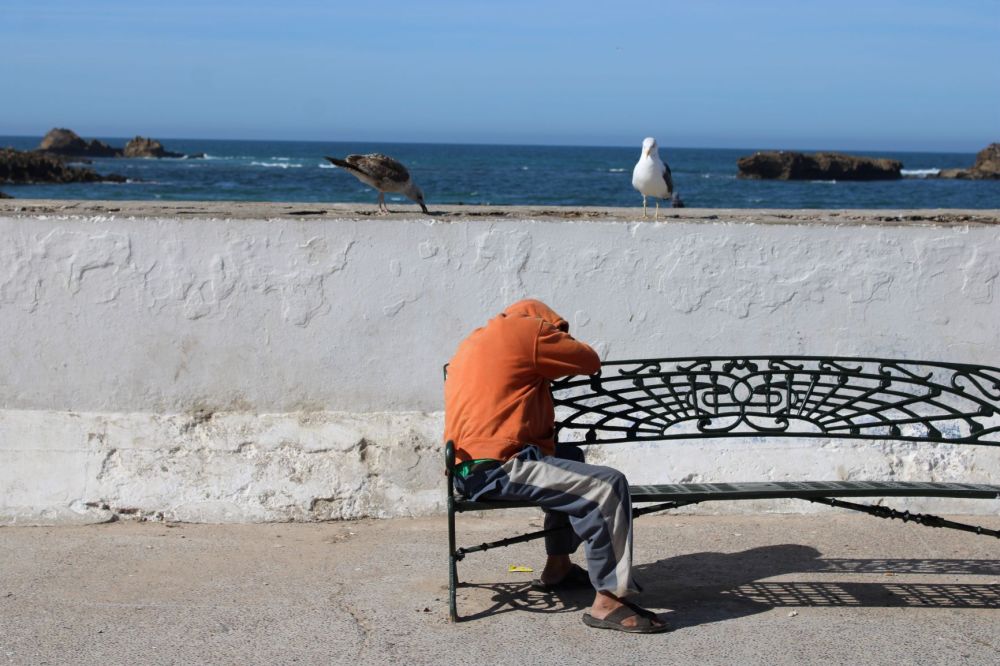
Was it sitting on one of the benches with his back to the sea, near the harbour, in a slightly quieter corner of Orson Wells Square that he wrote one of his most famous songs? Is it on the bench on which a man fell asleep under the benevolent gaze of a couple of seagulls?
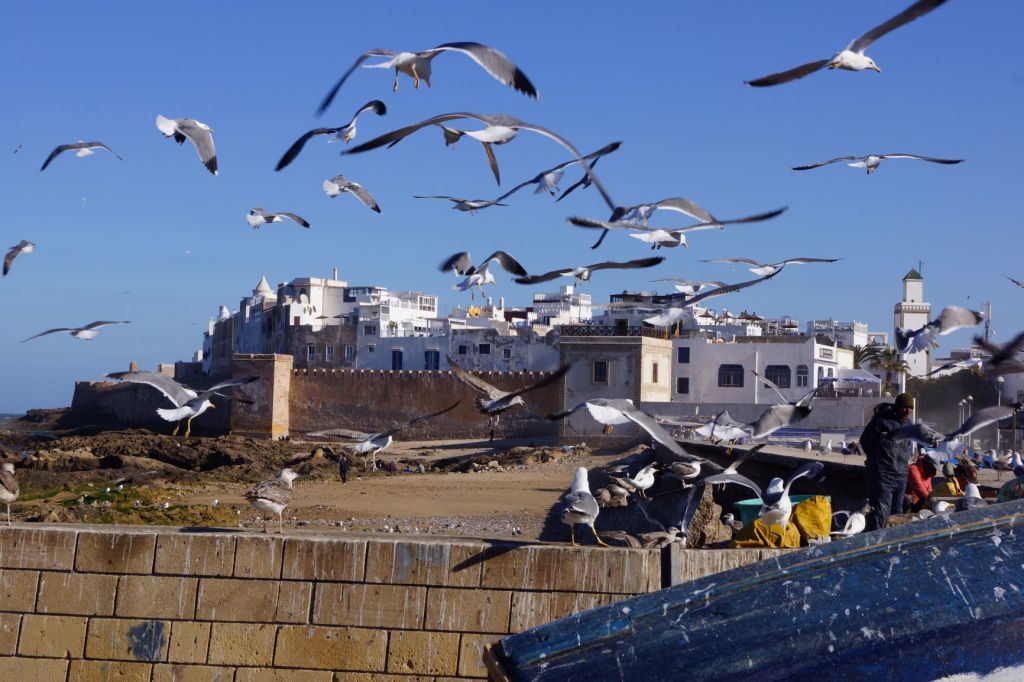
Was he inspired by the incessant comings and goings of the seagulls? These seagulls that sometimes land well aligned along the Skala wall of the harbour and look at the men carrying their pride like a flag. Or is it the seagulls that fly over the fishermen as they sort out the day’s catch in front of the Medina’s wall?
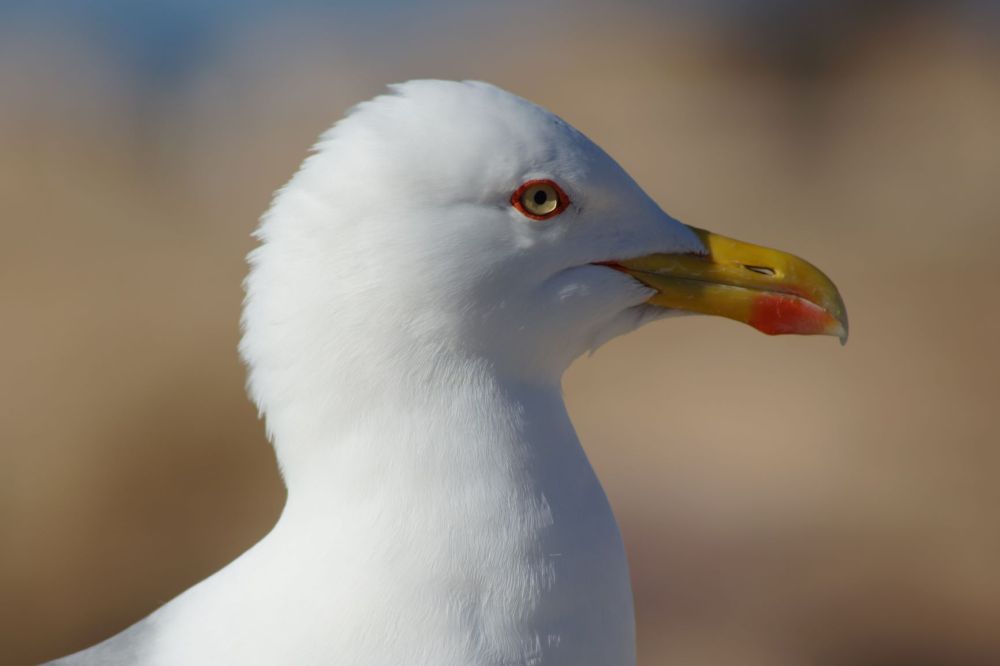
The ones with orange beaks underneath, reminiscent of the rim of their eyes, are ready to pounce on the food left for them by the fishermen. For their part, the fishermen remain imperturbable and continue their work, despite the majestic and noisy dance taking place above their heads.

Is it after seeing the seagulls flying through the oculus of the Skala, offering a ballet of permanent flights in front of the ramparts of the fortified city?

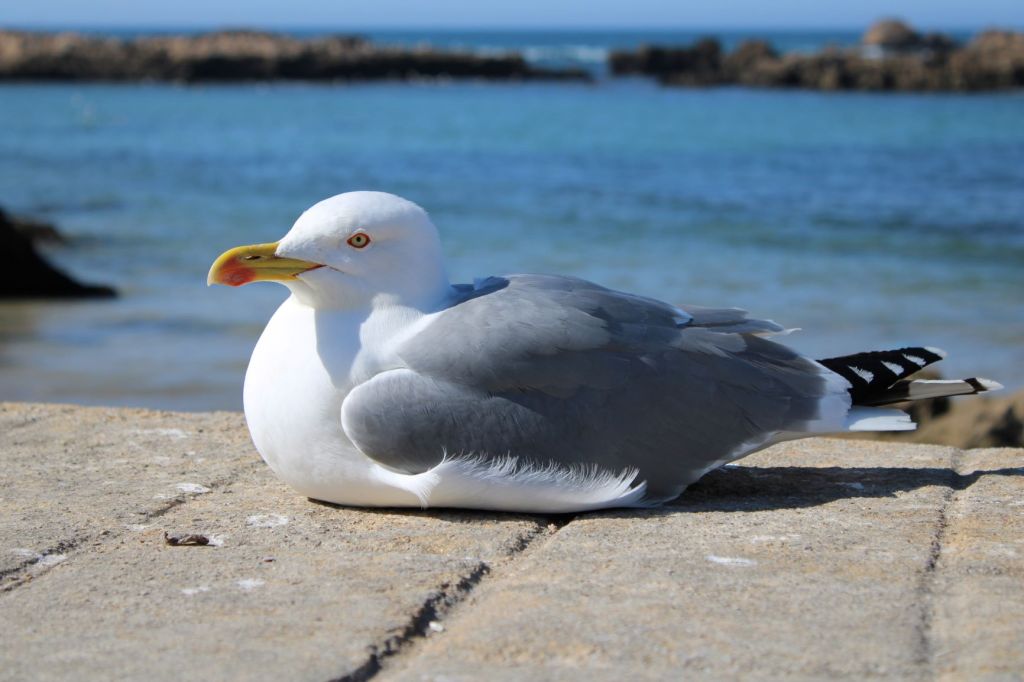
Or would it not be rather by looking at an isolated seagull, resting on the watchtower or on the low wall of the skala of the kasbah located at the other end of the city?
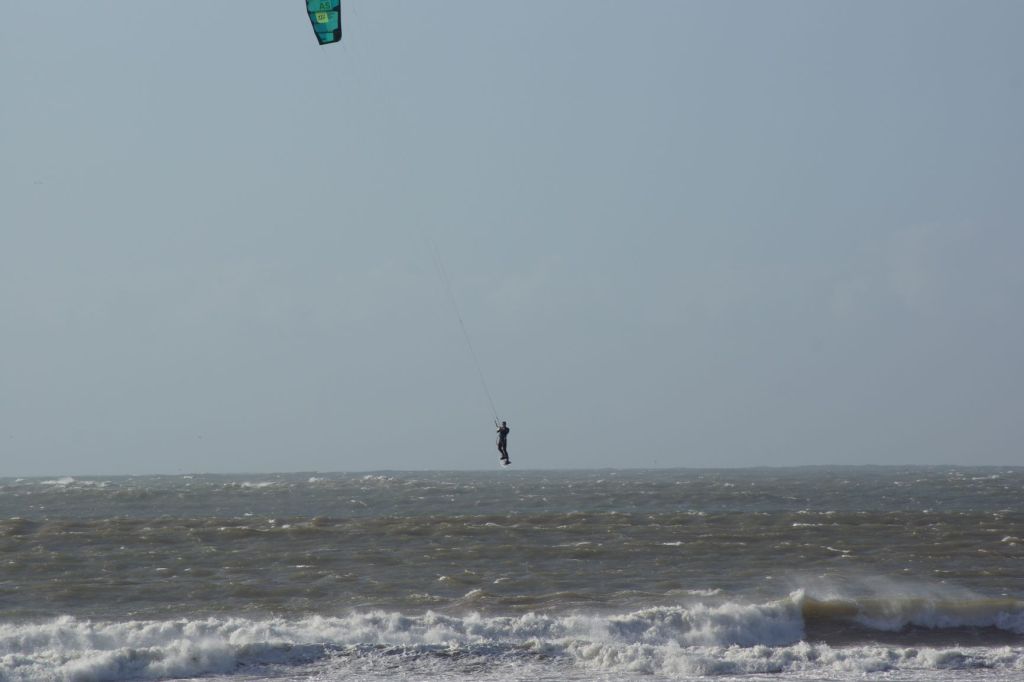
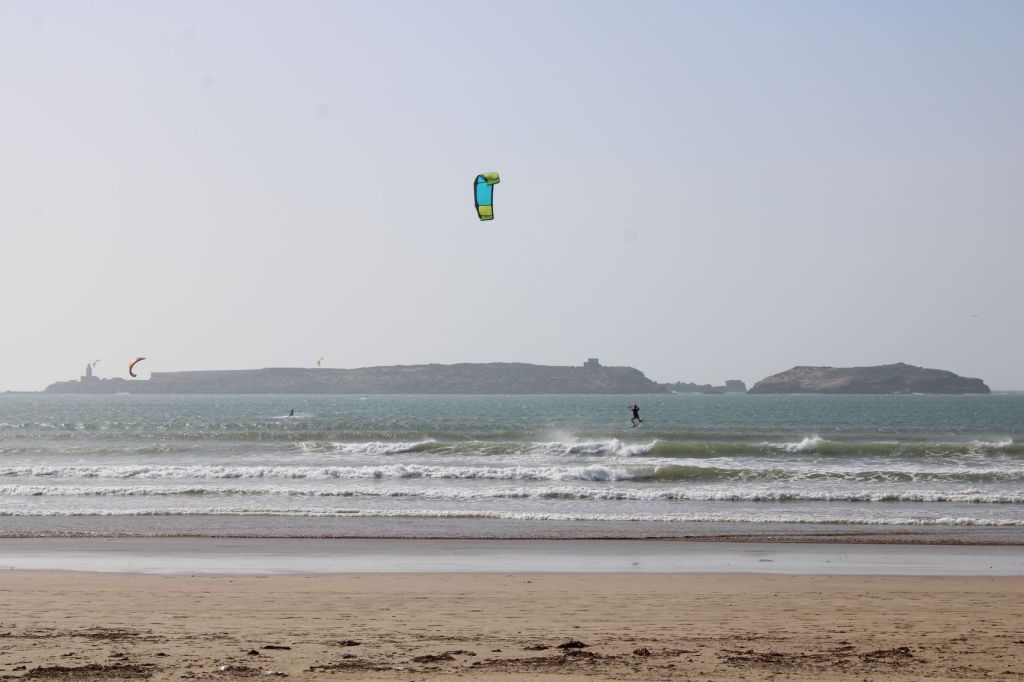
Looking at the photos of surfers taking off on the waves high above the sea, the ones you see from the promenade along the beach on Avenue Mohamed V, she wonders if this is what might have inspired the singer to write his famous composition.
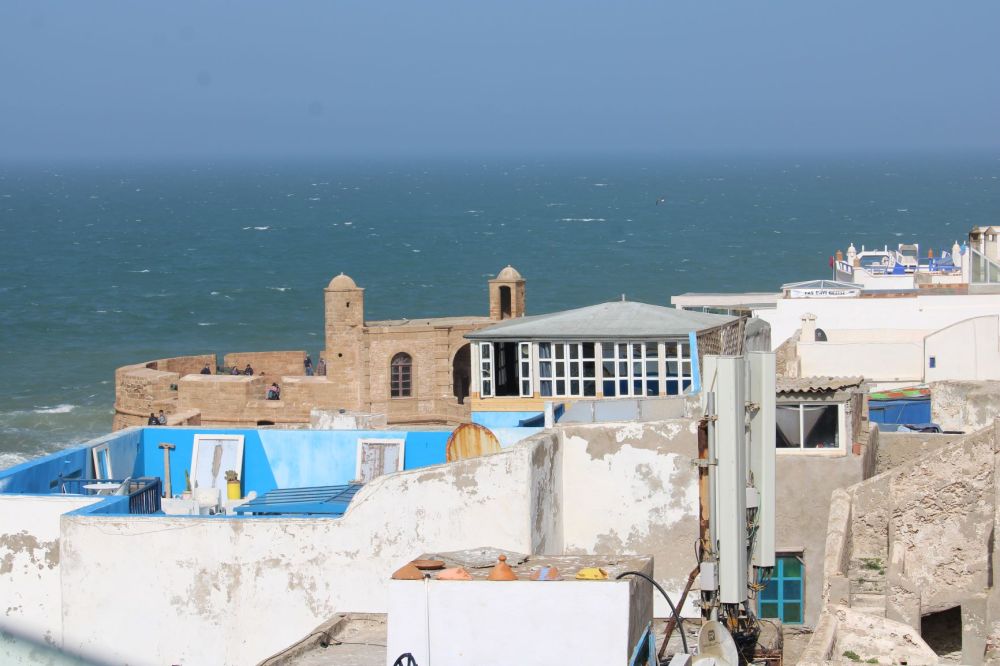
Unless the inspiration came to him during an unusual walk on the rooftops of the Mogador so much appreciated by poets?
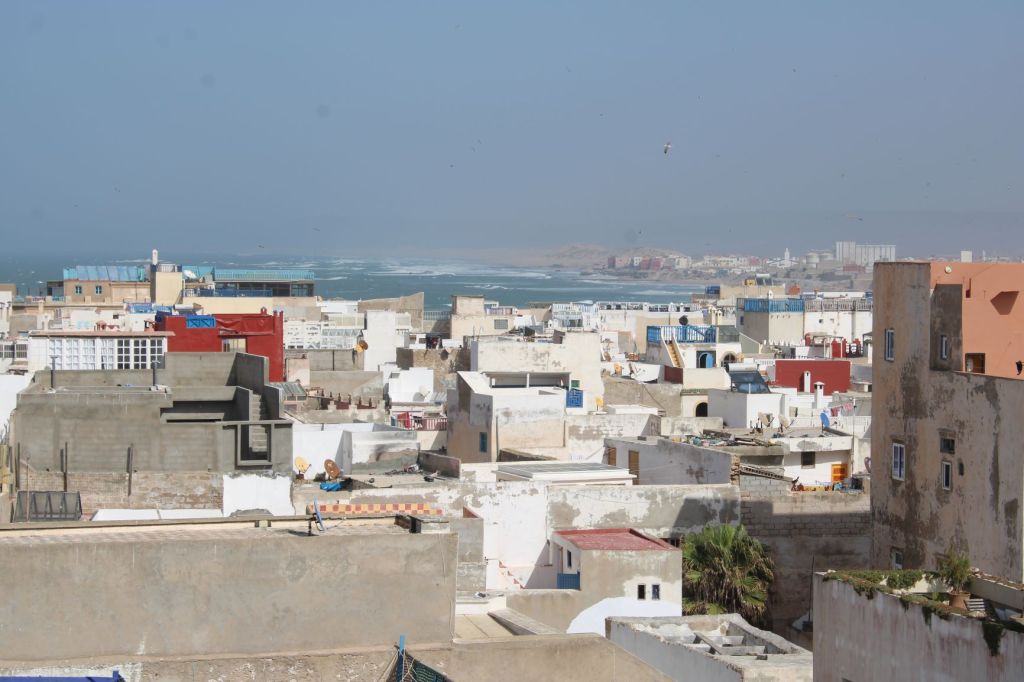
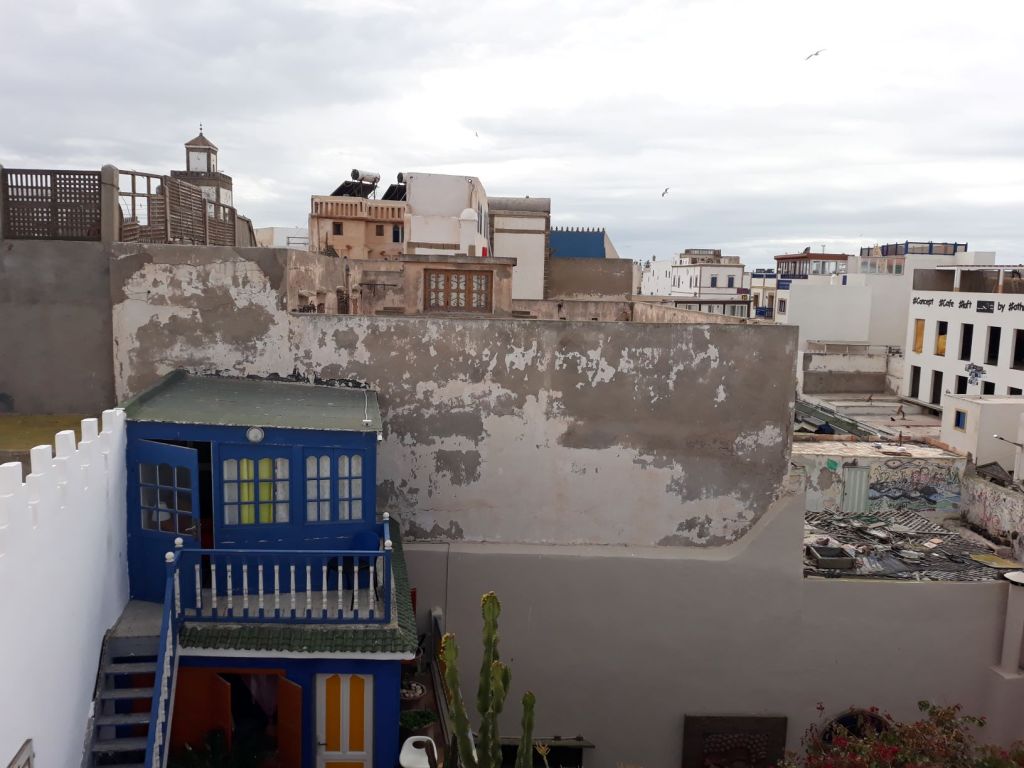
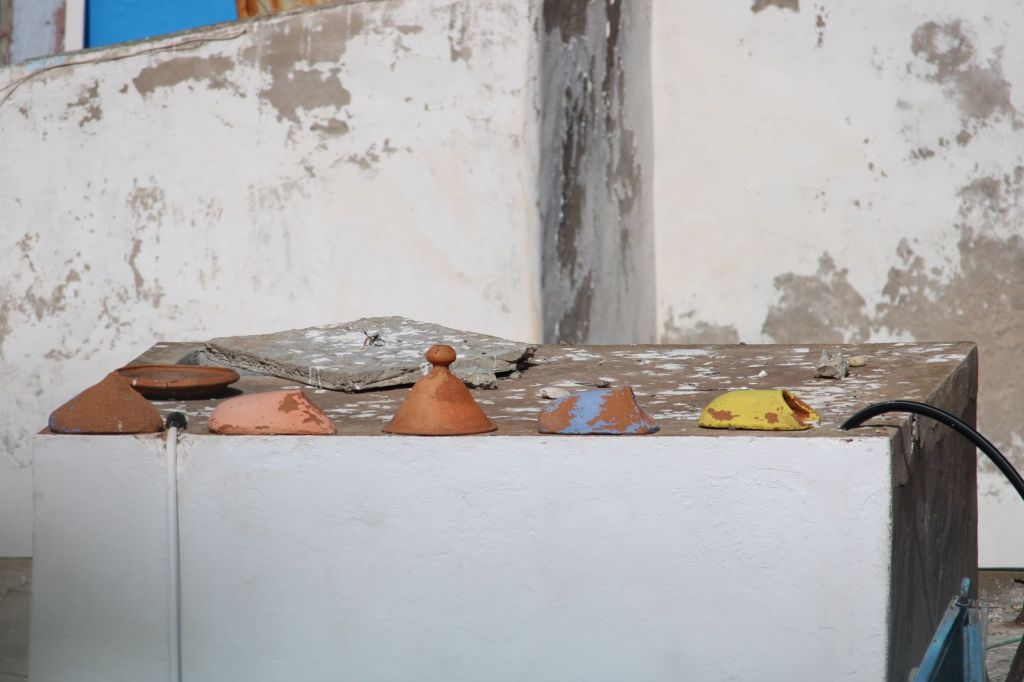
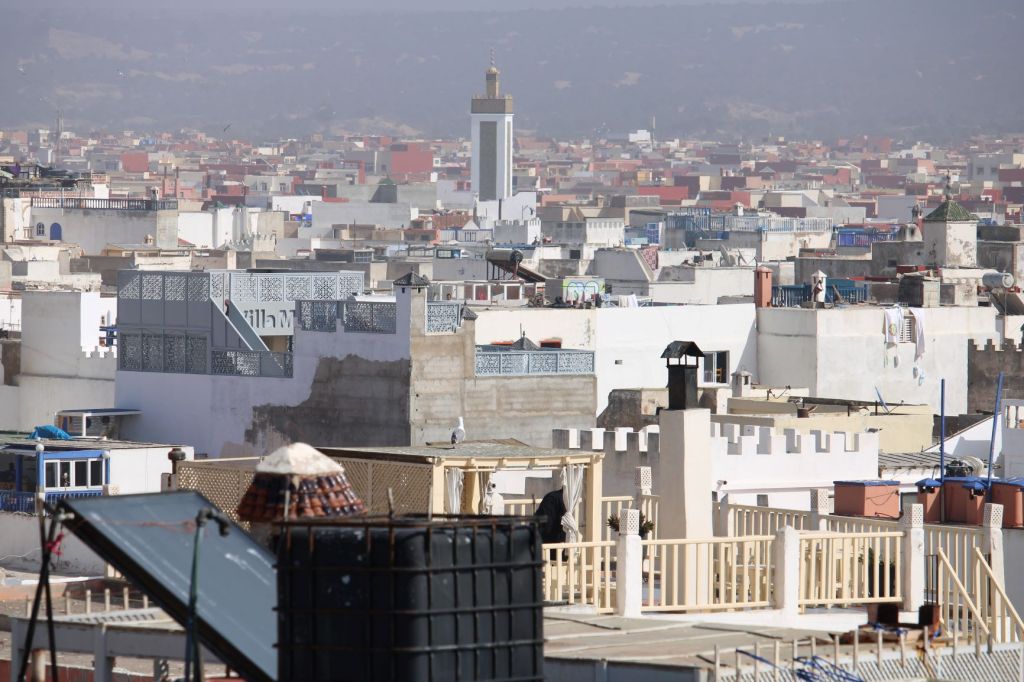
In front of her album, she imagines him on the terrace of the Palais des Ramparts, or on the terrace of Les Matins Bleus, contemplating the rooftops as far as the eye can see or sipping a mint tea from the Caravan Café. Whether you look out over the sea, the argan forests, or the industrial buildings, there are roofs on all sides. Roofs made of all kinds of materials, arranged by human ingenuity to catch a few extra rays of sunshine when the shade comes to cool down in the alleys below. From the roofs, a harmony emerges from the disorder. One discovers a tangle of satellite dishes, terraces and railings. On one of them, you can see a line of tagine dishes of all colours. They must have given back their office in other times. They were kept there for eternity. Here the objects carry the baraka, nothing should be thrown away and the past still has value.
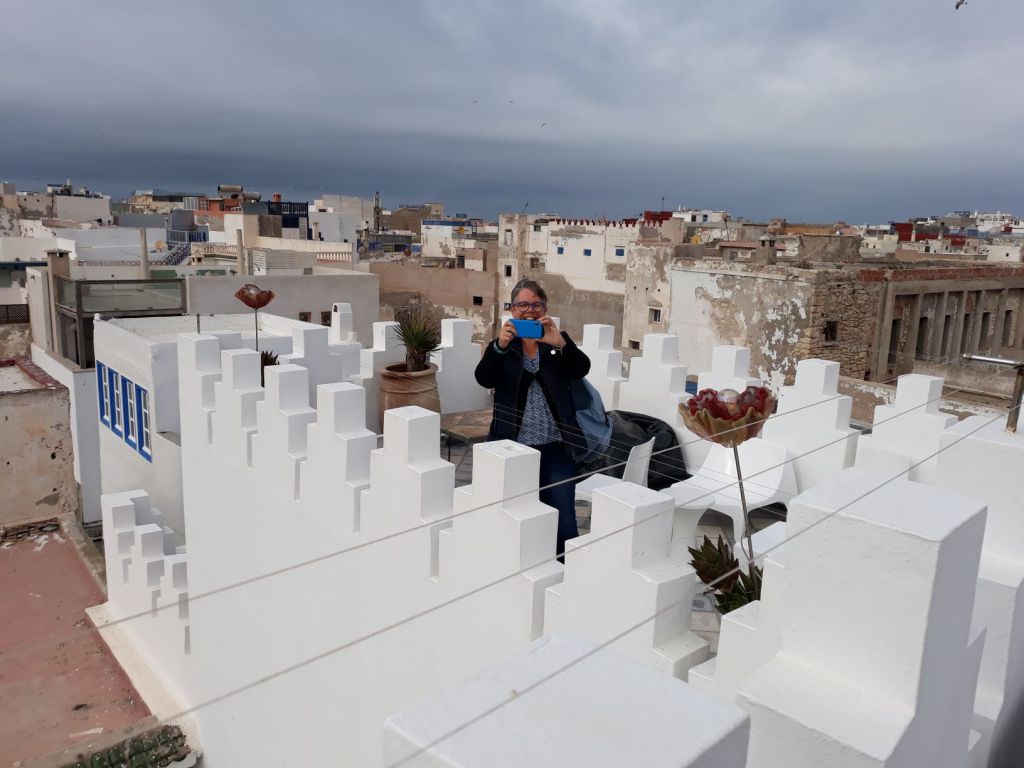
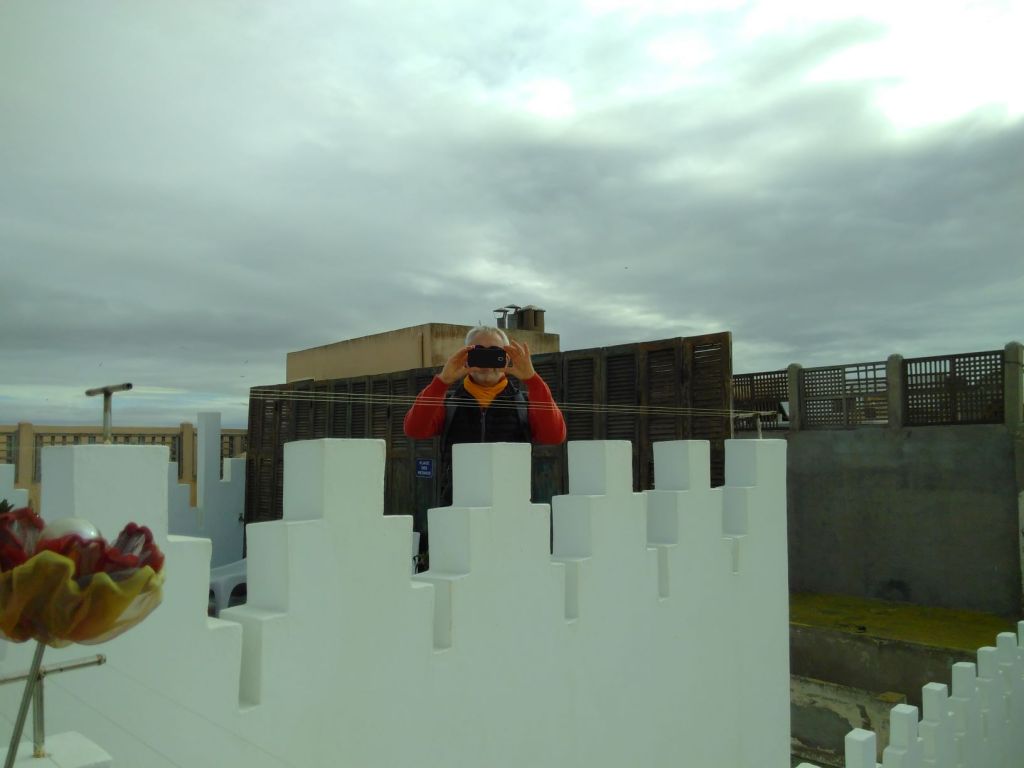
Did he too take pictures of his sweetheart from roof to roof, as most lovers who fly over the old town enjoy doing?
Perhaps it was here, on one of these terraces, that inspiration came to him. He must have been happy to find the right words to express his thoughts. Like all lovers of words, he probably has a notebook in one of the pockets of his discarded jeans. A notebook on which he hastens to capture ideas before they regain their freedom and fly away like threads in the wind.
Did he come back serene, soothed after one of his strolls, happy to have found the words that would best express his feelings of the moment and that would still be hummed to this day?
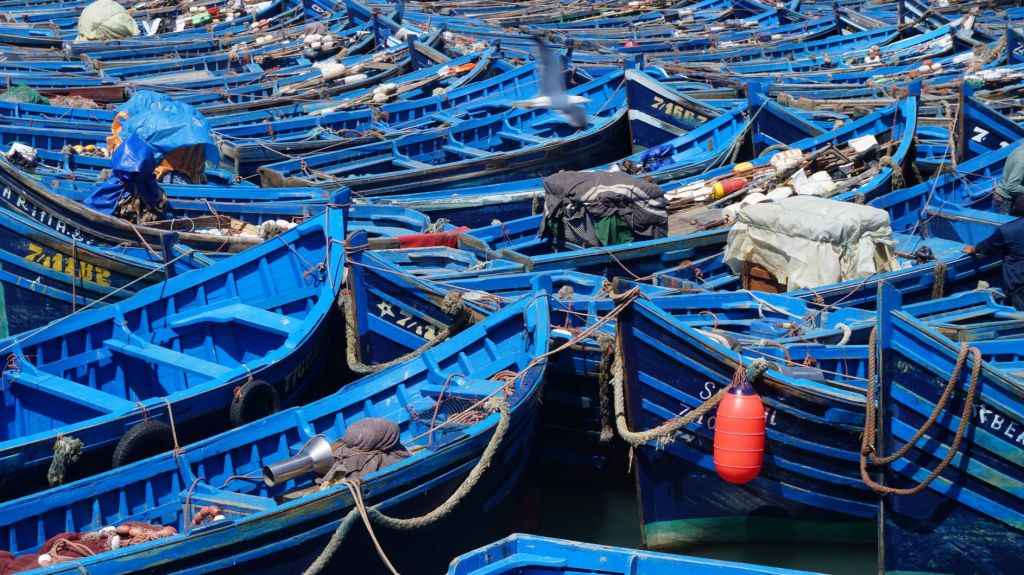

Did he love this city the way they loved it? With a love different but as powerful as the love that unites them. Was he struck by the colours of the old stones when the sun levelled the sea? Was he moved by the blue of the freshly painted boats? This blue that contrasts so much with the whiteness of tall houses that men take care of year after year. Did he like the interlacing of boats and fishing boats in the old port, so different from the rigour with which boats are stored in modern fishing ports? Did he wonder, as most passers-by do, how fishermen used to find their boats here and then how they managed to get out of the harbour? Perhaps that is when he thought that to get out of the harbour it would be better to fly away?
It is probably in a place like this that he must have felt the bursts of happiness that give him the energy to write and compose, to feel the happiness of being in his place in this world and the feeling of being part of humanity. Here life is peaceful and tranquil, to the rhythm of fishing with all the necessary routine and exoticism.
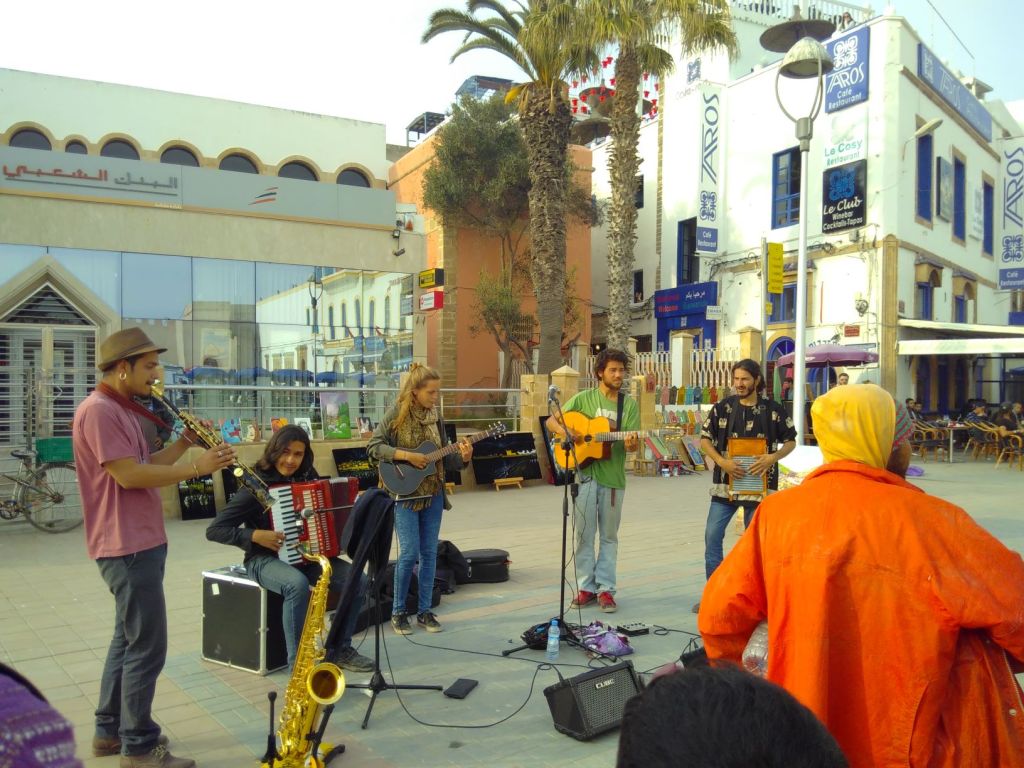
Has he also joined the families and lonely people who come to listen to backpacker artists at sunset?

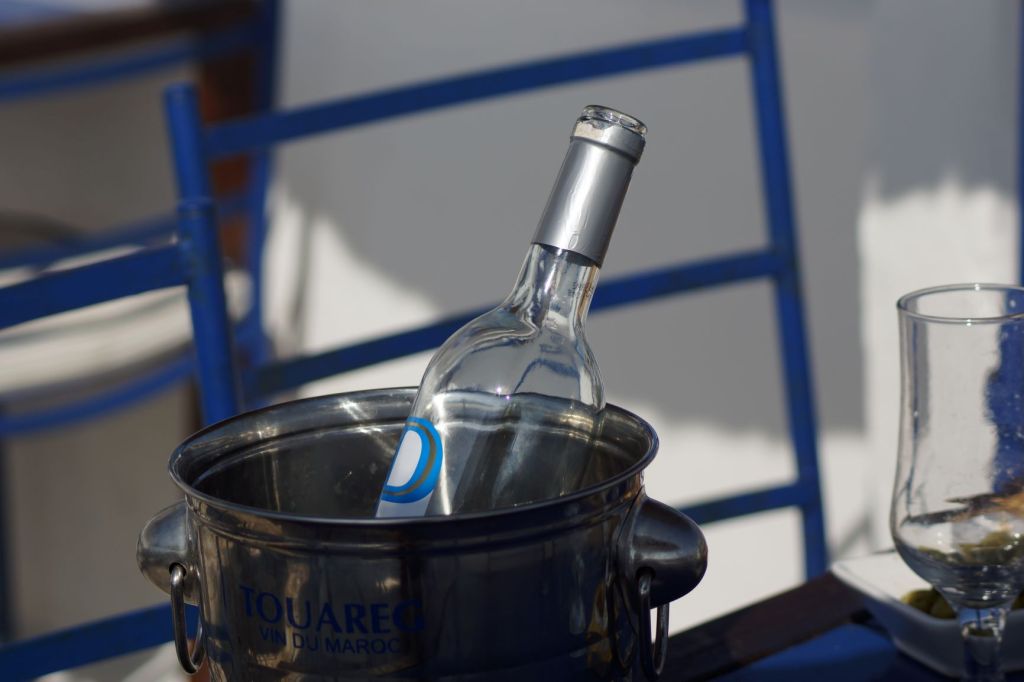


Did he take the time to enjoy a glass of wine from the terrace of the Taros, which lights up in the evening with these starry ball-shaped candle jars? Or has he discovered the music of the Gnaouas, in the overwhelming heat of the afternoon?
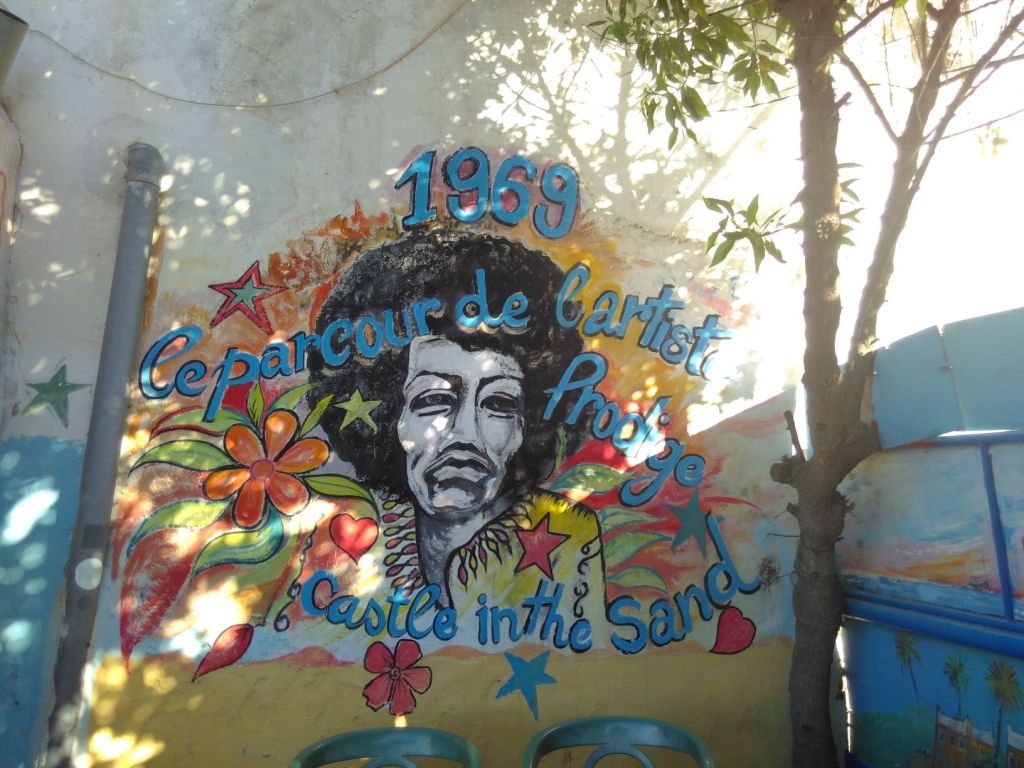
Still, Essaouira is an inspiring city for the nostalgic. Here human stories are definitely printed on the walls of the old city. It’s in the air, like something indefinable but that you feel as soon as you walk through a doorway. A breath, an atmosphere that nothing can ever destroy and that modernity has not been able to alter. The past has left its mark on every street corner. No effort is needed to find oneself in the 18th century at the side of Theodore Cornut, the renowned architect who drew the plans of the Medina, or at the side of Jimmy Hendrix in the 60s.

This one has its image reflected for all eternity on the windows of a bistro in Diabat.
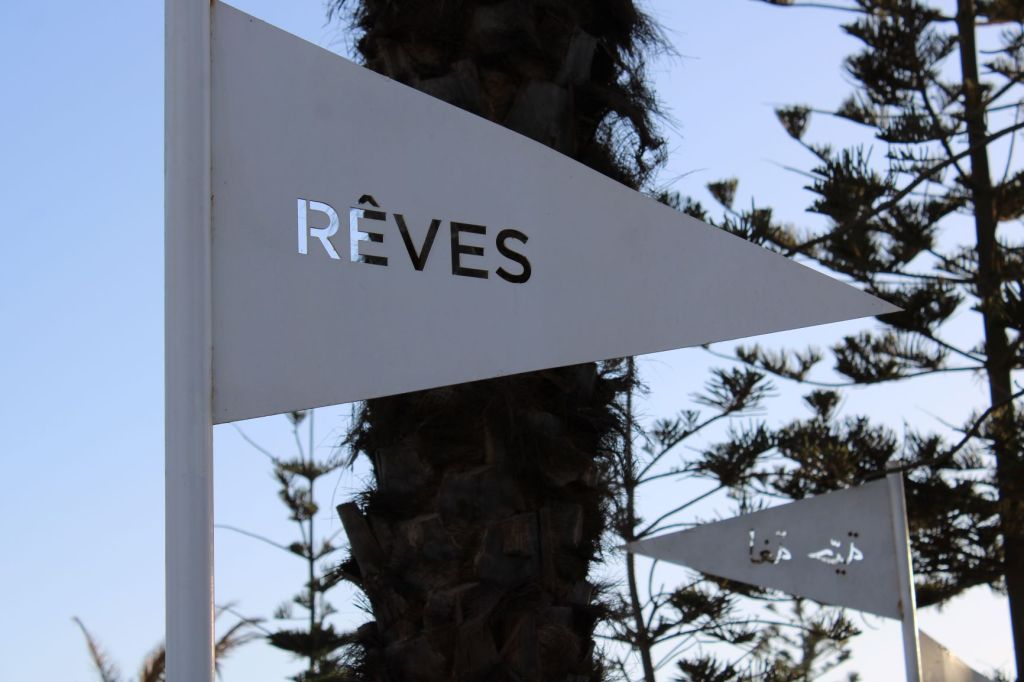

Here everything leads to daydreaming, even the signs in front of the Bab Sbaa that indicate the direction of dreams or that of diversity. No, no, she’s not delirious, she saw it with her own eyes…
Par Nathalie
Translated with http://www.DeepL.com/Translator (free version)
 Rencontres et découvertes, ici et ailleurs