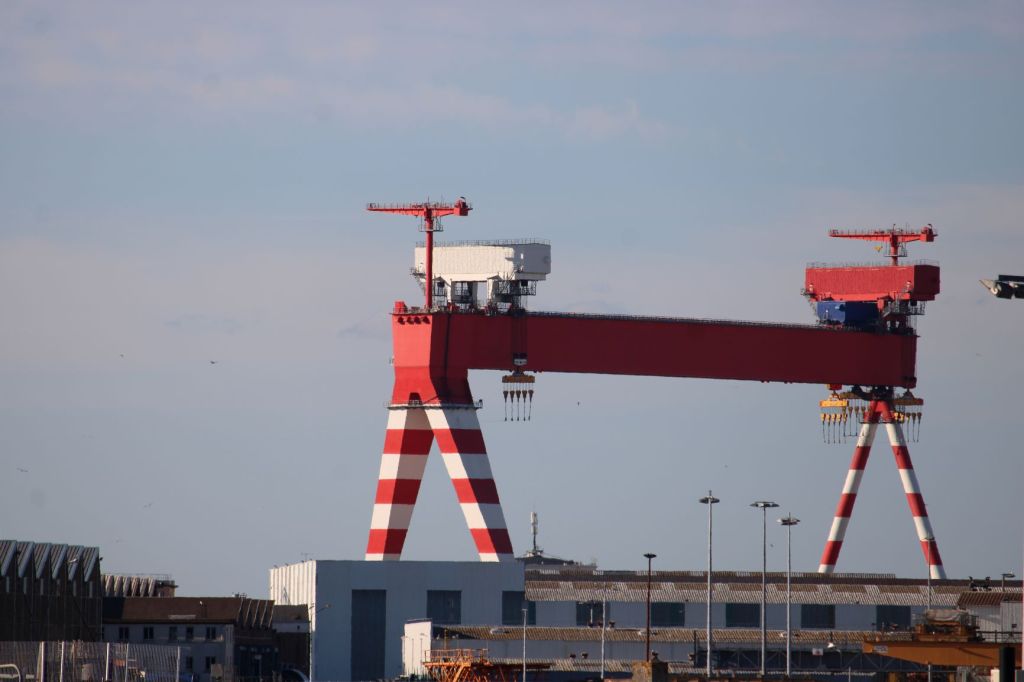
Tidal quay at St Nazaire, June 2020. On this Sunday afternoon, two children are playing on the small beach below the Môle d’Abri. You know, this little beach, which you discover when you look out towards the St Nazaire Bridge in the distance, on the side of the big red and white container crane. The children play side by side, each carried away in their imaginary stories. For them the beach becomes in turn a large road construction site, a fortified castle, a maritime museum and probably so many other wonders. One of the children is blond. He has very fair skin, the kind on which the sun leaves bite marks that keep you awake for long nights. The other is brown. She has very black skin. A dog, coming from who knows where, runs across the beach, enters the water and comes out of it snorting.
« Have you seen the dog? »
« Yes, be careful, he’s going to break your castle when he comes out of the water. »
That’s it, it’s very simple. They have gotten to know each other and now share the playground, mixing their imaginations to make their ephemeral constructions in the sand evolve together.

Parents watch their children from the corner of their eyes, from the high overhang. Amira, the little girl’s young mother admires the freshly painted lighthouse, proudly erected, which dominates the entrance to the bay with its small bright red head. From the Môle d’Abri, one can see on the right the fishing nets, similar to the more modest Chinese squares of Cochin. They are grouped together on the Quai des Marées, lined up in tight rows. Here, it smells like iodine and sea spray. On the left, beyond the small beach, just after the South Hall, roughly opposite the Ecomuseum, is a beached ship’s hull.

It’s the « Abolition of Slavery » monument. These docks have seen ships loaded with slaves pass by. The ones that left from Nantes for the colonies. Between the 17th and 14th centuries, it is said that no less than 600,000 slaves left, probably locked up in the holds of these famous ships.

This is undoubtedly what allowed, on the one hand, some families in Nantes to prosper at that time and we saw different aspects of the city change. Thus, the inhabitants of the small town of St Nazaire, located at the mouth of the Loire estuary, saw thousands of slaves pass through and it was at the end of the 20th century that a memorial was dedicated to them.
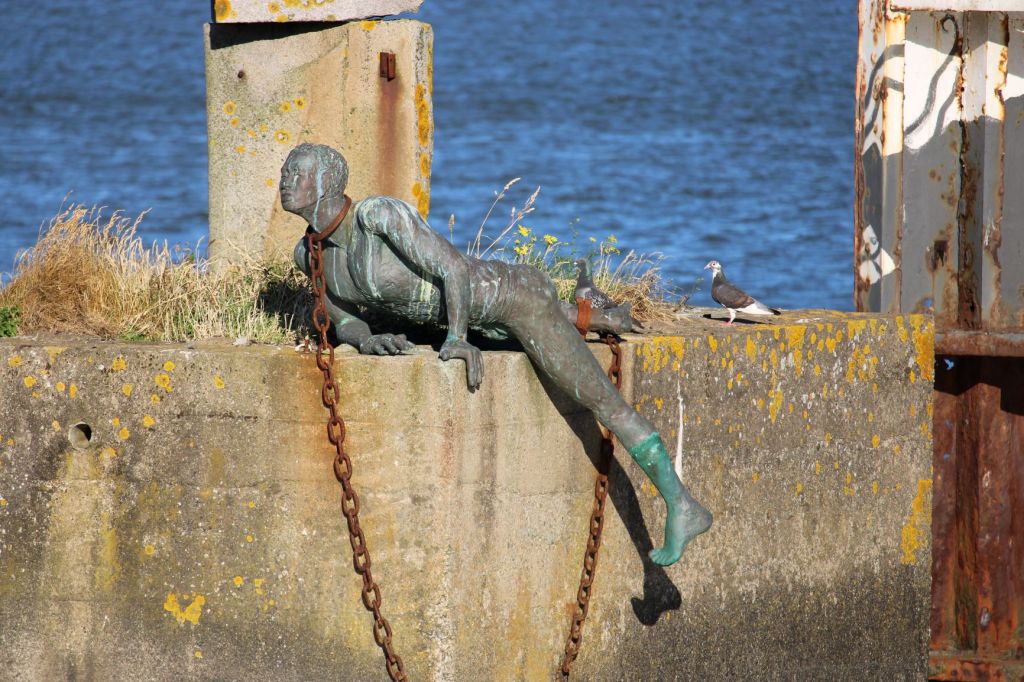
In front of this memorial, Amélie, the mother of the little blond boy, tells Louis her husband, the incredible story of one of her ancestors whose lover, had embarked in 1725 for a period of two years. Amélie recounts how she discovered the diary of this ancestor, while rummaging through her grandmother’s attic, when she was 16 years old. Not without difficulty, because this diary is full of emotions, Amélie finally allowed me to deliver here the last pages of this famous diary.
« Oh la la, my dear diary, I have to tell you about this memorable day because it may be the last time I will ever find time to write to you. Tomorrow will be a great day for me. It will be my wedding day with Alphonse. You know, my dear diary, you who have accompanied me all my life, that I have desired this wedding, hoped for it all my life. You remember when Alphonse left on board the frigate more than 50 years ago. You must remember, my dear diary, how I flooded you with tears. Alphonse had decided to embark for two years and go to the New World. He wanted to make sure he had a little money before he got married. Madly in love with each other, we promised to wait for his return to marry and start a family. And then the years passed and Alphonse never came back. You remember, my dear diary, the hours he spent at the end of the pier every time a boat was announced in town. I think I’ve seen every boat return for at least 25 years. My heart was pounding and my breath was short as I discovered the sails on the horizon. I would then run to the harbour and be deeply moved as I watched these men come ashore proud and happy to be back on land with their families. Their eyes were deep, their distant gaze laden with a thousand memories. Their skin was tanned. From the holds of the boats came the scent of the spices they were carrying at the cost of their lives, at the cost of my Alphonse’s life, no doubt, since he never returned. I would leave with a heavy heart, a long breath, foggy eyes, and rage in front of these women who were so happy to find their companion. And then, after 25 years, I had decided not to torture myself anymore and I had devoted my life to my little piece of garden. Vegetables and flowers with their many scents filled my daily life.
Working the land had helped me to silence my ruminations and little by little my life had taken another turn. Until that day last April. As I weeded my patch of peas, I felt like I was being watched. I gently looked up, spread out my aching back and discovered an old man staring at me behind the vegetable garden grates. It must be said that in our corner of the French countryside, visitors are rather rare and always announce themselves. In front of the insistence of his gaze, I began to ask myself questions. I didn’t feel any fear, I was rather surprised. As soon as my gaze crossed his a little closer, I found that spark that I had never forgotten. That spark that had so many times capsized my heart. That spark that I had so many times scrutinized, waited, hoped for and never found in any of the eyes of the men returning from the New World. That spark that gives you like the beating of butterfly wings in your heart and lungs. I stammered a few words and then my lips sketched out his first name…Al…phon…se? I invited him in. We were a bit awkward even though deep down we wanted to get back to our old gestures. What do you want, my dear diary, at 75, gestures aren’t so vivid anymore. Alphonse kissed me gently.
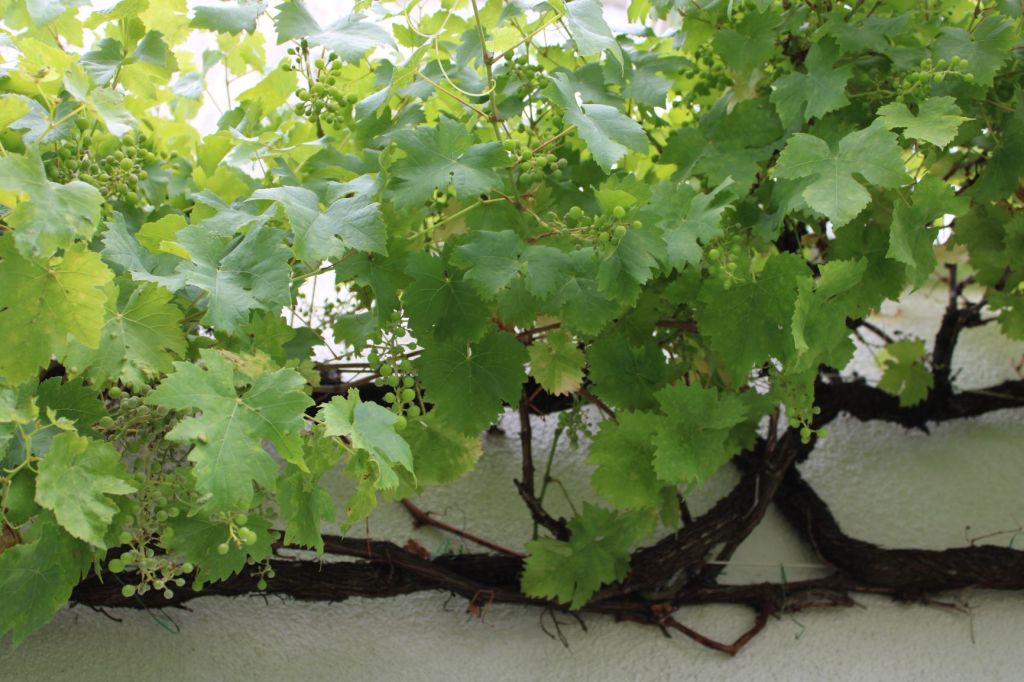
We sat under the arbour, in the vegetable garden, which he took the time to admire not without emotion. It was there, in the shade of the arbour, that he told me his incredible story. A crossing to the Mercury, a 600-ton brig. This one had lasted long months with sick companions and two companions who had died from diseases he had escaped.
When he finally arrived in Pondicherry, after a 258-day crossing, he was able, as planned, to work in the trading business on behalf of his father. Two years later, with his nest egg in his pocket, he had embarked on the Espérance, hoping to meet me on arrival to propose marriage. After a terrible storm and a crossing that had been going badly from the start, the boat had been wrecked on an island.

Under the captain’s leadership, the shipwrecked had managed to rebuild a small boat. And so, after a few weeks, the captain, his first mate, the chief petty officer and two shipowners had managed to leave the island, while promising to return for the survivors. They had been recovered from the open sea by a Spanish frigate and were only able to return to Nantes after years of captivity. Back in Nantes, faced with the exorbitant cost of such an expedition, they had been very careful not to talk about this promise. The 22 shipwrecked people who remained on the island had organized themselves and, as time went by, they had ended up recreating a veritable micro-society. The shipowners had never kept their promise. It was the son of the chief petty officer who, 50 years later, having received his father’s confessions, decided to charter a ship on which he himself had embarked, to go and look for survivors, if any were still alive. There were only six survivors left and Alphonse was one of them. His love for me had always given him the energy to survive and he had never given up hope of finding me one day. For my part, I had very little to tell him, except that apart from my success in selling spices, I had devoted my life to this little piece of garden to console myself. Happy and delightful reunion, my dear diary. Tomorrow is the day we are to be married. Yes, tomorrow and this time, if he goes back on a boat, it won’t be without me. »
On the advance of the Shelter Pier, Amira looks at her daughter who is still playing on the beach. She listens to the snippets of this confession and in turn, she feels the urge to tell the incredible story of her ancestors. Next episode.
Par Nathalie (with the precious help of Jean-Yves on historical aspects)
Suite : https://nathjy.travel.blog/2020/08/17/childrens-games-and-family-secrets-episode-ii/
Translated with http://www.DeepL.com/Translator (free version)
 Rencontres et découvertes, ici et ailleurs