If you haven’t read it yet, here is the link to episode I : https://nathjy.travel.blog/2020/08/01/childrens-games-and-family-secrets/

Amira, looking into the distance while watching over the children’s games, listens distractedly to Amélie’s story. She then remembers a very different story. The story of a love story which, although it did not last very long, was very happy and very intense. The story of a committed life that still inspires her today, even though she has become a mother.
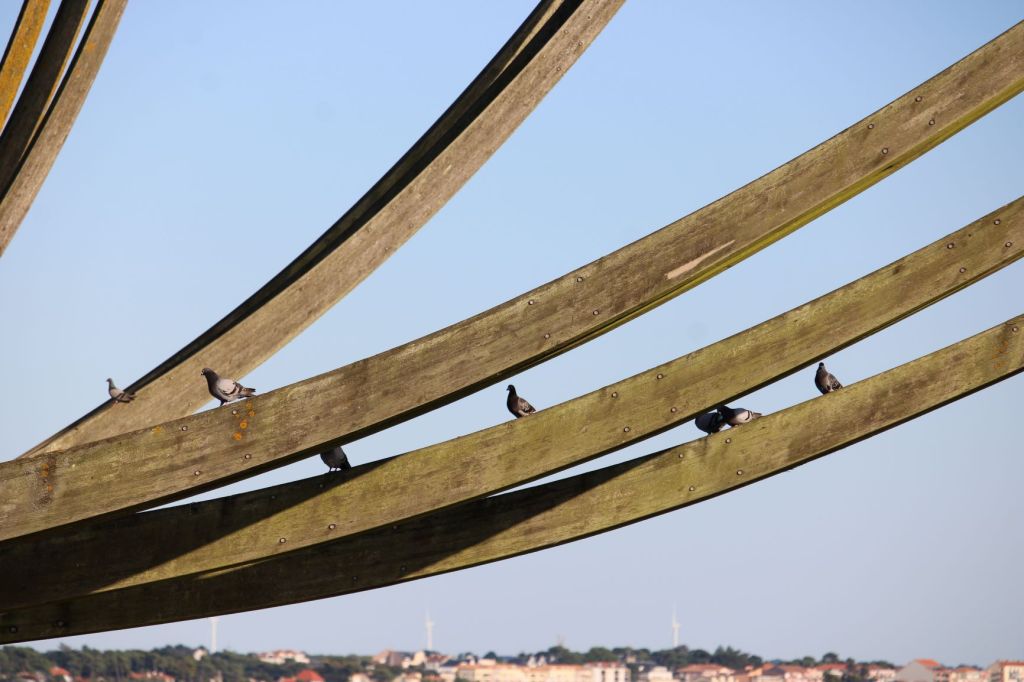
That was a long time ago, in 1710, to be precise. The ship, which was carrying slaves between Africa and America, had undoubtedly started from St Nazaire and had probably passed in front of the Môle d’Abri, on which it is now. Aboard this horrible slave ship was Modesty, her great-great-aunt. Always cheerful, ready to do anything for others, Modesty was nonetheless a slave from Africa.

In spite of her status as a slave, she imposed some and always managed to gain respect. Young and lively, she was a true force of nature and had arrived alive and rather fit on the other side of the ocean, despite a rather difficult crossing, during which she had seen many of her friends perish. Arriving in New York City shortly after the Slave Uprising, an uprising of 23 African-American slaves, Modesty soon realized that tension was still palpable in the big city and felt that whites were very suspicious of blacks.
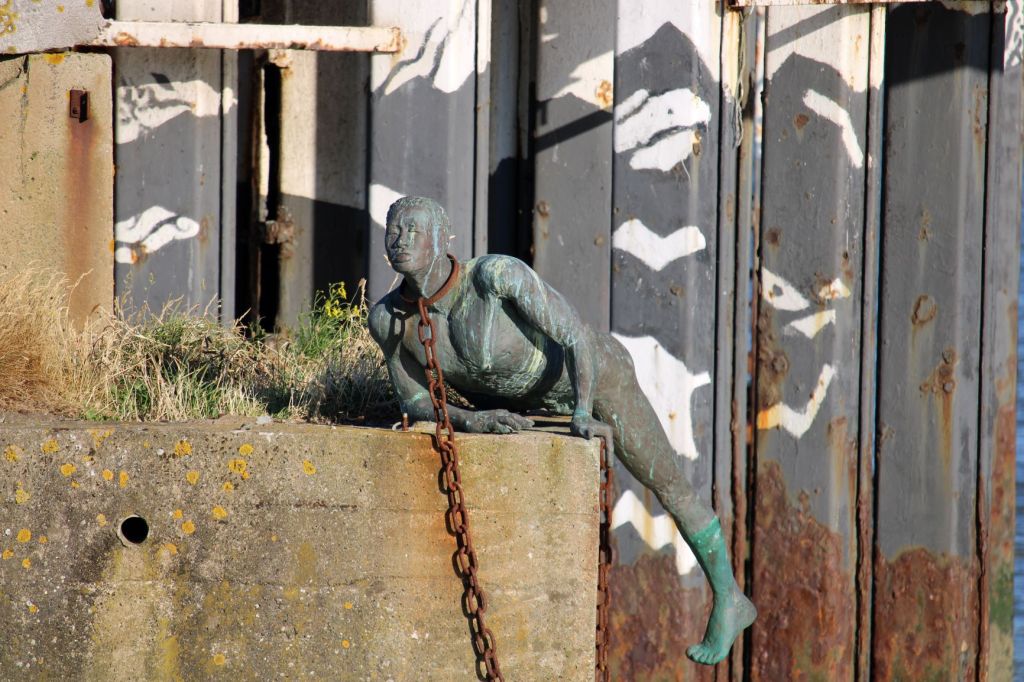
From her trip on the slave ship, from New York City, she had no memory of anything except the landing at a very special moment in the history of slavery. She had thus remembered something she would never forget: it was possible to resist. Modesty had been bought by a family of rich planters from the South. She had been married and had children. As a mother and then a grandmother, she had never missed an opportunity to tell her descendants this story that had followed her all her life. She had tirelessly carried on the oral tradition of telling the story that one day slaves had risen up and the story had become more beautiful over the years. Was it this story that had inspired the life of Hariette, one of her granddaughters? Was it her strength of character that had led this granddaughter to have a life very different from that of most of her peers? No one knows and no one will ever know. It is without bunker in a kind of alchemy between the two that the truth lies. Just like her grandmother Modesty, to whom she looked very much like, Hariette was beautiful. Everyone could tell at first glance that she knew what she wanted. Hariette was born when her parents worked as slaves on a plantation.

His mother was in charge of the kitchen while his father worked in the cotton fields. Hariette helped her mother in the kitchen from an early age. She especially liked to bake pancakes. Above all, she liked to watch them swell in the small pan. Her mother had also taught her the art of escaping while preparing the masters’ meal. Cutting vegetables, mixing spices, preparing sauces, decorating desserts, all these repetitive gestures allowed her to give free rein to her imagination.

From her grandmother Modesty, she had also learned not to bend her back, while not provoking the wrath of the masters. Never to be servile while remaining servile, that was Modesty’s watchword. To remain dignified, to inspire respect without stirring up anger. However, his father did not like to see his daughter try to gain respect in this way and he feared that one day the masters’ anger would fall on her. Hariette was so beautiful, so tenacious that it reinforced her inner beauty and created around her like a protective halo.
At the age of fourteen, she was separated from her parents, as was often the case in slave families. She then began to rebel a little more often and was regularly beaten for it. But nothing could overcome her tenacity. As a young woman, she fell madly in love with John, a free young man. John, for his part, admired the beautiful and strong young woman, who dared to resist improper orders. She dared to look others straight in the eye without ever looking away. Above all, she cooked excellent, voluptuous pancakes, the smell of which escaped from the small veranda-shaped kitchen every morning. John was already dreaming of holding Hariette in his arms and imagining her body as voluptuous as her pancakes. Within a few months, they were married. John had a keen sense of humour and our two lovers spent a lot of time laughing together to forget the tragedy of life on the plantations. They also often quotes about the condition of slaves, especially female slaves. A subject on which Hariette was inexhaustible. Their passion for love had remained alive after many years, but Hariette and John had never had children. After 20 years of passionate love, John was suddenly struck by an illness so serious that he died within four weeks. Four weeks during which Hariette never left his bedside except to bake pancakes, which she tried to make him eat in small bites. She couldn’t take her eyes off the one who had given her so much, the one who had made her laugh so much, even when everything around her made a mockery of her. Four weeks at her bedside, during which she had vowed to devote her future life to the cause of women slaves – she had no children and was losing the love of her life.
And so, just a few weeks after John’s death, she began a new life. If you had been there, at that time, you would no doubt have seen her crossing the United States, leading a group of young slaves. After helping them to escape – she knew a lot about escape, because she had done it so many times when she was young – she led them to a land of freedom called Canada. She nicknamed these transfers « Modesty’s walk » in memory of her grandmother. She was as quick and crafty as a fox to thwart the traps she was bound to encounter on her way to freedom. She knew the paths and had studied the hideouts to carry out her expeditions. On a particularly vigorous November, she had even managed to win Canada for two of her sisters and three of her brothers. Among this little expedition was Kessie, Amira’s grandmother. Later, Hariette became a great activist for the Abolition of Slavery.
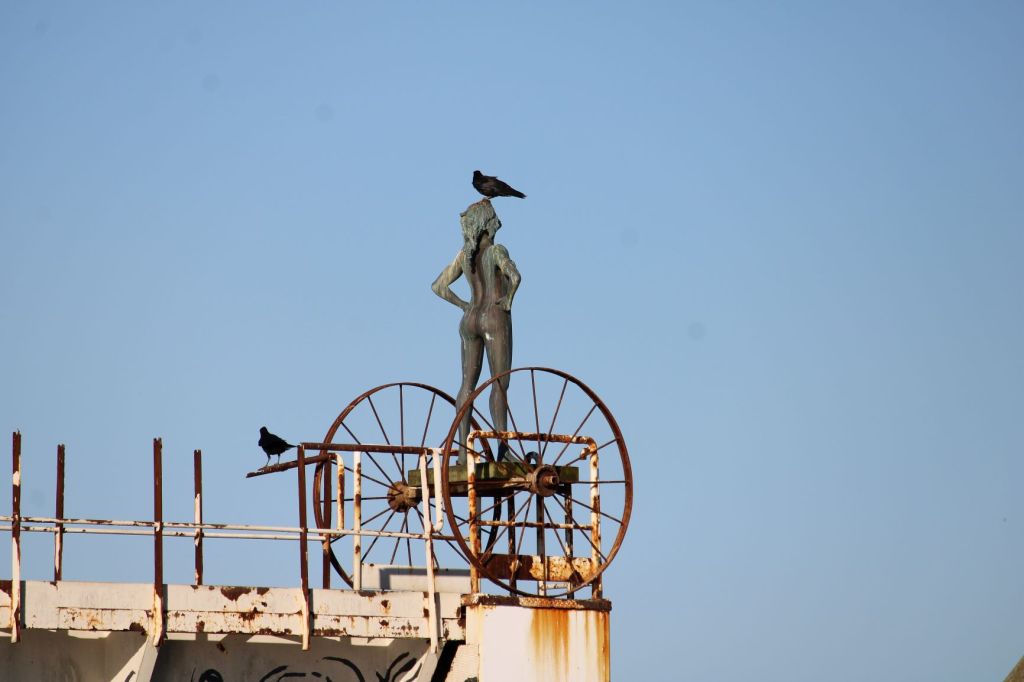
It is with great emotion that Amira remembers this great-aunt, while meditating in front of the memorial » A l’Abolition de l’esclavage » of St Nazaire. The weather has cooled down, the sun seems to want to set on the horizon and the children are beginning to get tired. They are less enthusiastic about building their imaginary castles on the beach and they are beginning to shiver. It is now time for both families to go home. The children say goodbye, the parents greet each other. Amira thinks about the journey she herself will undertake tomorrow at dawn. She is happy to have dedicated this last day to her daughter.

Tomorrow she’ll land on the Isle of Lesbos. Amira is a doctor and every year she spends two months coordinating operations in Mediterranean hot-spots on behalf of Doctors Without Borders. Two months during which she will have to rediscover the tenacity of her ancestors, to resist the heartless officials of the EASO. EASO, the European-funded body that examines asylum applications without any benevolence, based on European directives, which consist in protecting Europe from the influx of refugees, even to the detriment of their lives. Their lives which, in these hot-spots created by Europe, count for nothing. Their lives that no longer move anyone, their lives that may well perish at sea without any semblance of reaction. Amira already knows that, as every year, it will be a real psychological shock when she arrives at Oliveraie I, II and III. But just like her ancestors, she cannot resist this powerful instinct that pushes her to give the maximum of herself for a fairer, freer world. A world in which the values of social justice and climate change would finally take on their full meaning. Amira knows that she is ready to go, she knows that she will find a few well wrapped pancakes at the bottom of her bag to comfort herself.
Par Nathalie
Translated with http://www.DeepL.com/Translator (free version)
 Rencontres et découvertes, ici et ailleurs