Any resemblance to actual facts would be purely coincidental. This story was born in the minds of two people, following the sending of a postcard bought last February in La Fibule, a famous small bookshop in Essaouira.
This news is dedicated to a very precious person whom I am lucky enough to meet every day in my work. It is thanks to her that I find myself, every Monday morning -outside confines-, from dawn, or even well before dawn, wandering in the hall of a large Parisian train station or airport, looking for a Chaï tea to wake me up. Finally, more precisely, it is mainly thanks to this person that just after finding my tea, I will be able to settle down at place 112 or at place 98 of car 14 of a TGV, always in the direction of travel and on the corridor side, because she took care to check the smallest details of my journey (among the thousand other things she takes care of to assist me in my work)… This story was born from our exchanges around the gates of the Medina. These doors that fascinate us and give free rein to our imaginations. Today is Monday and she is waiting for the publication of this article scheduled around 7:45 am. I’m late, she must be getting impatient…
Translated with http://www.DeepL.com/Translator (free version)
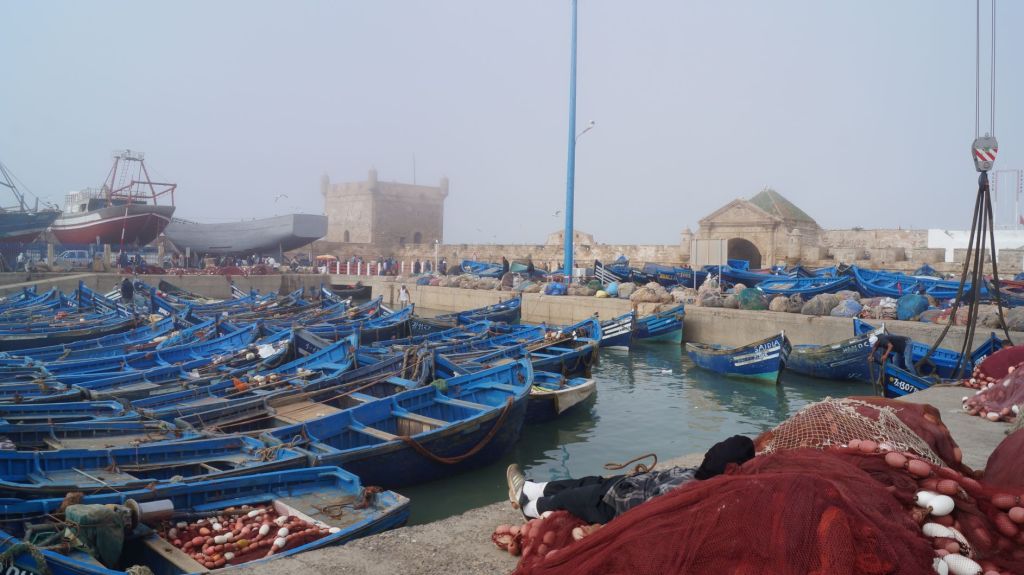
As the fishermen, asleep on the nets in the port, barely emerge from the torpor, the morning mist rises at the same time as the men.
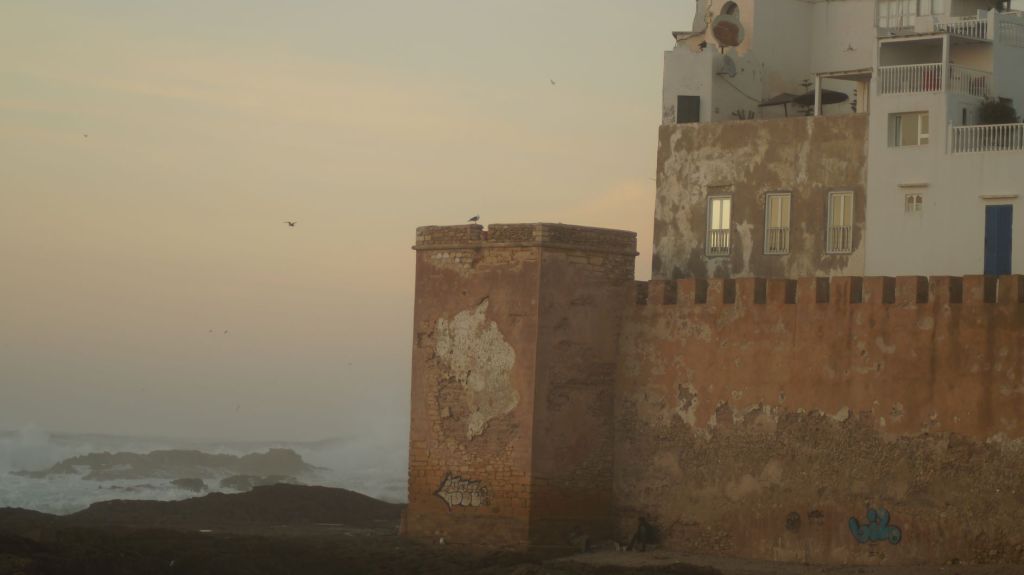
On the ramparts of the famous Mogador, only a few seagulls start their whirl in search of a few fish to swallow.
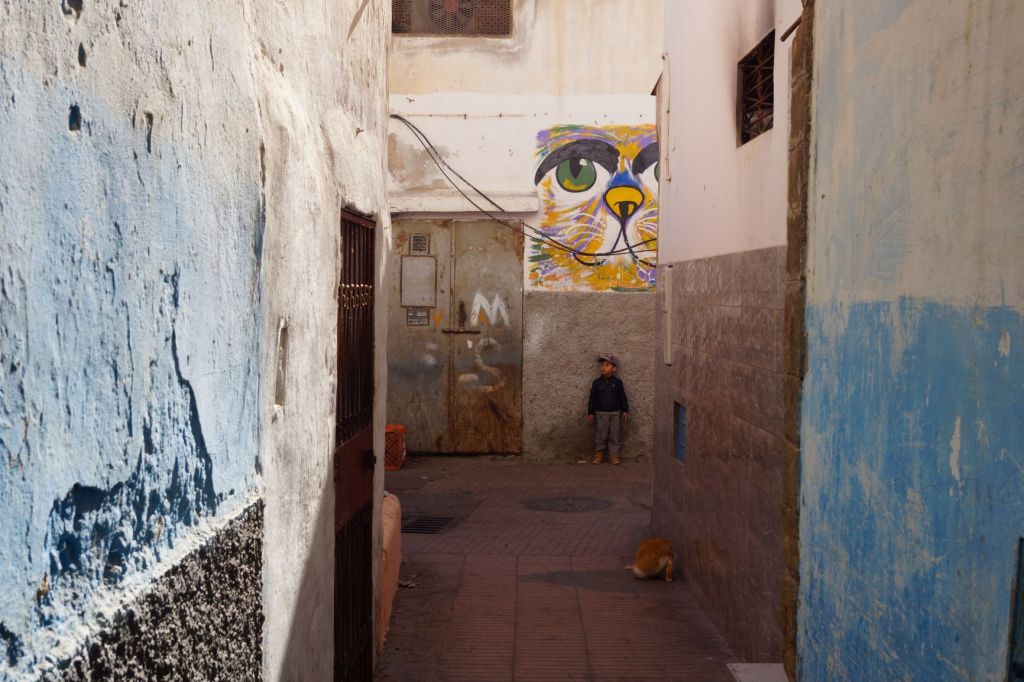
In the streets of the Medina, a few stray cats, in search of the reliefs of a meal deposited for them at the corner of an alley, amuse a child who is waiting for his mother in front of the bakery, where she works.
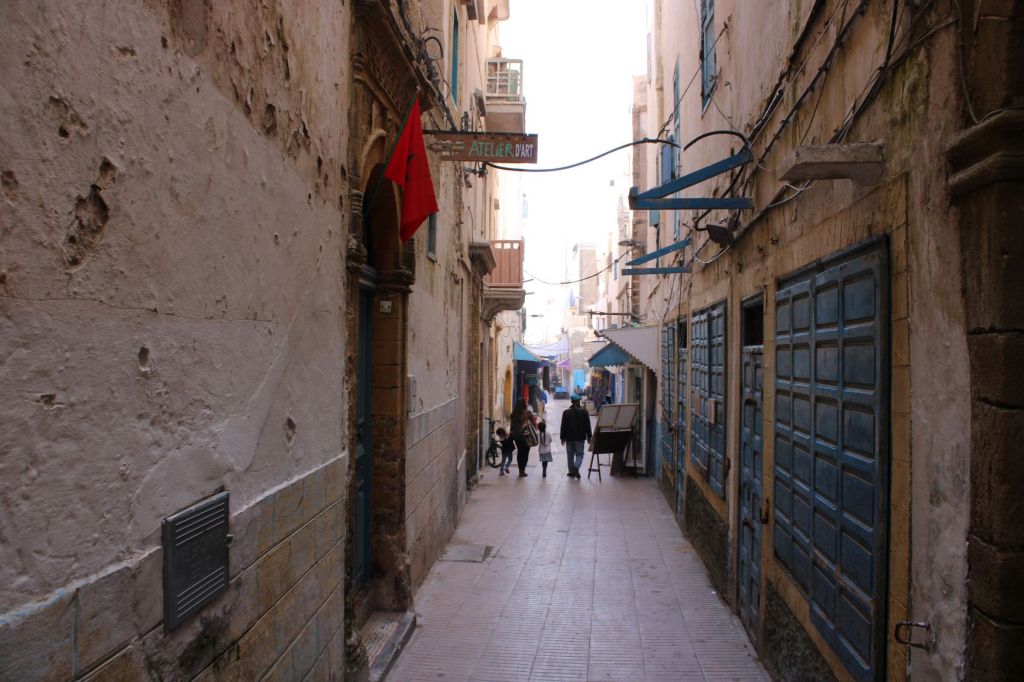
The streets of the Medina are still almost empty and the small shops have not yet opened their heavy wooden curtains.
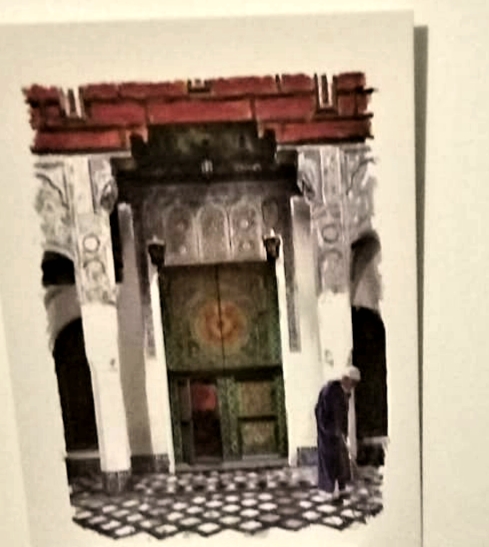
A man comes out on the threshold of a door and seems to hide from the gaze of the curious few. Bad luck, Lucie, who likes to wander in the early hours in the still peaceful Medina, has spotted him and finds his attitude intriguing, even bizarre.
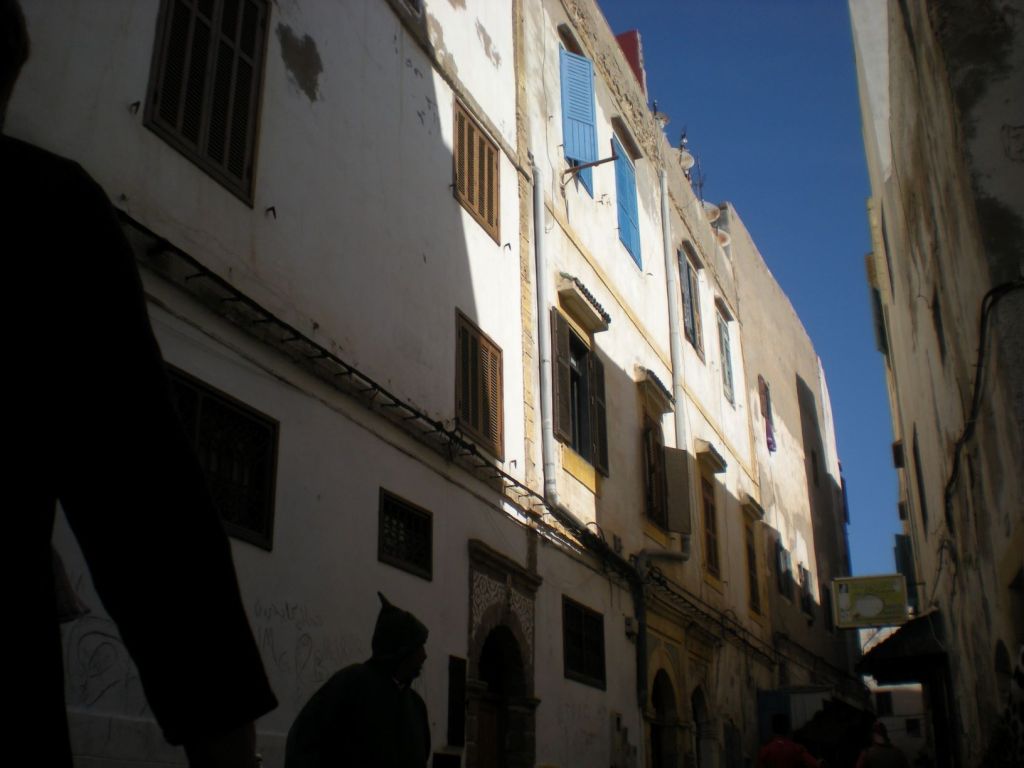
To have fun, she decides to follow him discreetly from afar. The man with the dark burnou is on the move and quickly makes his way through the alleys. He doesn’t see that he is being followed and that’s good.

The man with the dark burnou is now heading towards Qaraouyine street, on the side of the synagogue district. But what can he be doing at this early hour of the morning in a neighbourhood where hardly a soul has been alive for some years now? Perhaps he has noticed that he is being followed and is trying to sow the French, who are extremely discreet.

Now he takes Mellah Street, passes under the arcades, where the street becomes very narrow and it is very dark.
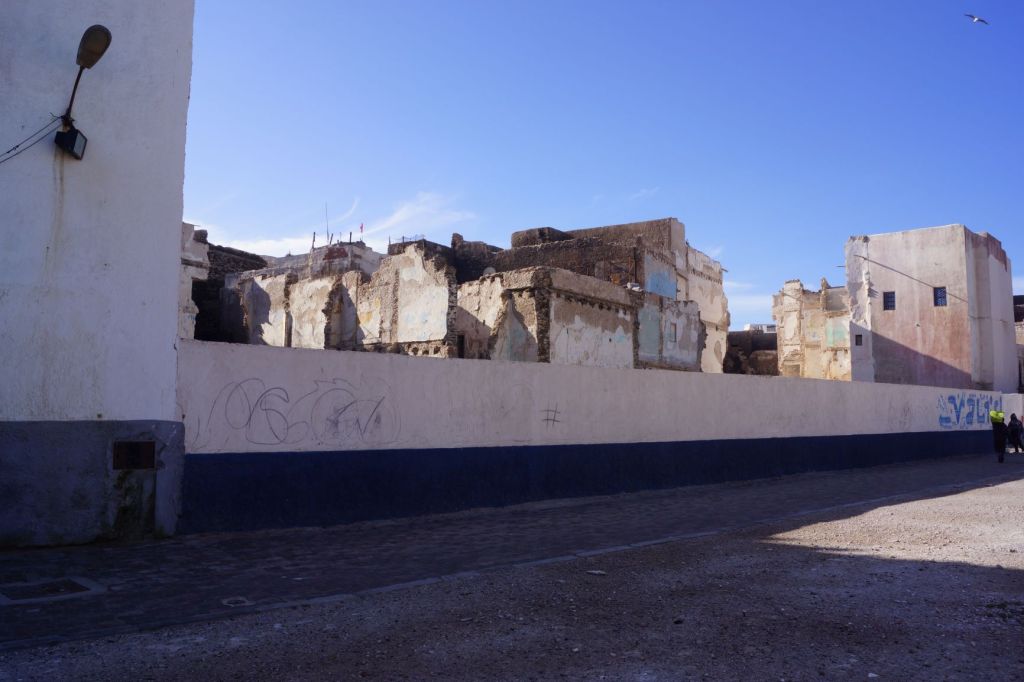
It then continues in the rue Mellah, the main street of this former Jewish district, almost abandoned by men since Moroccans of the Jewish faith deserted the beautiful Mogador in the fifties/sixties.
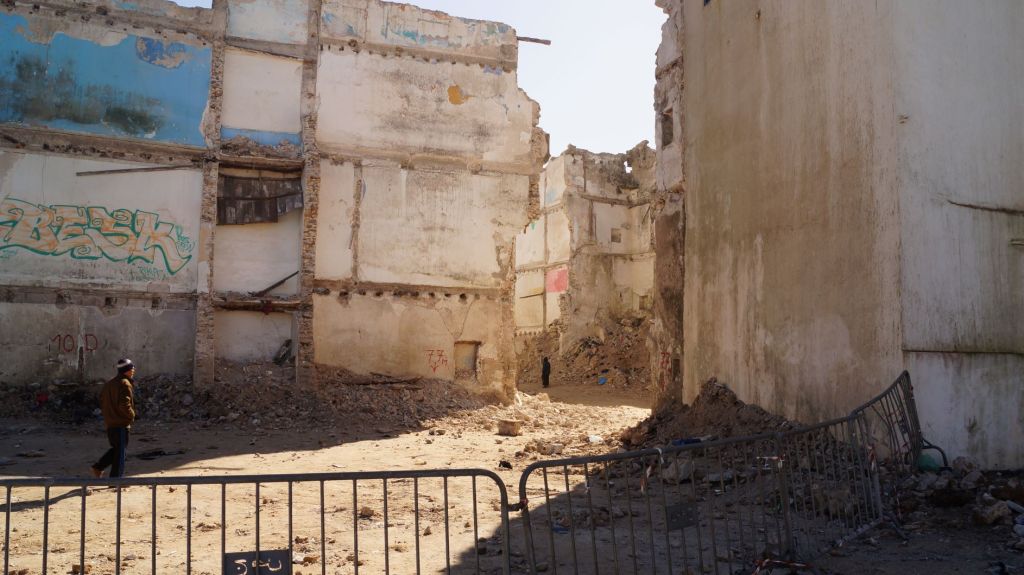
The man with the burnou finally slips into an abandoned building site. Lucie lets another man slip in between her and the suspect so as not to be spotted.
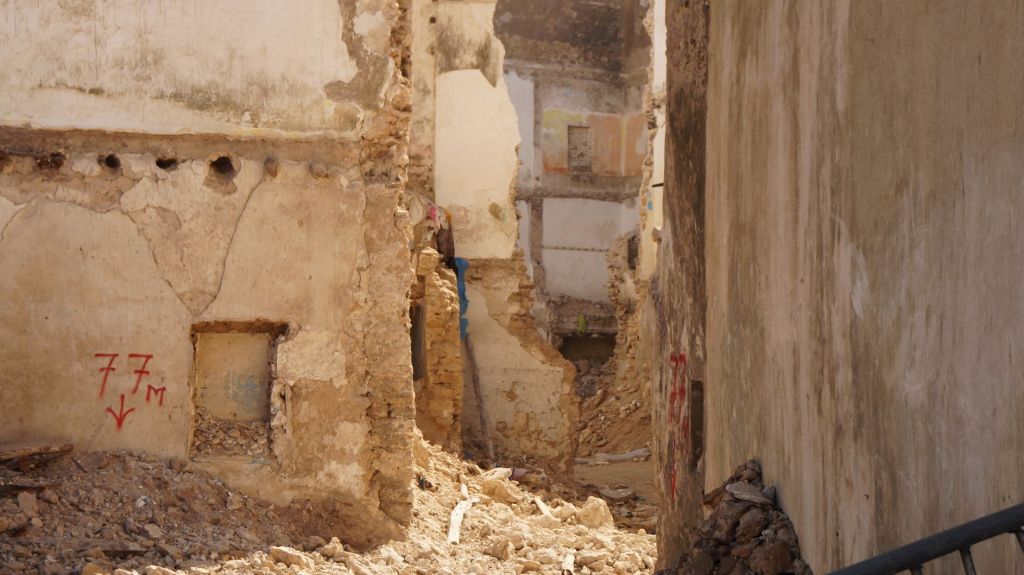
At the same time, she discovers the remains of life revealed in the open air. Here, she notices a condemned door leading where? There, she distinguishes clothes abandoned in a cupboard destroyed by the years. Little girl’s dresses, young child’s trousers. What has become of the children who wore these clothes? Probably old today, they still remember this neighbourhood, close to the Baab Doukala, where they spent their early years?

Did they ever come back to roam the alleys of the old Medina where, as children, they had to run and undertake crazy games of hide-and-seek?
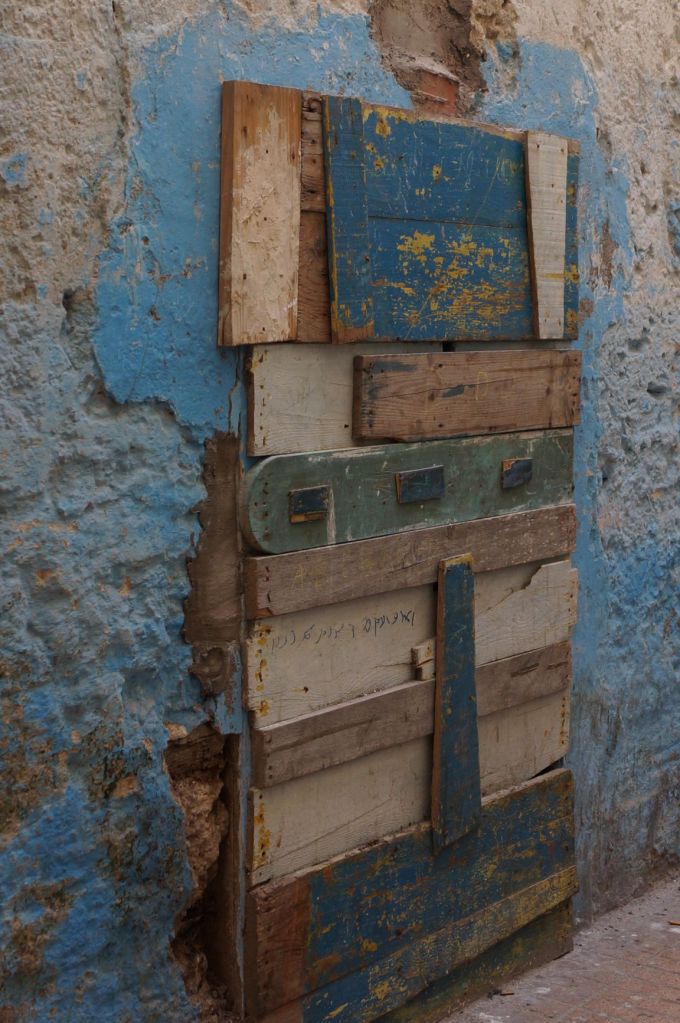
But let’s get back to our man. He suddenly disappeared. Damn it! Lucie got distracted and now she’s lost sight of him. Maybe he rushed in behind that little door made of junk and junk?
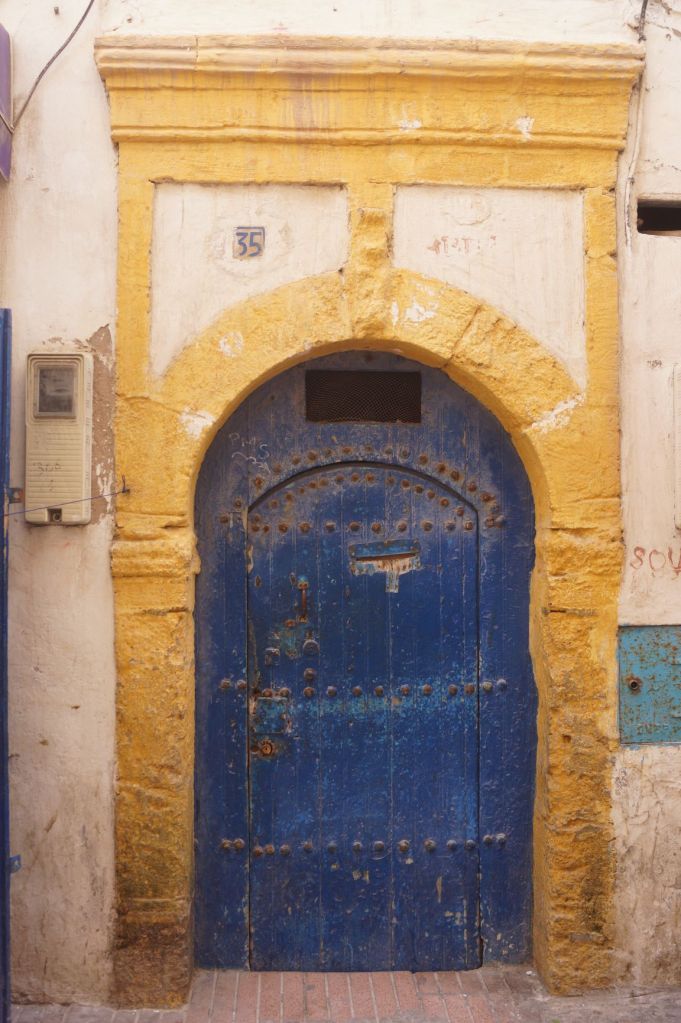
Unless he is entering at number 35? Lucie thought she heard a door creaking. She is hiding in the corner of the synagogue, her heart is now pounding and she feels that it resounds throughout the quiet neighbourhood.
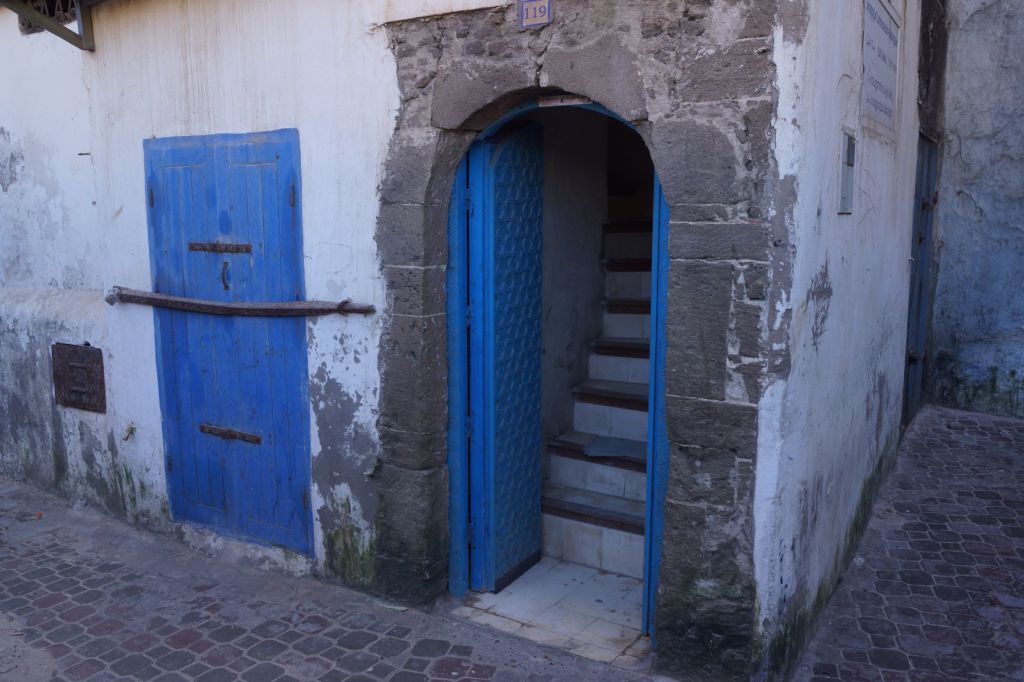
Suddenly, she hears a rattle, like that of a bunch of keys being shaken out of a pocket. She turns around and discovers the man a few metres behind her. Busy looking for his keys, he hasn’t even seen her. Or is he faking it? He opens the door at number 119. As he starts to climb the stone staircase, Lucie sees him take a small bag out of his pocket. On closer inspection, the bag is full of olives. And suddenly part of the mystery is revealed. She recognizes the man she has been following since dawn. In the distance, she hears the muezzin, it is time for prayer. The suspect then heads towards the mosque near the Baab Doukala. No doubt, it is the old olive merchant on the Avenue Mohamed Zerktouni. The one who is set up just around the corner from the vegetable market. The one that Lucie likes and who has such a smile, when he stands in her stall, that she can’t resist the urge to buy something from him every time she passes in front of his stall.
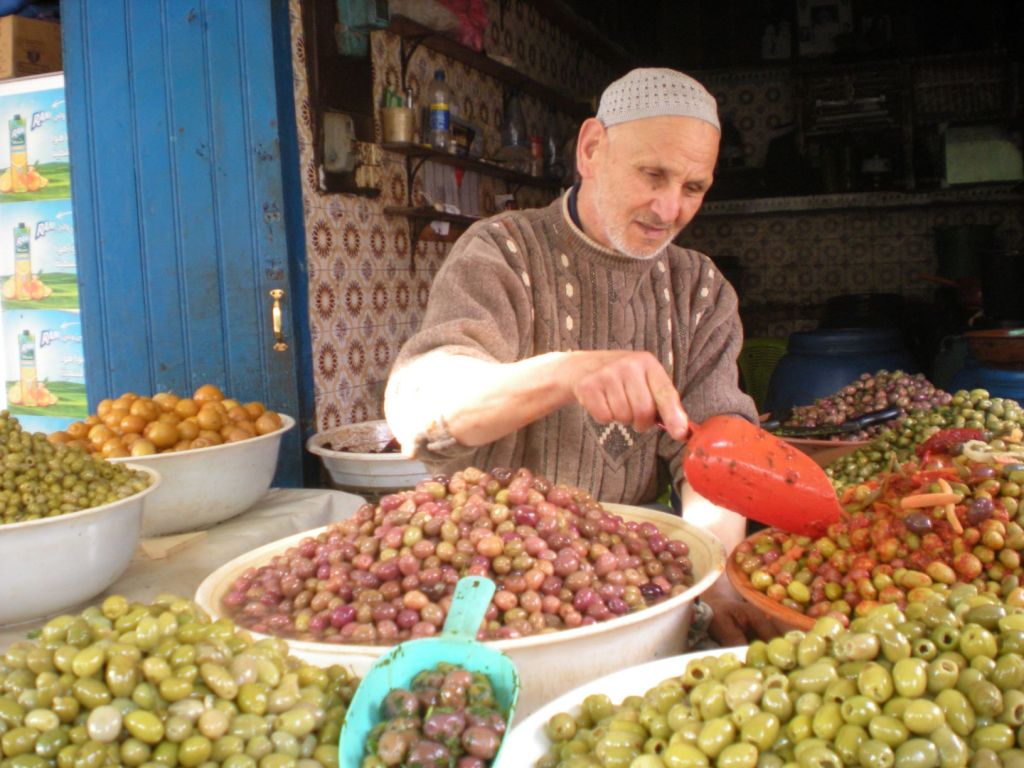
But then, if it’s really him. What is he doing at such an early hour of the morning in this neighbourhood far from his home and his shop? The mystery, which she thought for a moment she had cleared up, thickens. Why is he playing hooky before coming to the shop, pretending to hide? Just ten minutes after entering 119, a small smile comes to the edge of her lips. He closes the heavy door with his wrought iron key ring. For Lucie, there is only one way left to try to solve the mystery: to talk about it with her friend Khadidja. She is always up to date with all the gossip in the Medina and can tell you about it for hours without losing her breath.
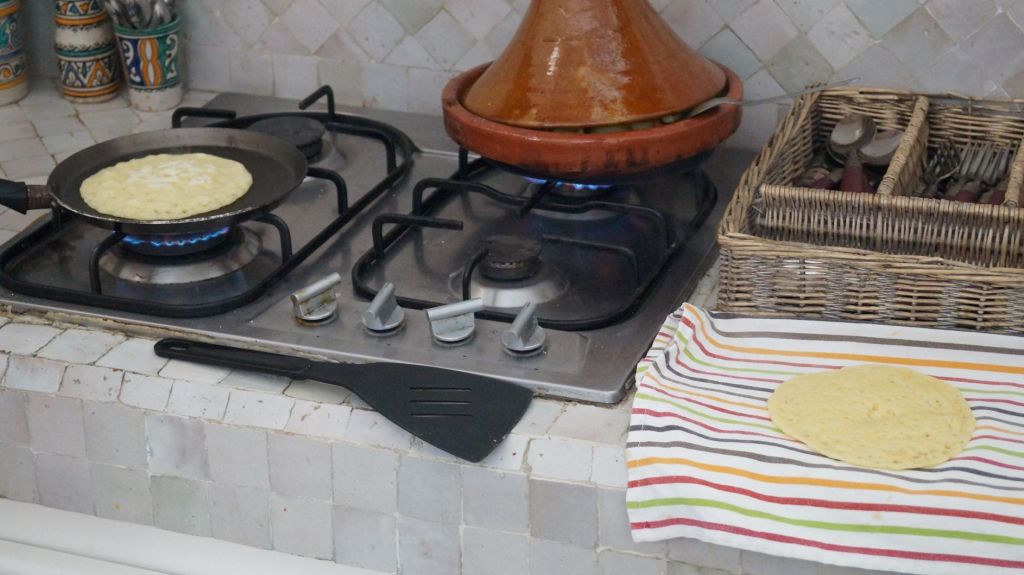
Over a cup of tea and delicious mille-trous pancakes, Lucie learns that there is only one Sephardic resident left in Essaouira and she lives at 119 rue du Mellah. As Khadidja already told her, in the 50s and 60s, Moroccan children, whether Jewish or Muslim, all played together in the streets of the Medina. The olive merchant’s wife was the best friend of the woman who still lives in the Mellah district today. She asked her husband, the little olive merchant, as she was drawing her last breath, to look after her friend and to bring her every day a small bag of picholines, a variety of olives that they tasted together, in their young years, on their way to school.
Par Nathalie
Translated with http://www.DeepL.com/Translator (free version)
 Rencontres et découvertes, ici et ailleurs