
If you pass through the Kathmandu Valley, you should not miss the fabulous Bhaktapur, and this for many reasons, the flavors of which we hope you will taste throughout this post. Even if this royal city suffered a lot from the earthquake of 2015, it remains an architectural treasure. This medieval pearl, formerly nicknamed Bhadgaon – the village of rice – owes this name to the cultivation of rice practiced throughout the surrounding plain. This too is worth a look but that will be part of another post.
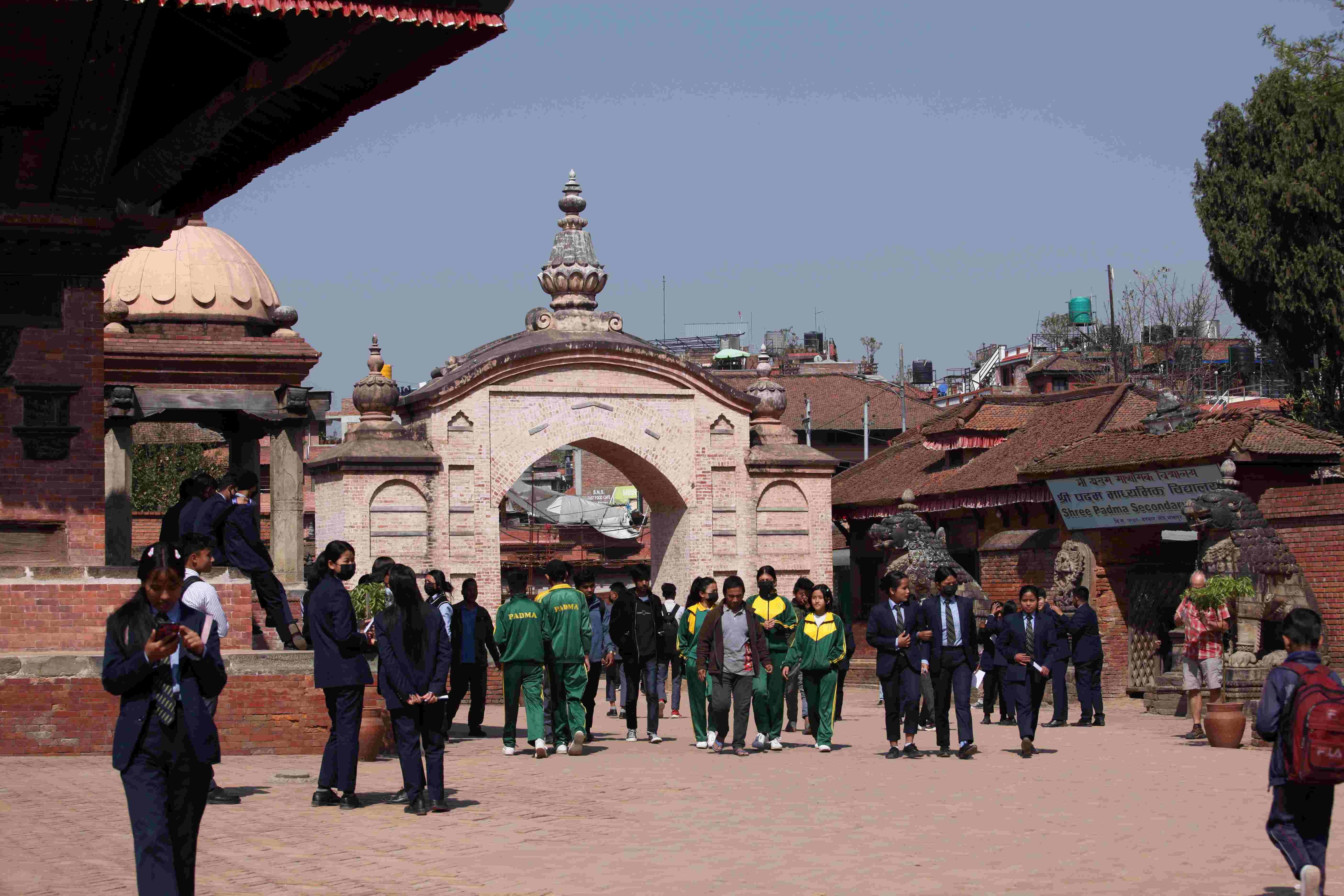
As soon as we pass through the door, we are touched to discover that the old quarters are full of life, as they are still inhabited and traveled by young people who are educated in the various schools located in the very heart of the city. Nothing to do with the medieval quarters of our European cities which sometimes end up looking like Disney-type spaces for tourists looking for curiosities and trinkets to buy.
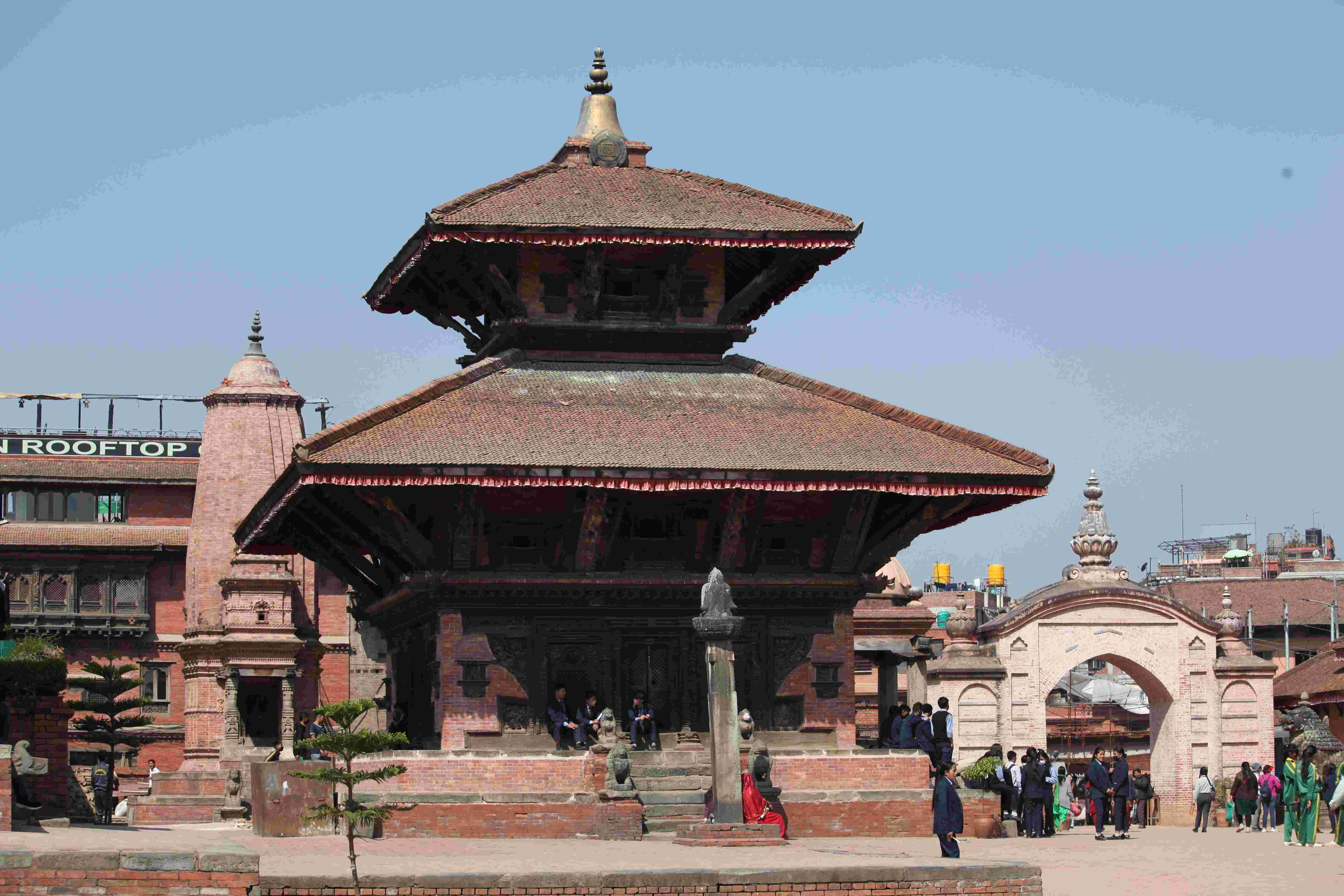
Durbar Square wakes up early in the morning, resonating with the multitude of footsteps of its inhabitants and its schoolchildren, happy as everywhere in the world to meet with each other to discuss together.
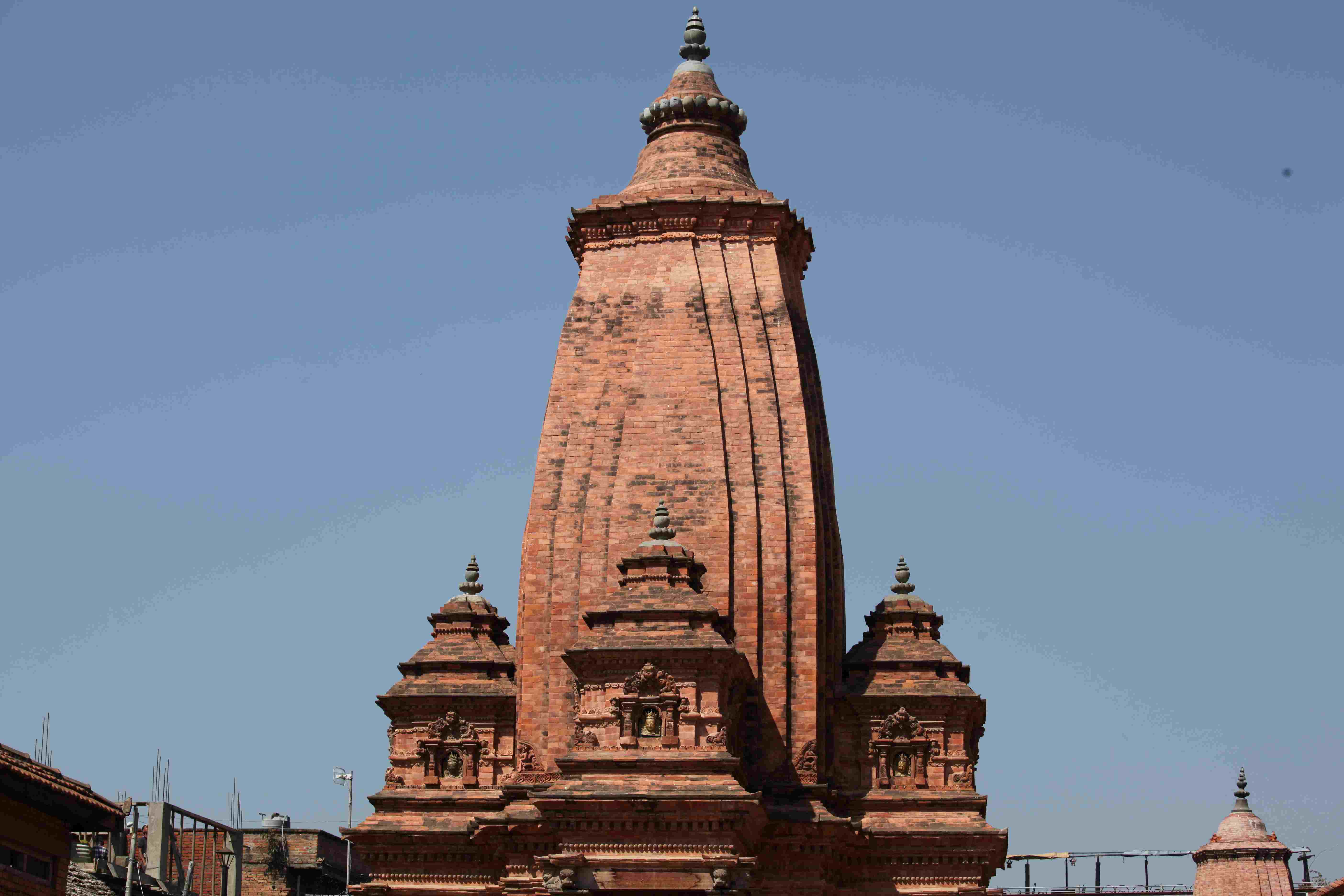
Wherever we look, temples. We are surrounded by temples with various architectures. There are so many that our eyes don’t know where to start looking. Fortunately, Buddhiman is there to help us find our bearings in time and space and to make sense of this environment. As always, our guide invites us to make this visit a meditative time by taking the time, without haste. And to start, it is towards the temple of Shiva that we turn, very small in front of the slender majesty of the construction.
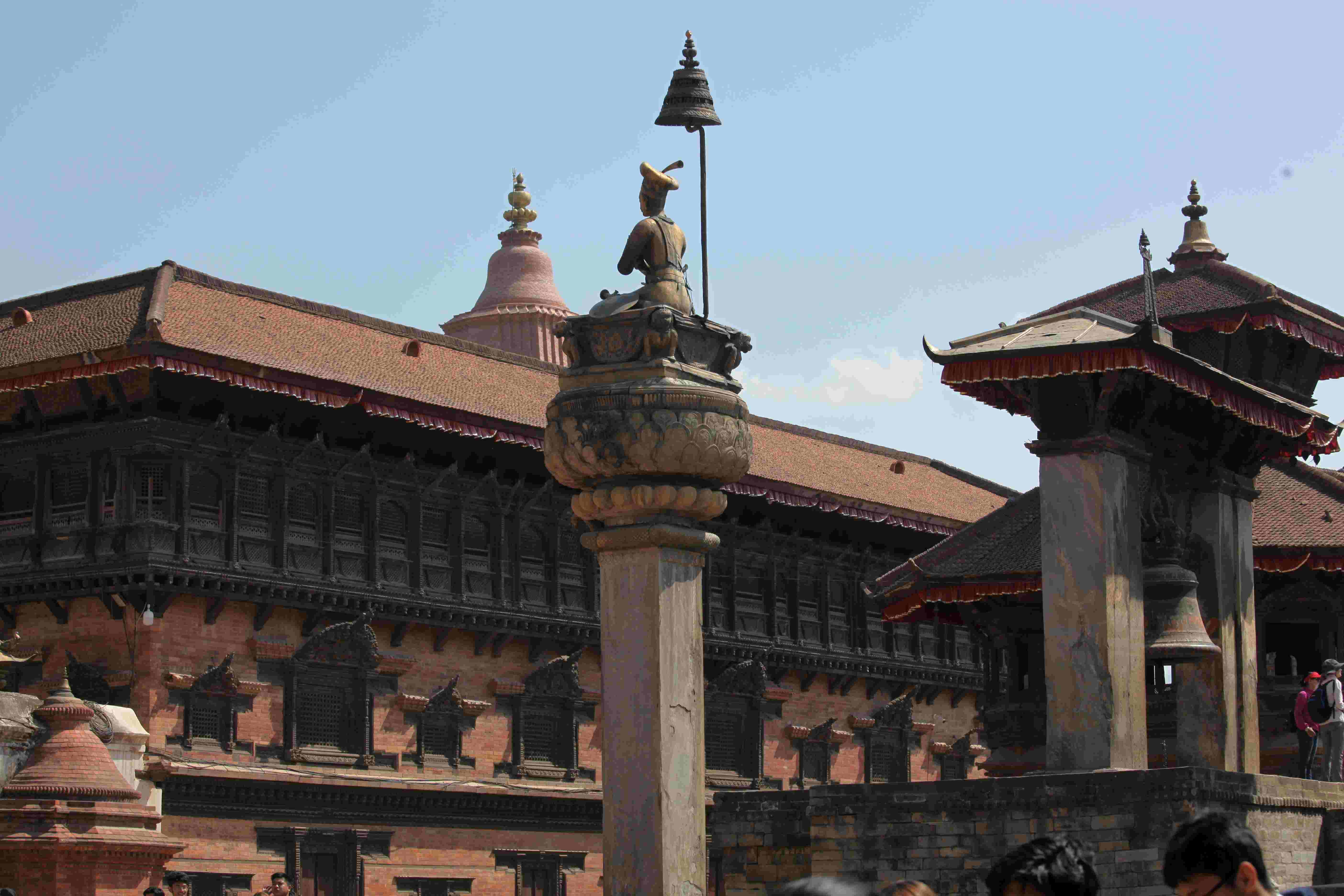
Then, we slowly turn towards the monolith on which King Bhupatindra is seated, honoring Taleju, the goddess of Bhaktapur.

In the same direction, a little further, we discover the entrance to the national art museum with its impressive guardians.
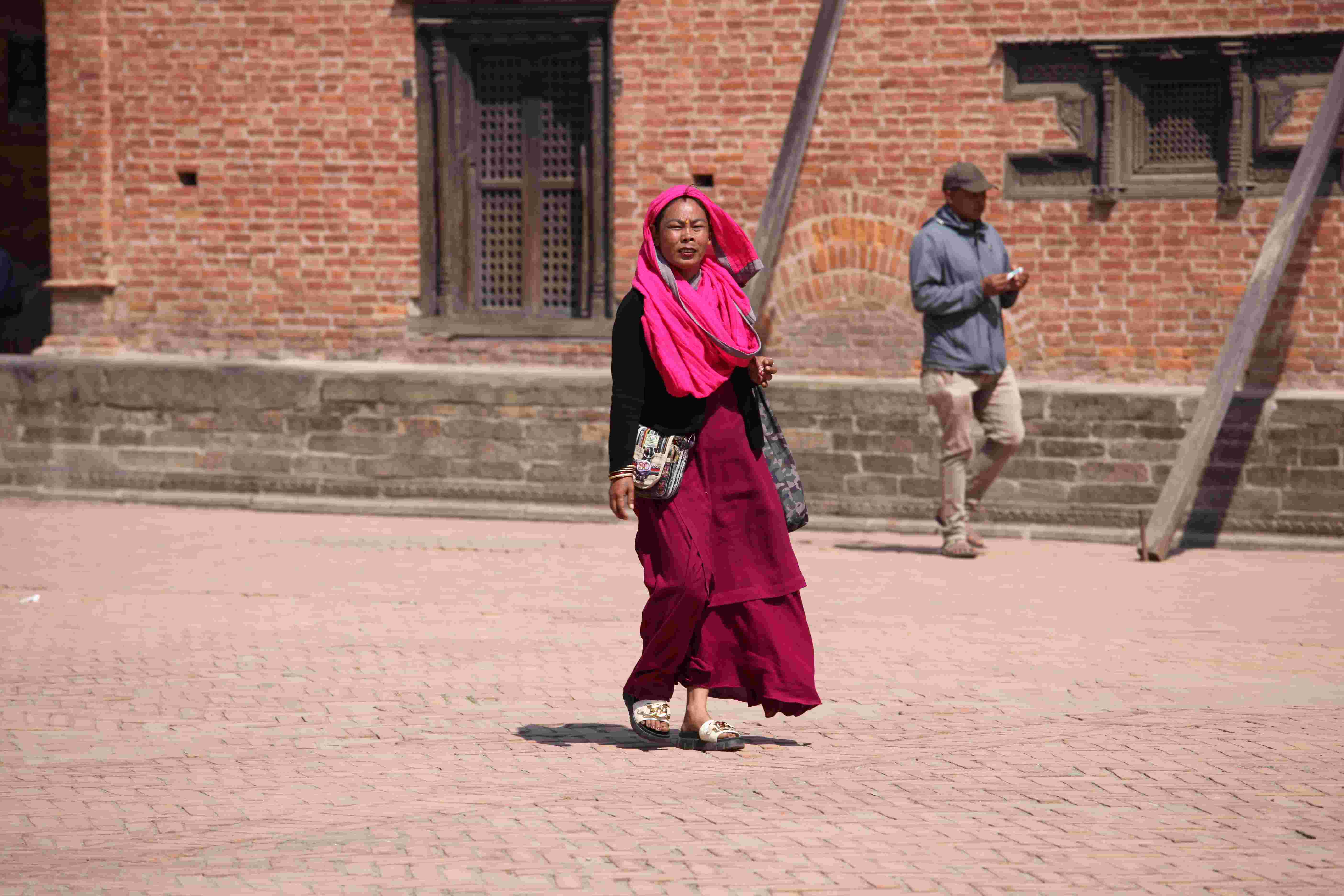
But, as already said, Bhaktapur is not just an architectural jewel of the past, because here is our first encounter with a worthy representative of the Newar people.
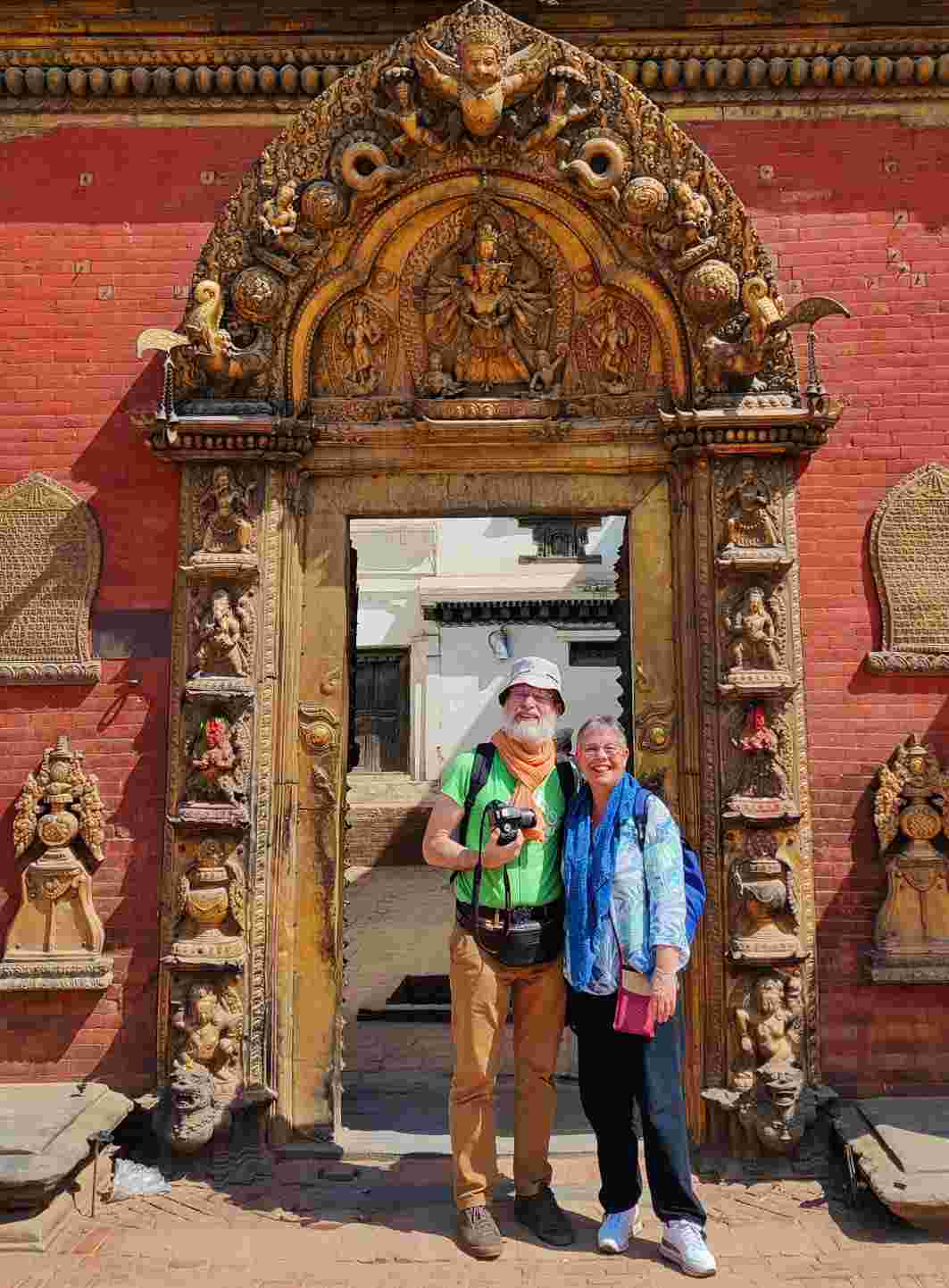
Little playful pose in front of the Golden Gate which leads to the Temple of Taleju…
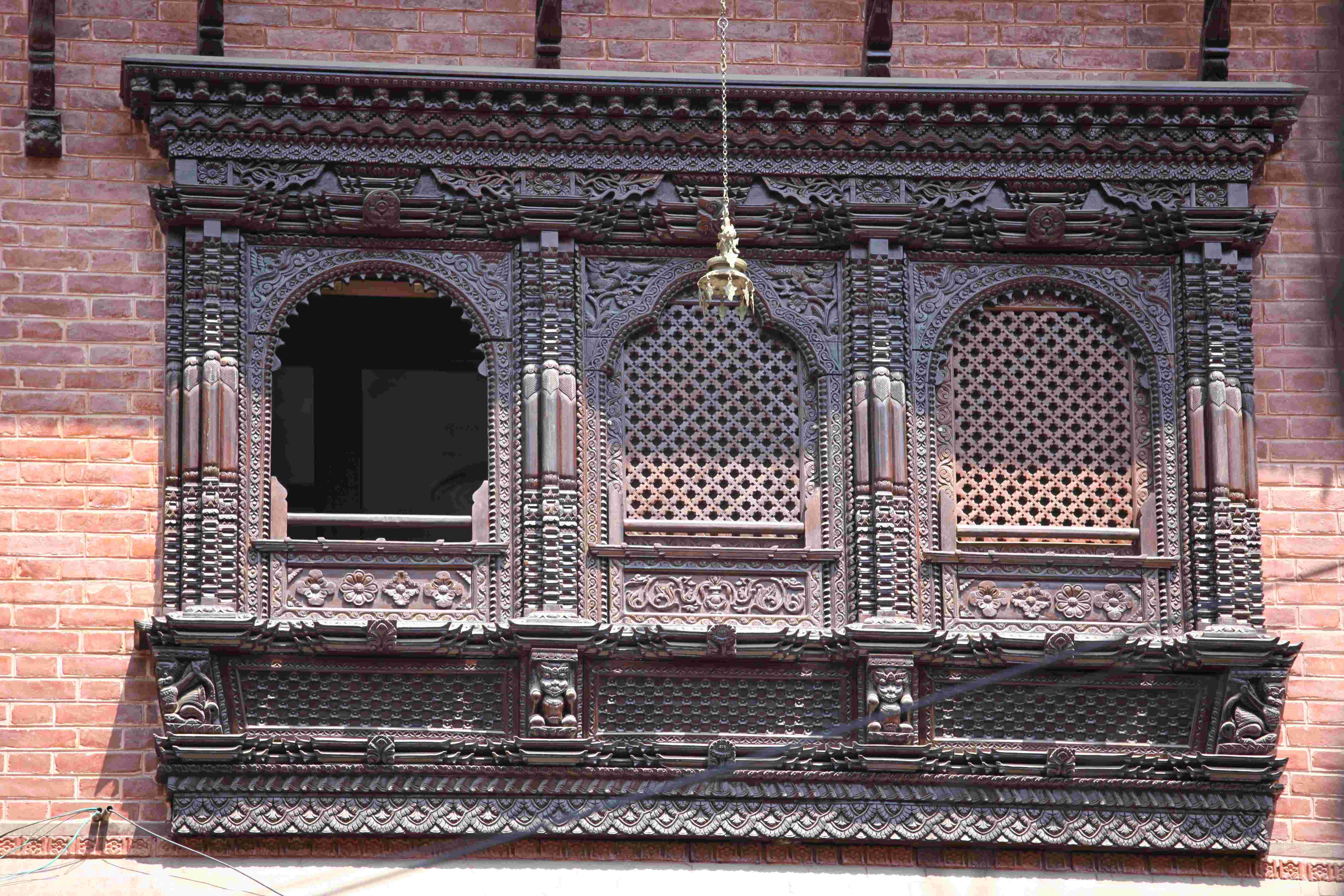
…located just against the Palace with 55 windows, and not just any window, we let you judge for yourself.

Nous éloignant du Palais et des Temples, nous arrivons dans le quartier des potiers, toujours très actif.
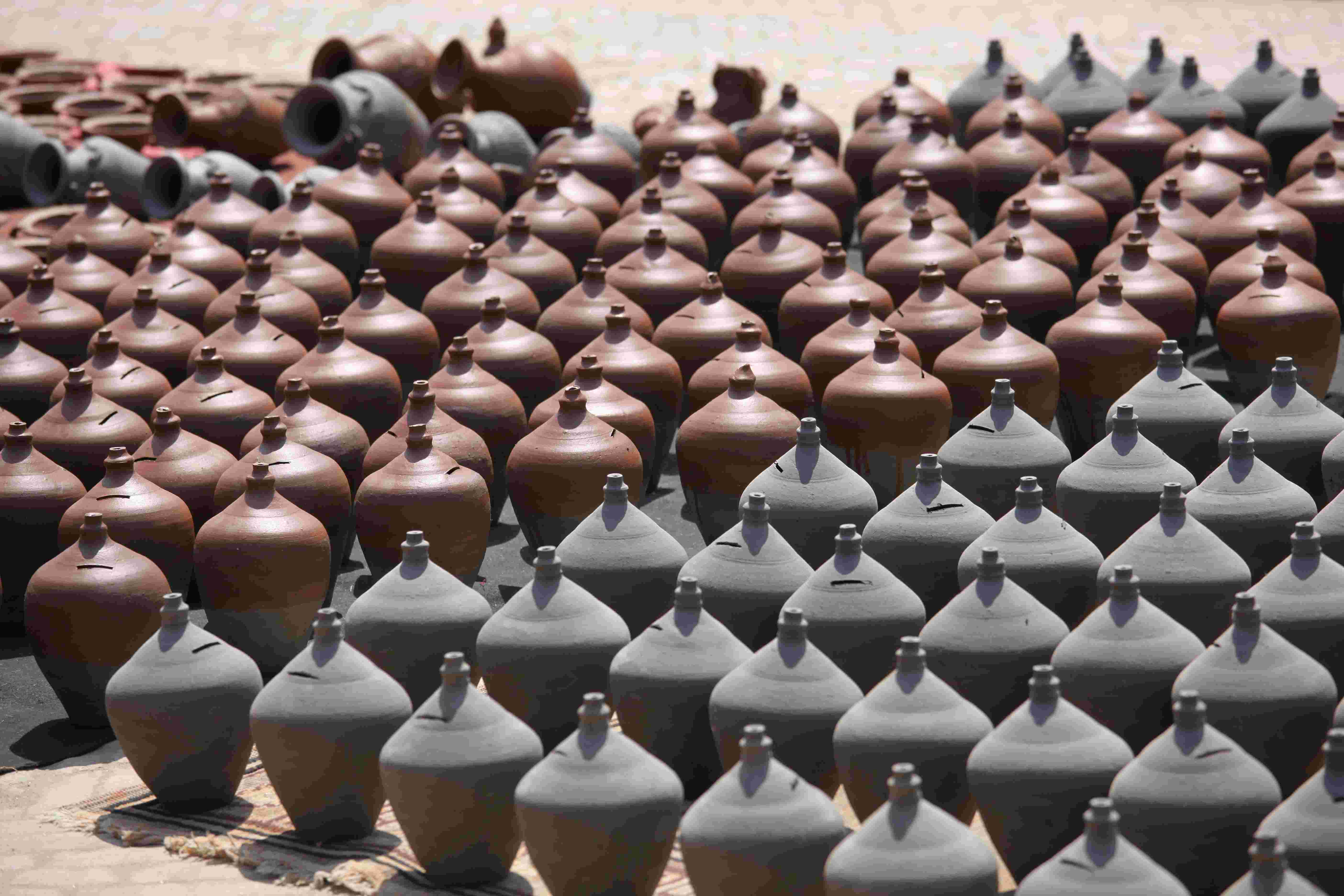
We are impressed with the production of piggy banks.
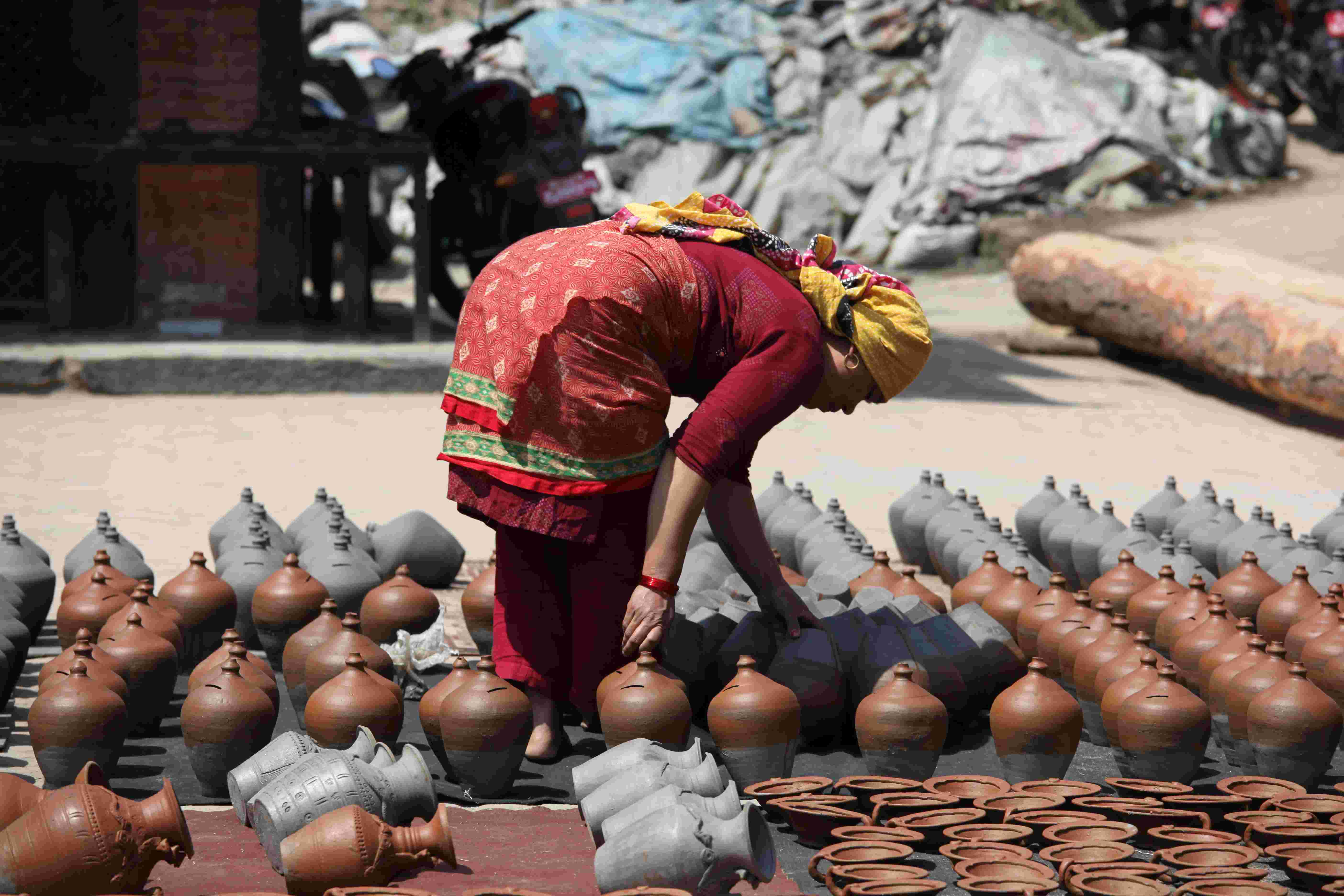
The work of the potters’ wives consists in ensuring that the jugs, piggy banks and yoghurt pots are evenly dried before they are put in the oven.
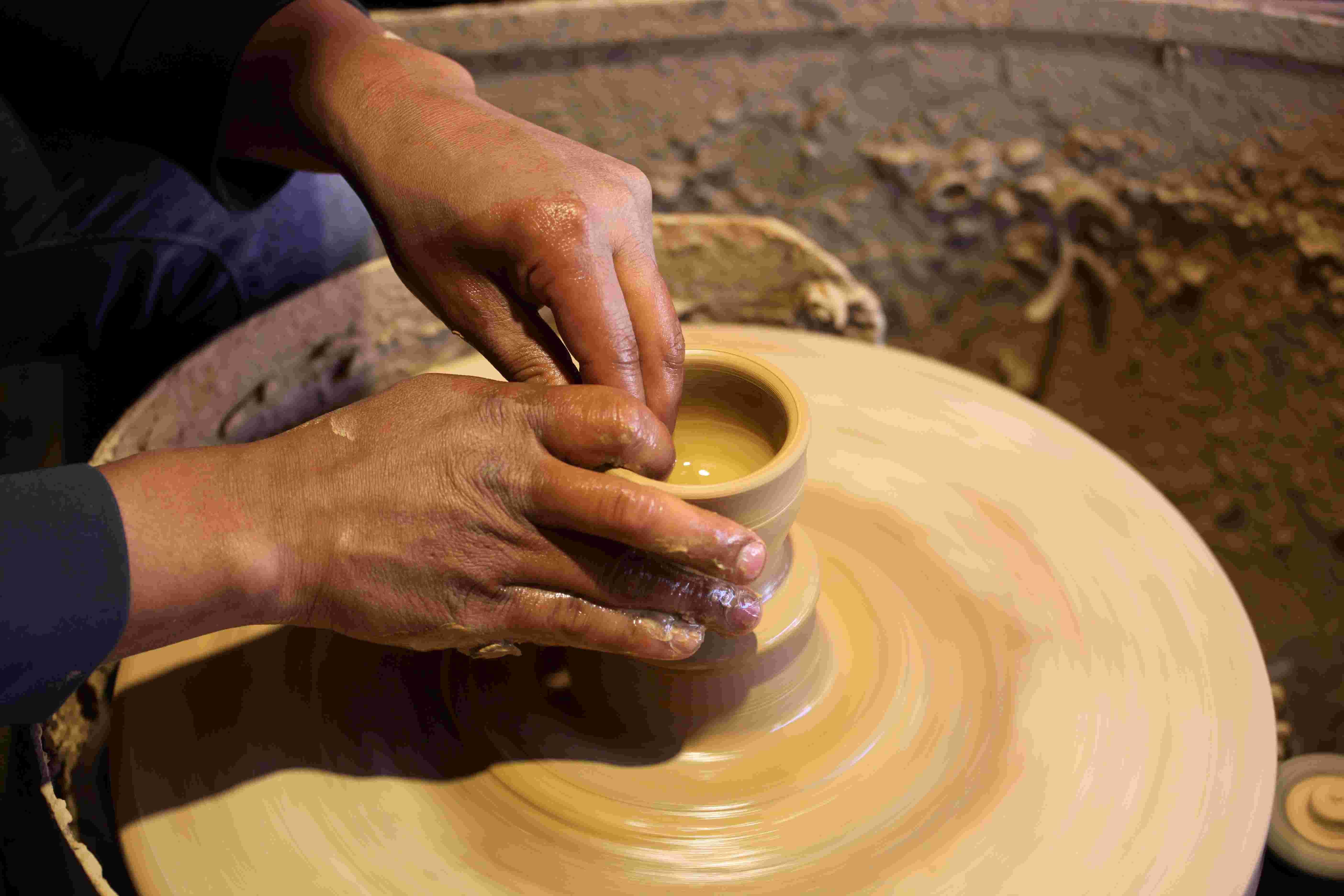
Not far from there, a friend of Buddhiman, runs his workshop and his shop. This is an opportunity to get to know each other better and see expert hands at work. We take the opportunity to do some small shopping and, oh surprise, we will each be offered a small pottery Buddha.
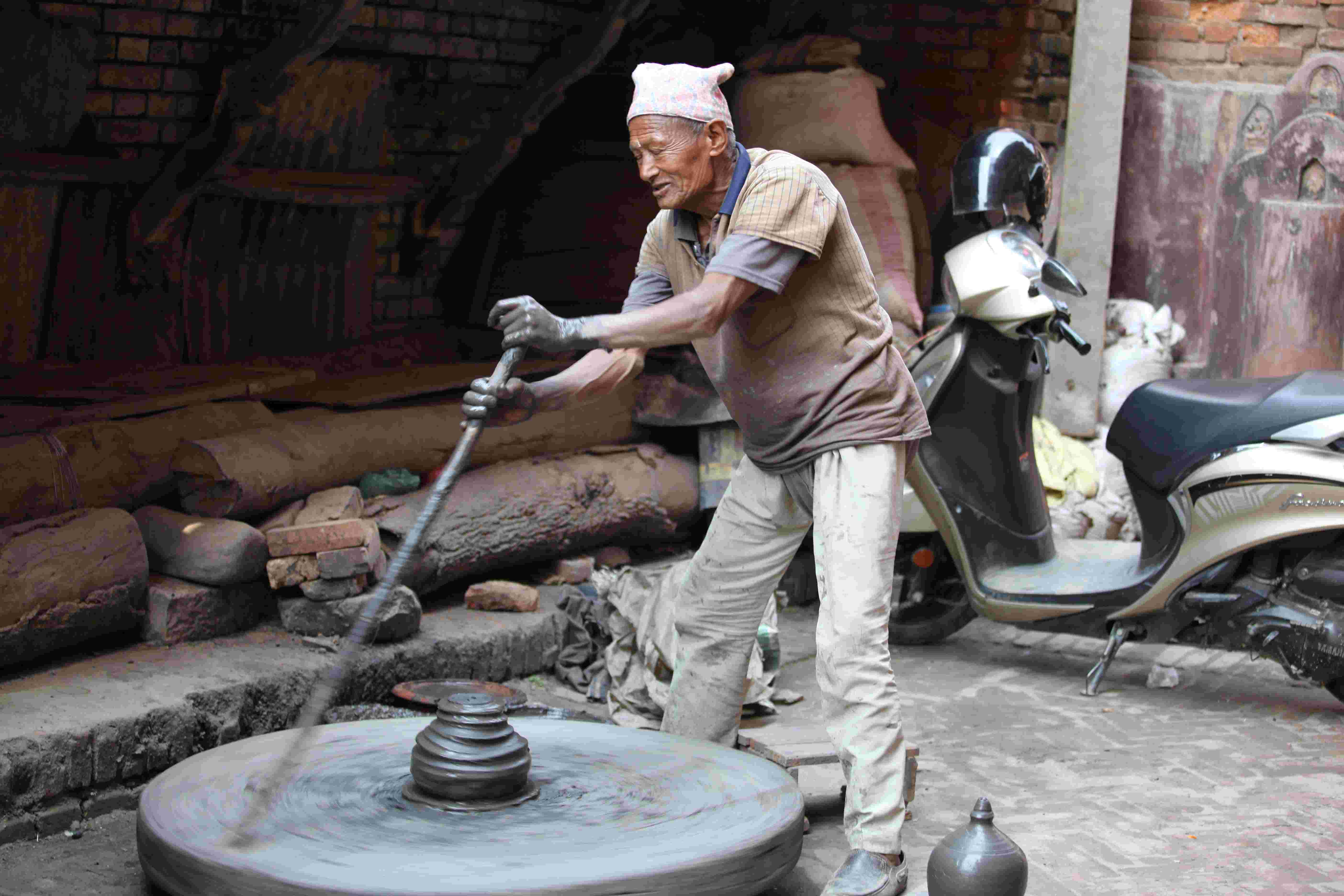
Going up an alley to go to Place Taumadhi, we meet elders still in full activity.

Working on a stone lathe is really very physical, but it has the advantage of keeping you in great shape.
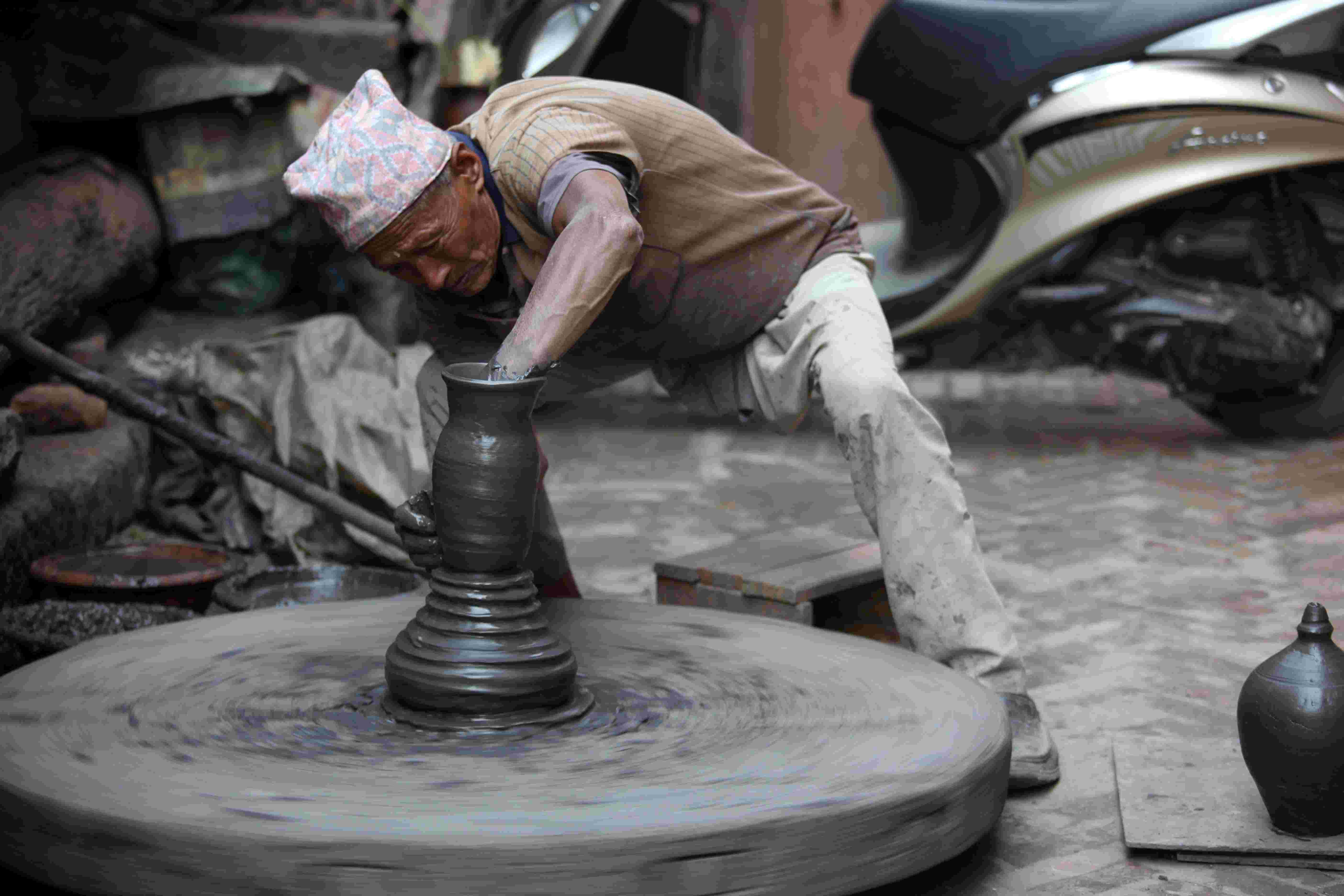
We are captivated by the care that this potter gives to each of his pieces.
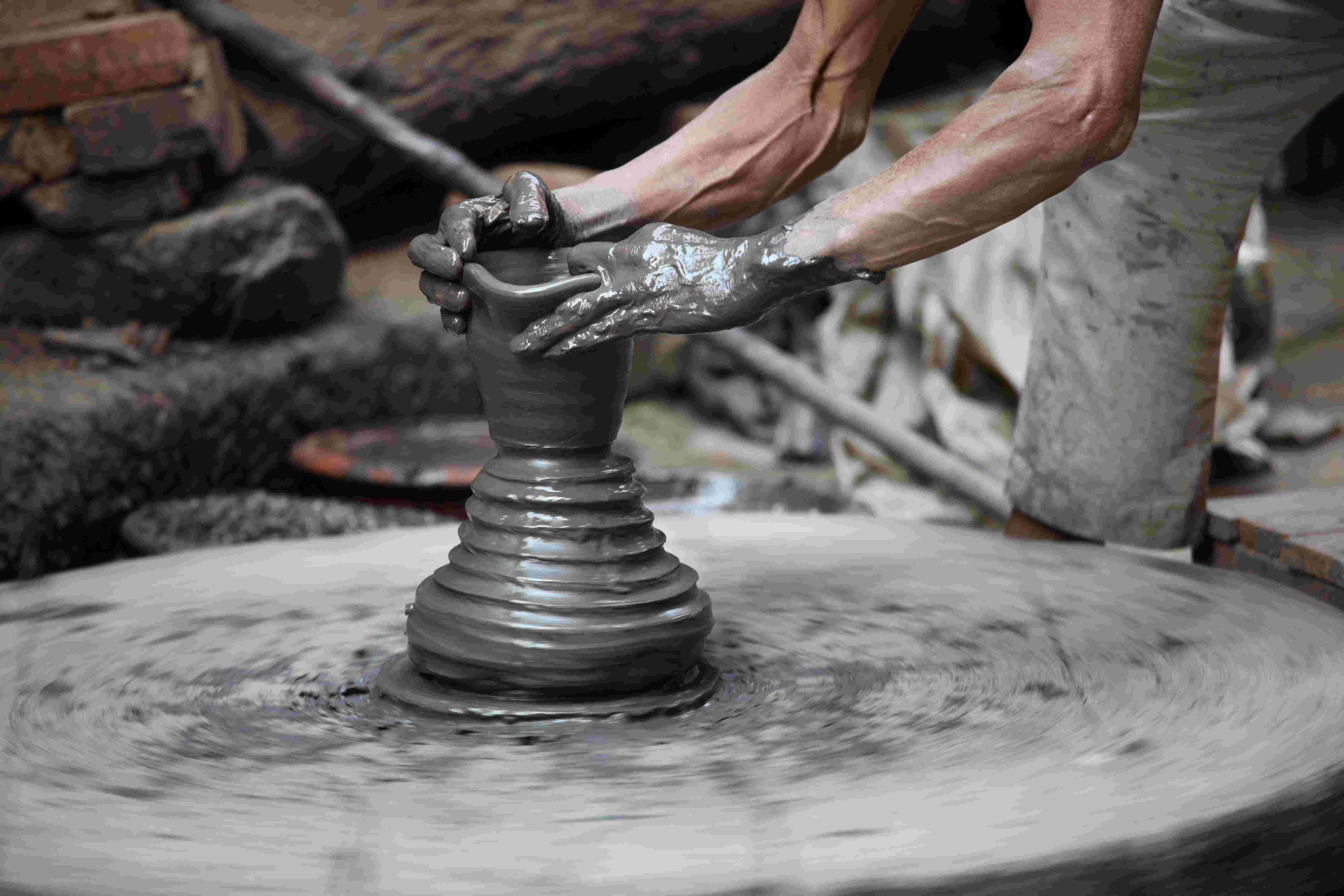
Under the expert fingers, we see the material taking shape, and becoming vase, tirelessly.
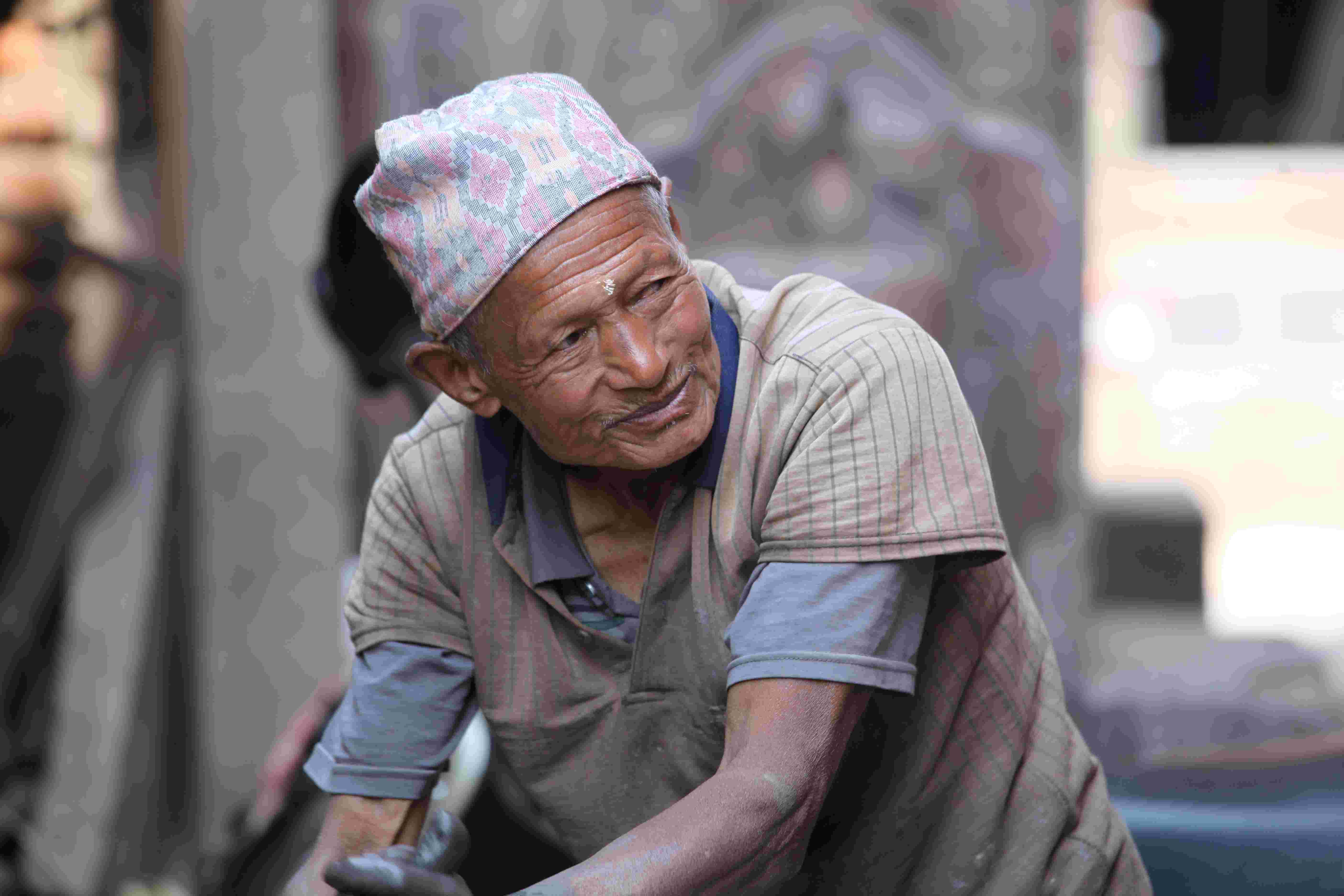
But suddenly, the man glances to the side…

…here is his lifelong companion who has just appeared and says a few words to him while laughing.

We immediately feel in the exchange of looks, years of complicity, that nothing, not even this grueling work, can destroy.

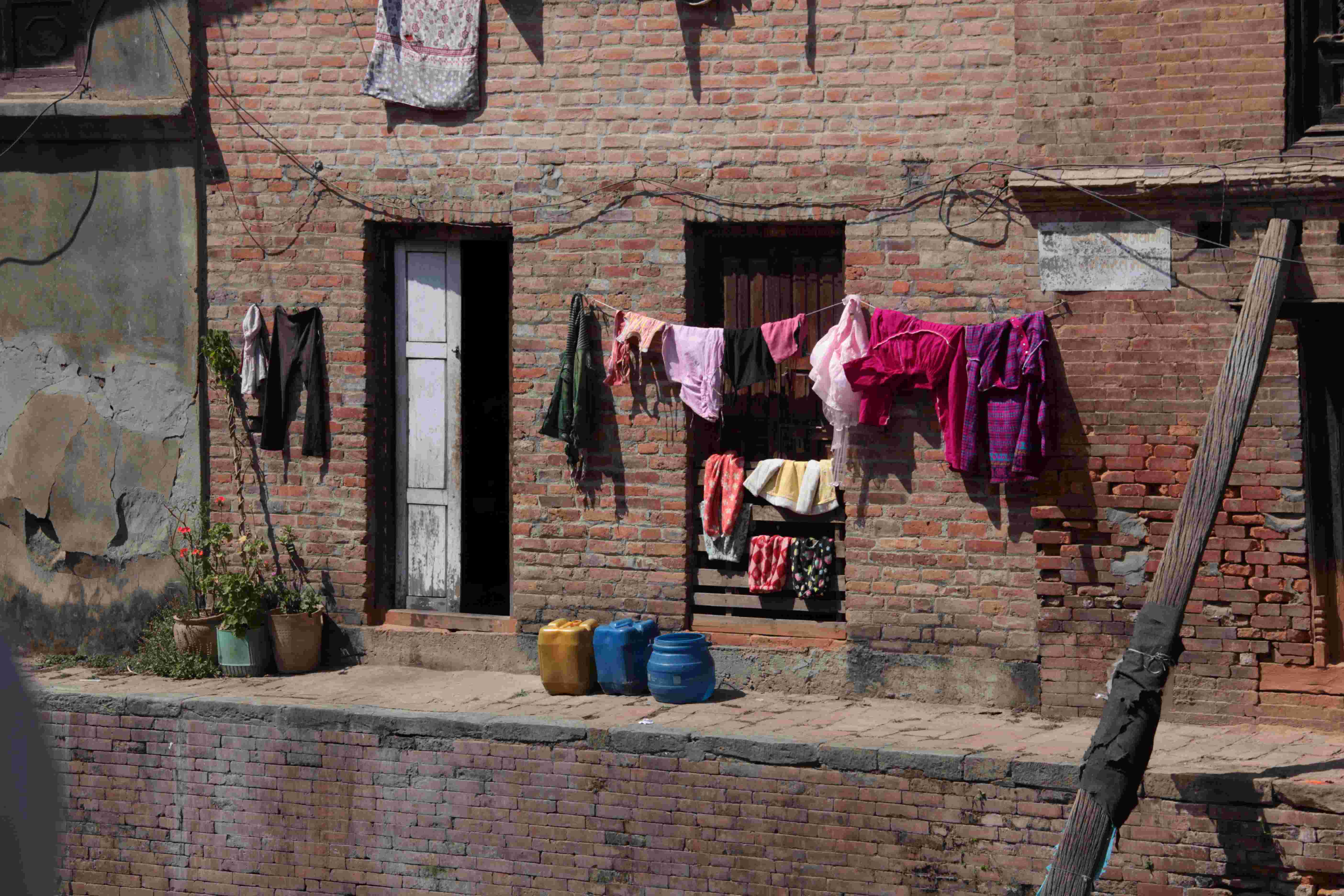
Let’s go a little further down the alley. It’s time to do the laundry.

A little further ahead, it’s time for a meditation for some.
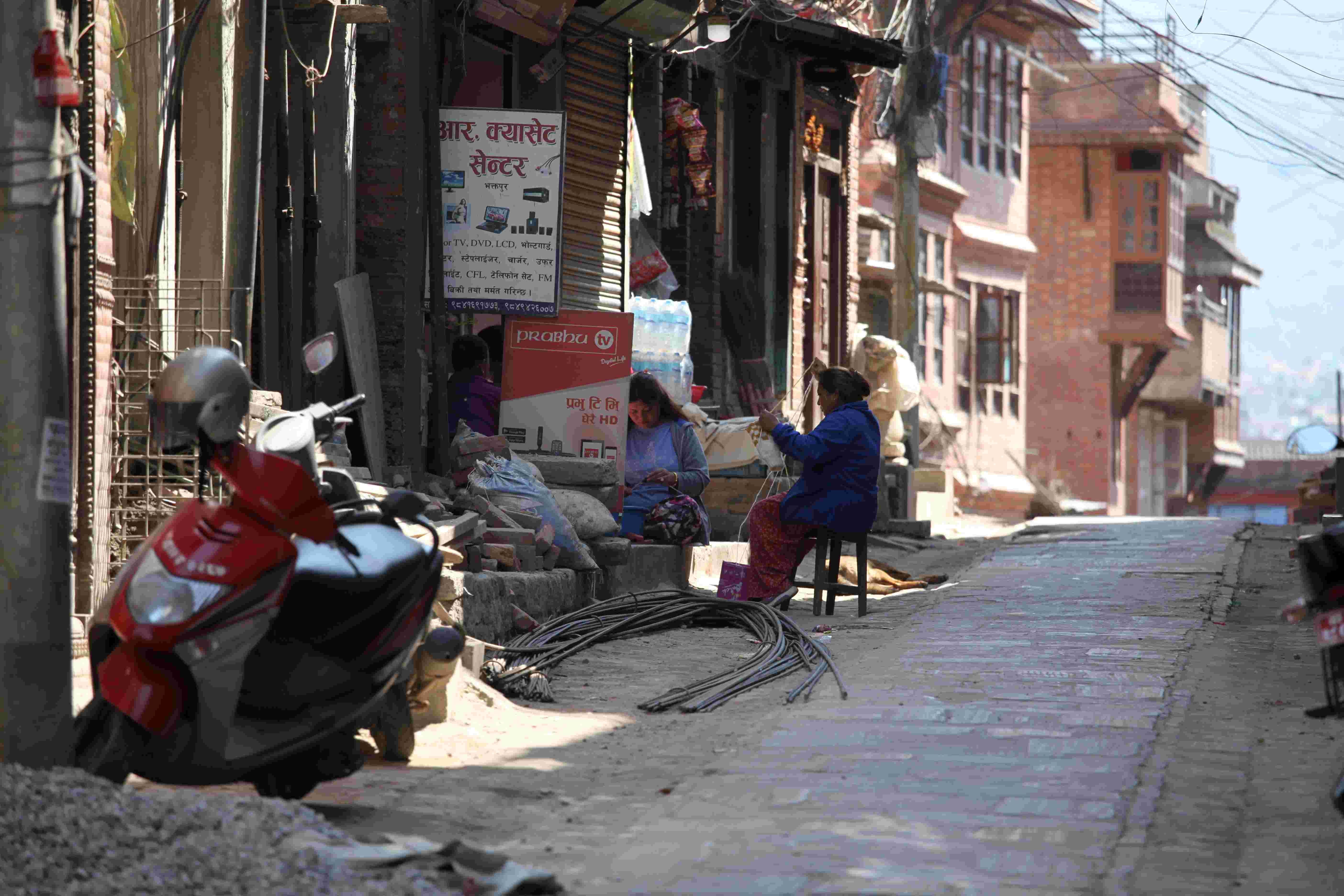
The walk in town continues, allowing us to see the different activities of the Newari who live here: knitting, spinning wool, weaving….
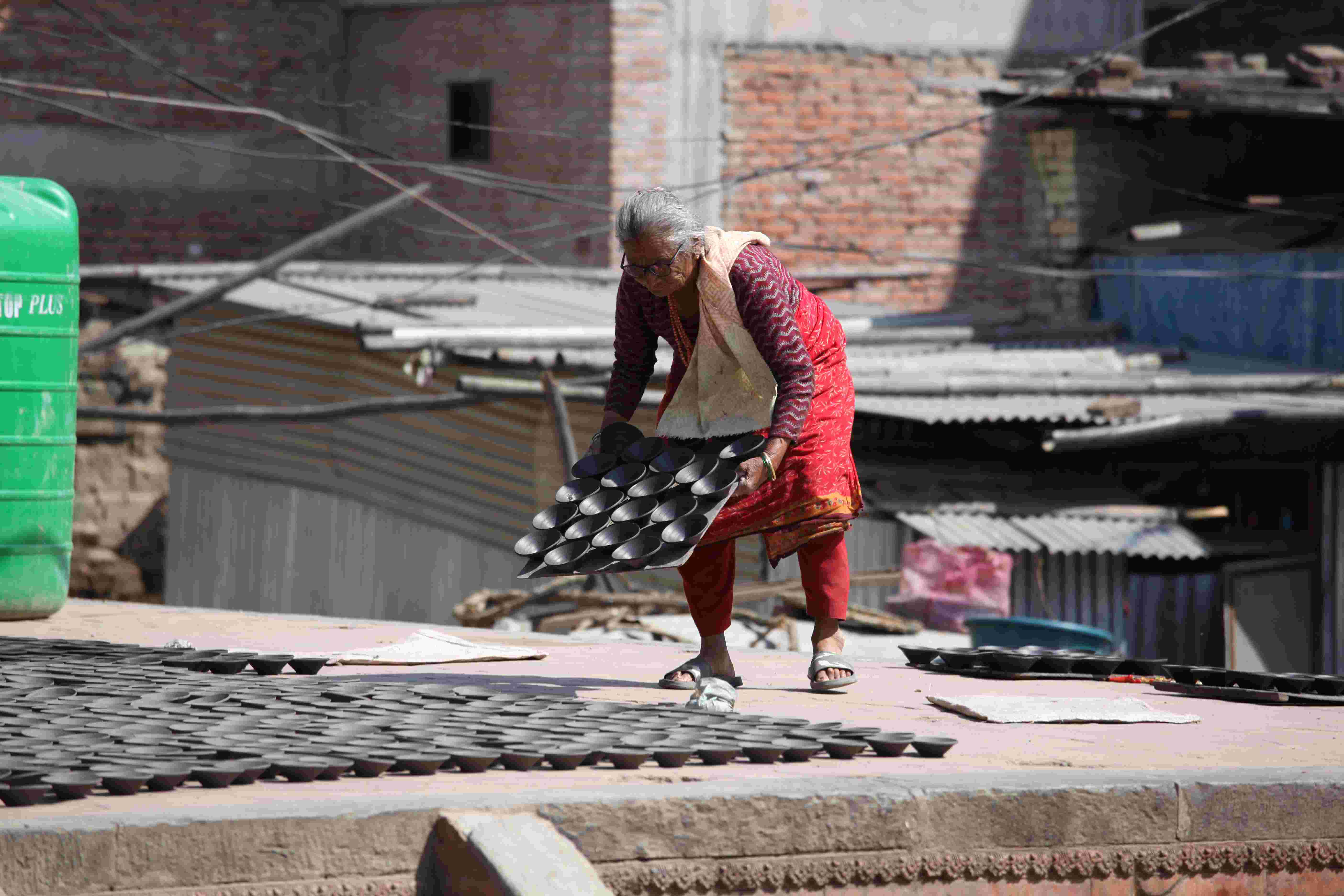
On a roof, another potter’s wife at work. What dexterity to stir up all this raw earth without spilling a single one of these yoghurt pots.
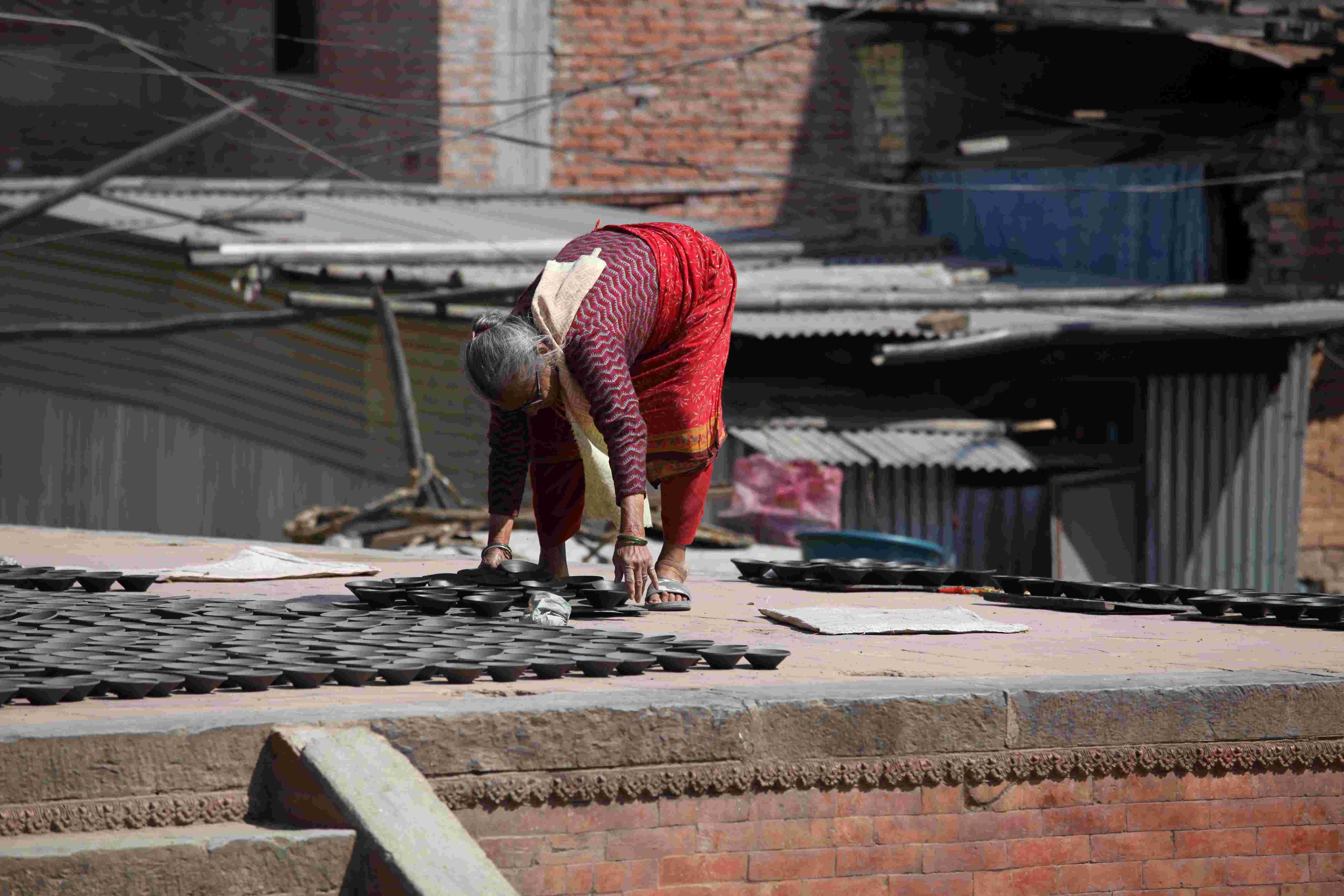
Definitely a yogi’s flexibility…

And here we go again with a new, well-laden set.

Here women fill pottery kilns. They diligently pile up a multitude of pottery there, because the kiln must be as complete as possible, without anything breaking.

Another activity, here a mushroom merchant.

And on all faces, the smile. Without a doubt, despite the earthquakes, despite the turpitudes of life, despite the poverty, there is happiness in living here. There is something in this country that allows you to overcome difficulties, to feel loved, to remain serene…
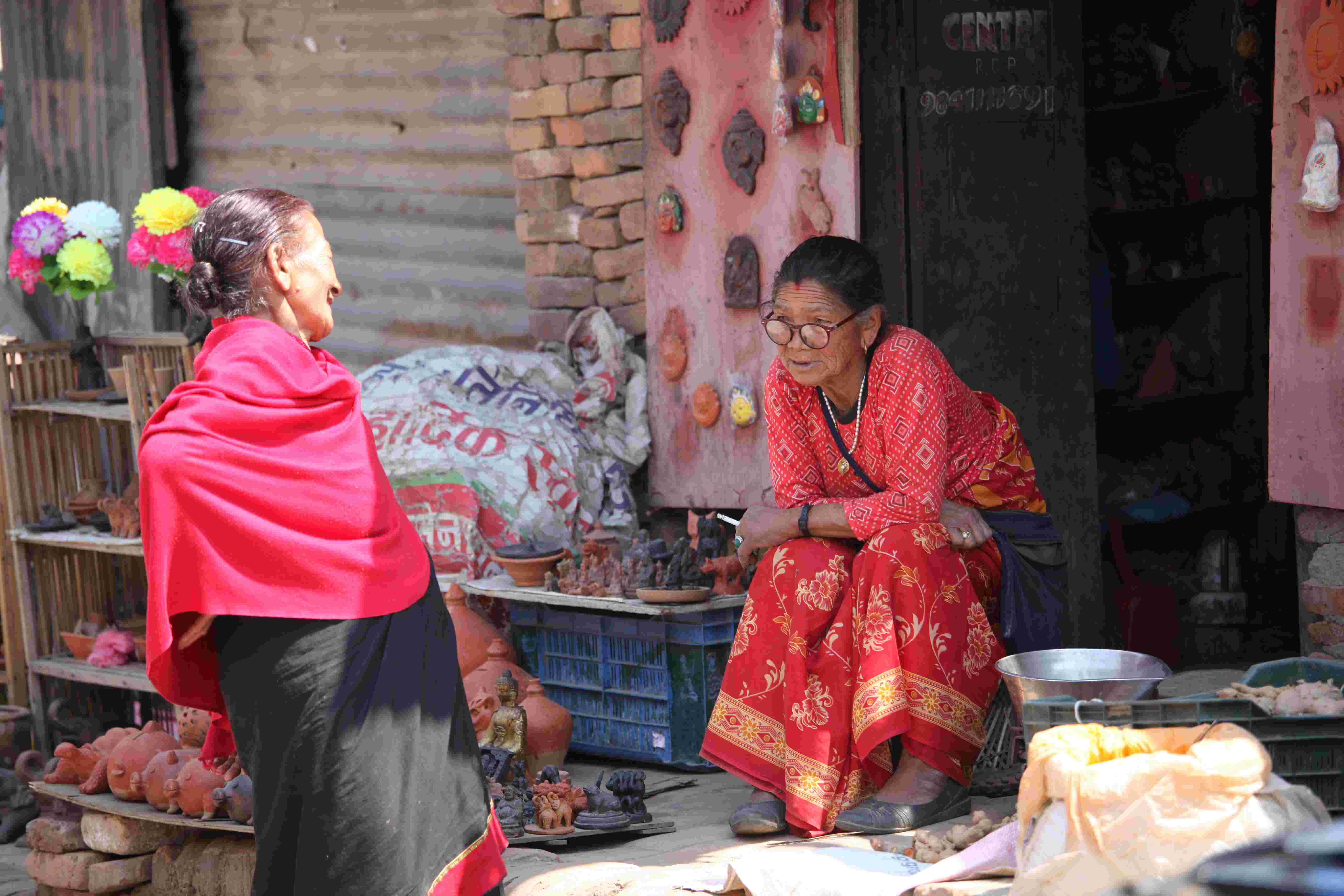
In the footsteps of small stalls, we exchange, we discuss and we laugh a lot.

The traces of the last earthquake do not prevent the joyful animation of the street.

Gradually, the shops are rebuilt, but royal city requires, we took care to keep the old architecture. A school even had to be created to train new cabinetmakers capable of reproducing the Newar style.

Some meditate in the middle of their well-stocked stalls…
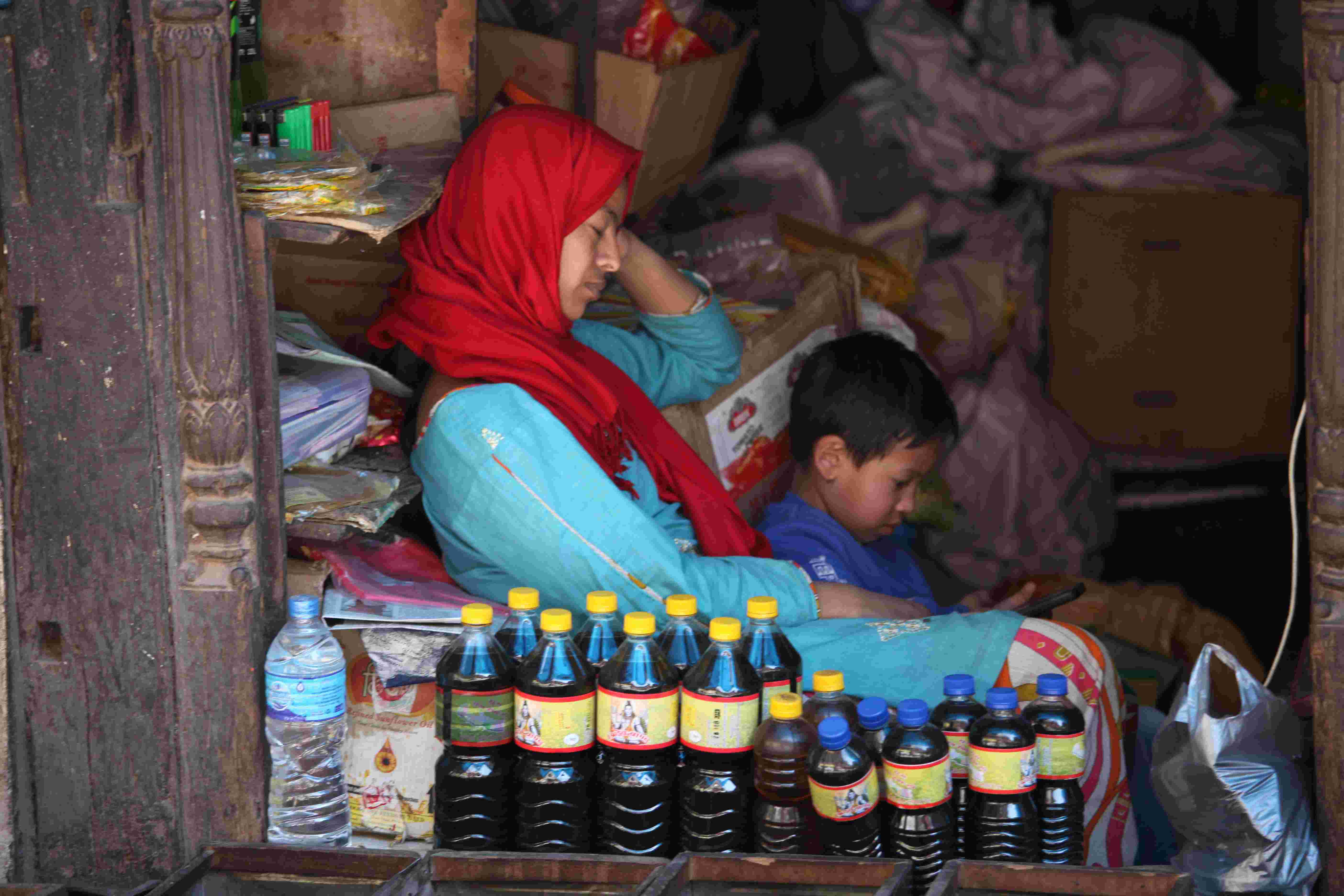
…while others confidently doze off.
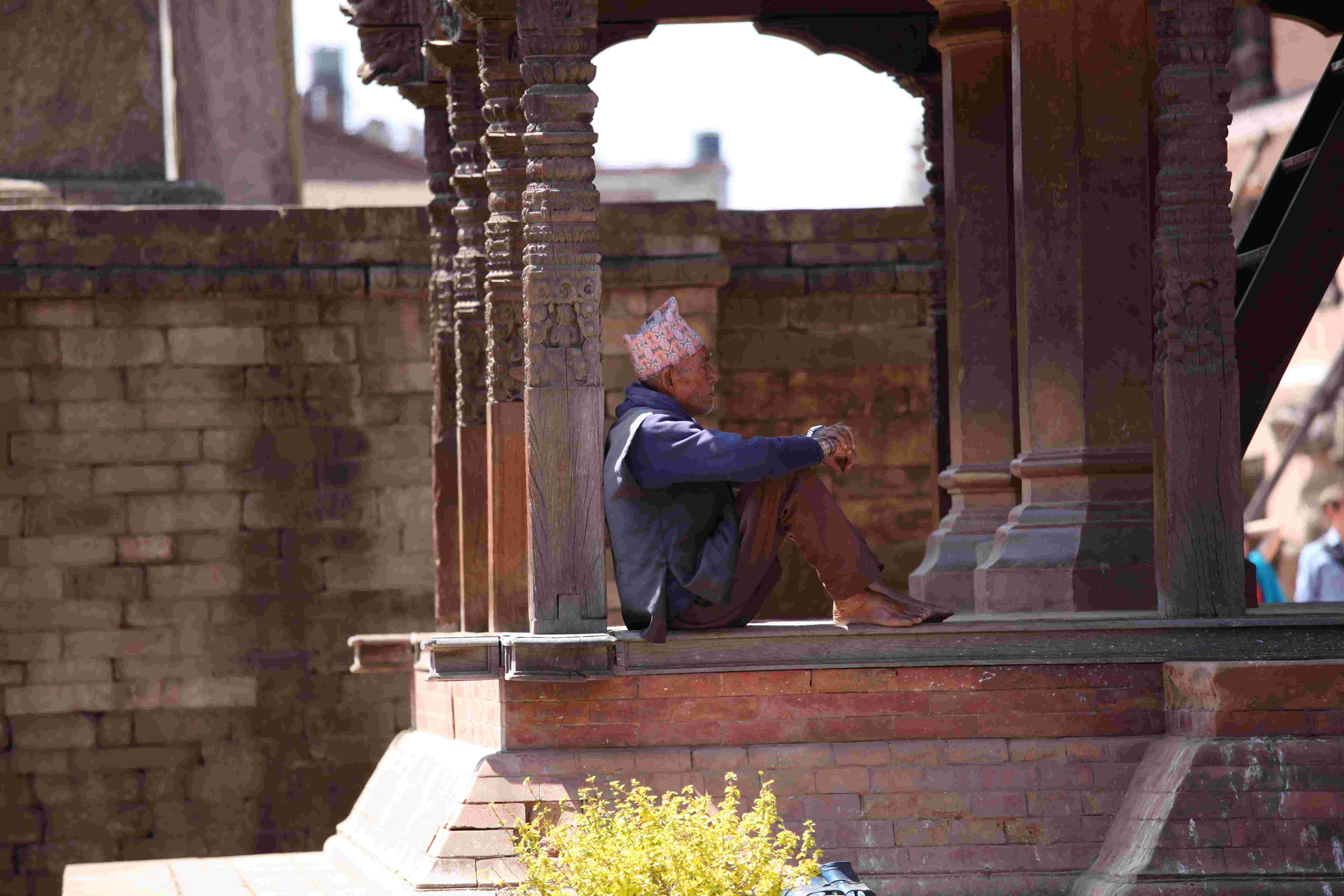
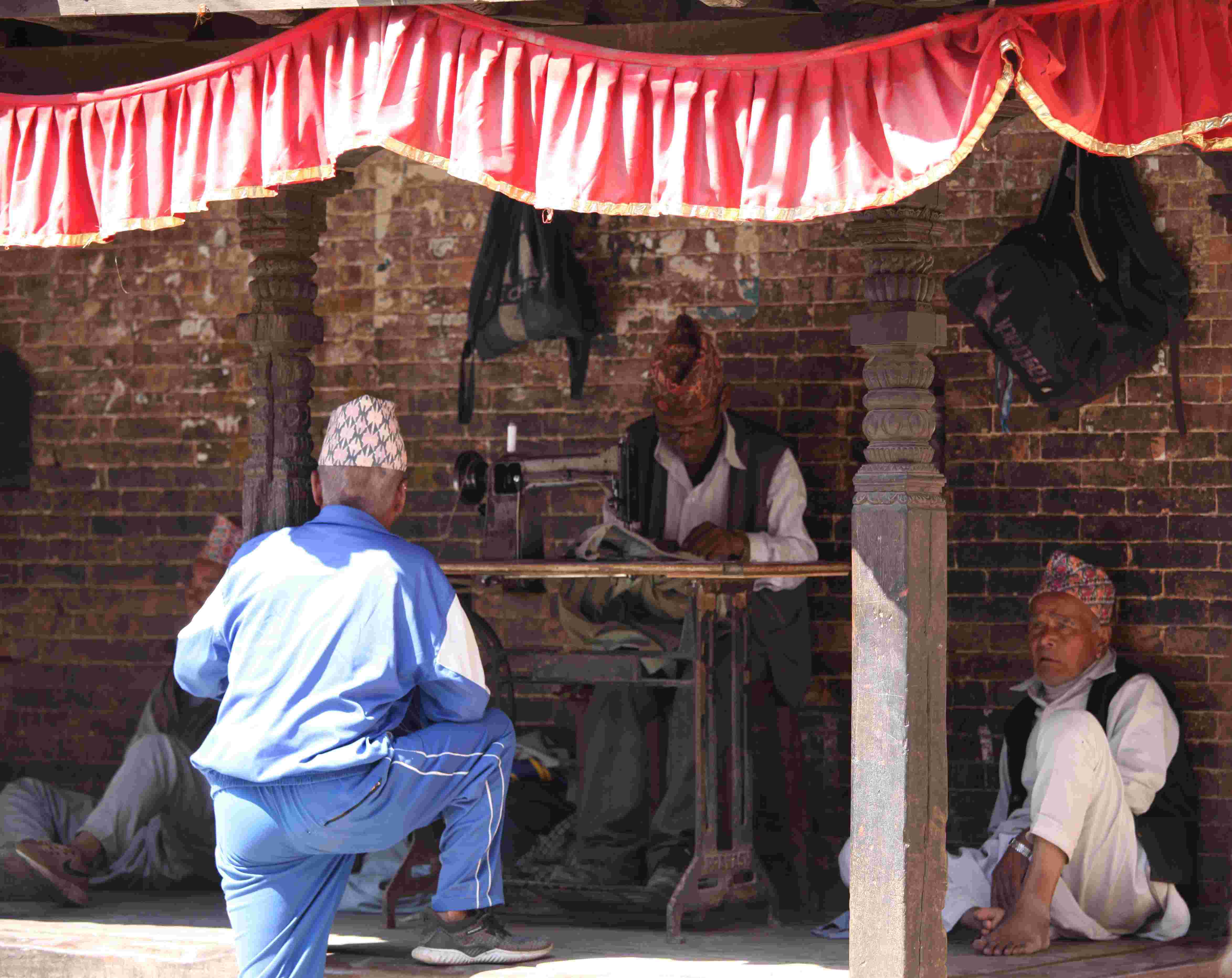
The elders meet to meditate in the shade, on Taumadhi Square, facing the majestic Nyatapola temple.
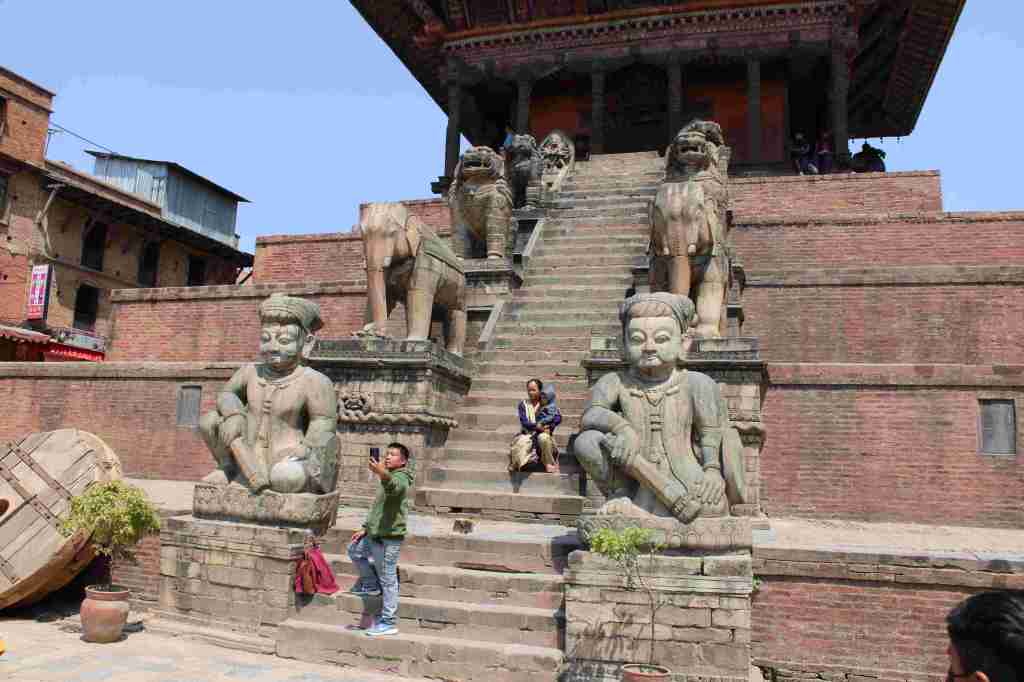
Also called the Five Story Temple or the Five Towers, it is said to be the tallest pagoda temple in Nepal. At each level the guardians of the temple: two Rajput wrestlers, two elephants, two lions… increasingly powerful guardians as one climbs the imposing steps, and of course, the divinity at the top being still ten times stronger than the strongest guardians. A demanding spiritual path to follow to reach divinity…

With the height, we discover the city under another aspect.
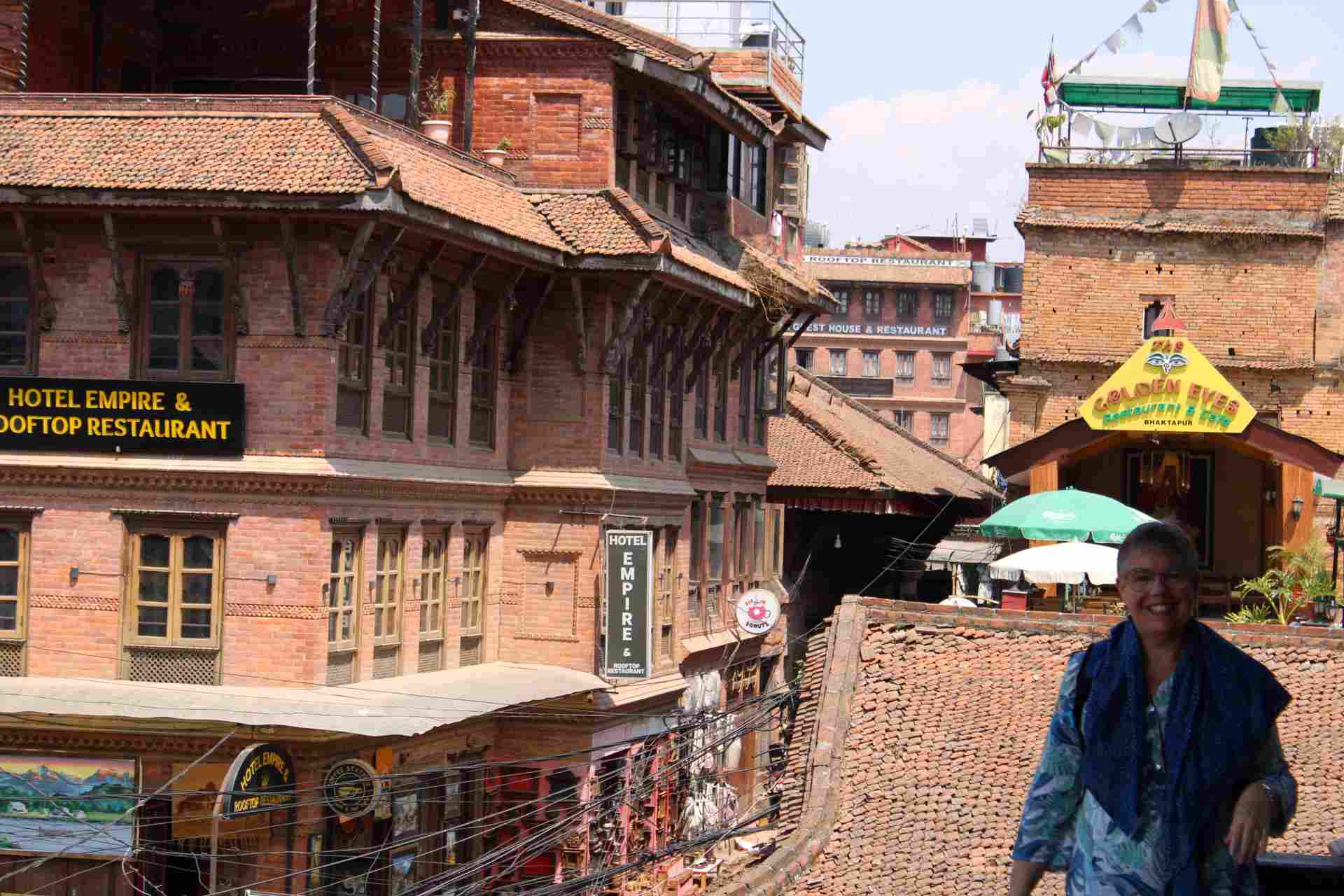
It’s even an opportunity to come across the famous Golden Eyes in the background.
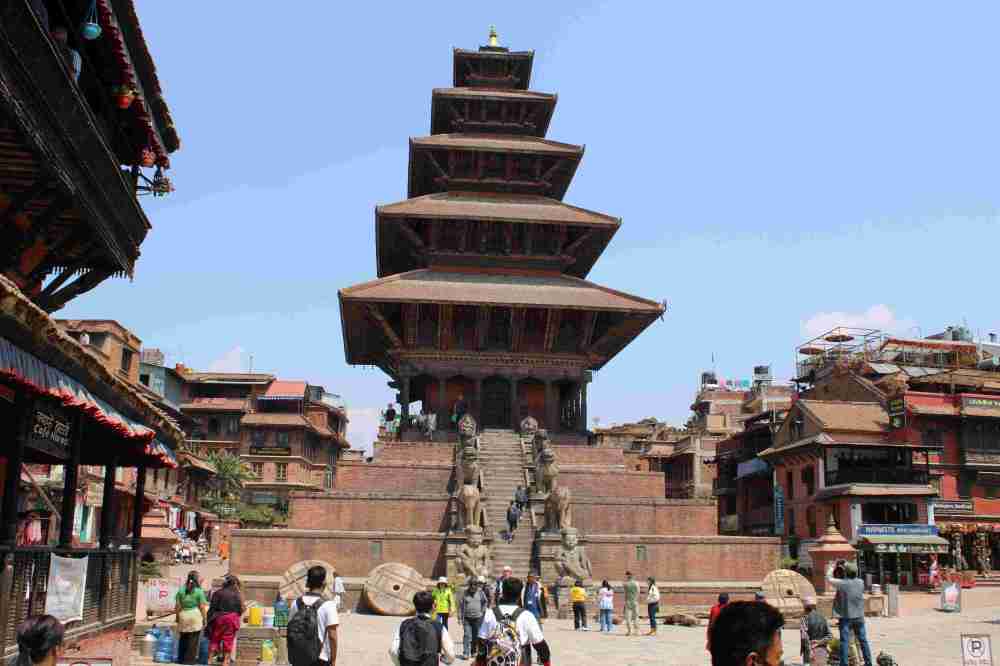
At the bottom of the temple, the large wooden wheels of the decorated floats which will soon be used for the New Year festivities.

At the bottom, in a corner, a Newar, recognizable by his superb Dhaka Topi, a hat with various patterns, meditates on the comings and goings of tourists.

Continuing our journey, what surprise at the top of the Temple of Lakshmi?
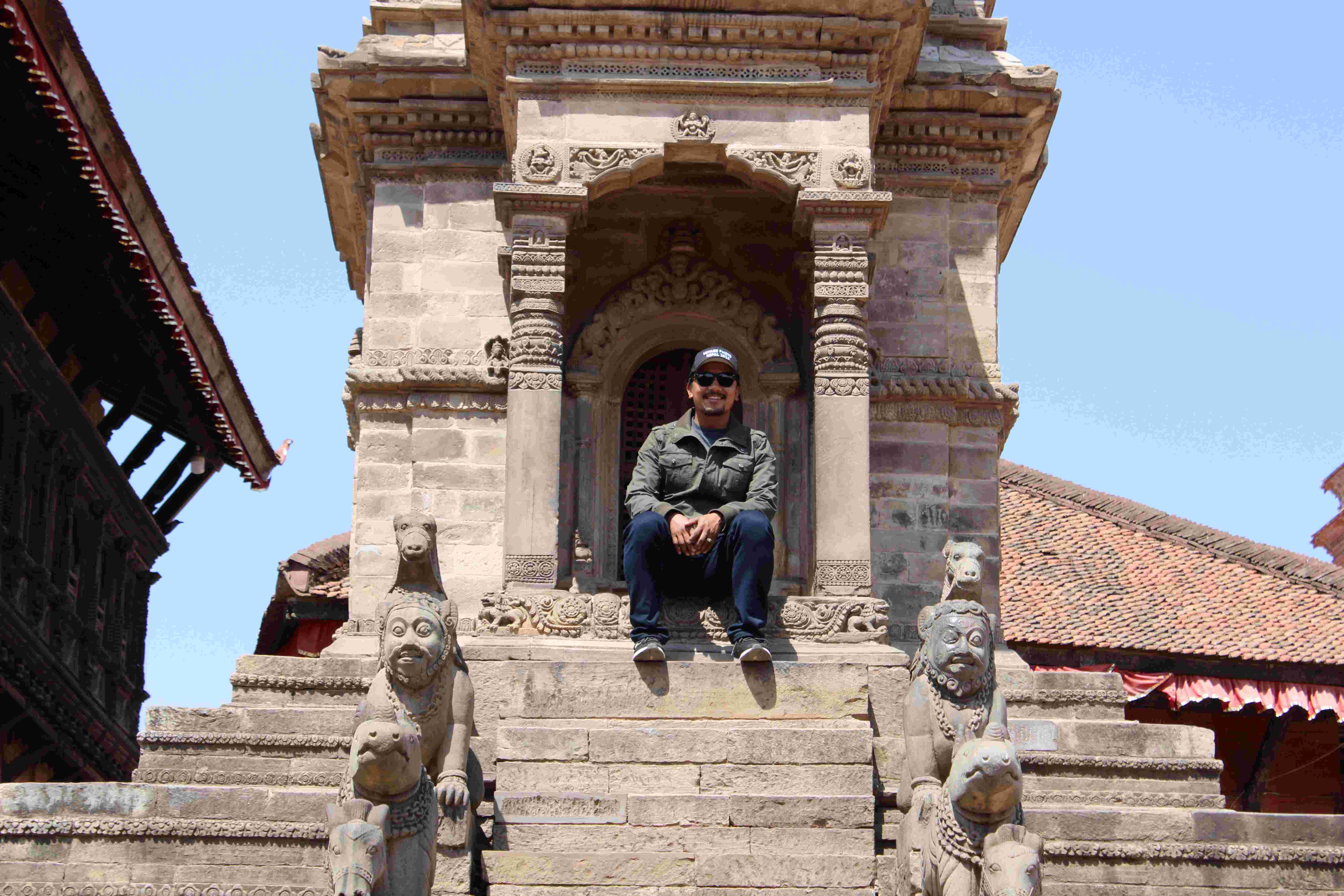
We discover the ultimate guardian… Buddhiman!
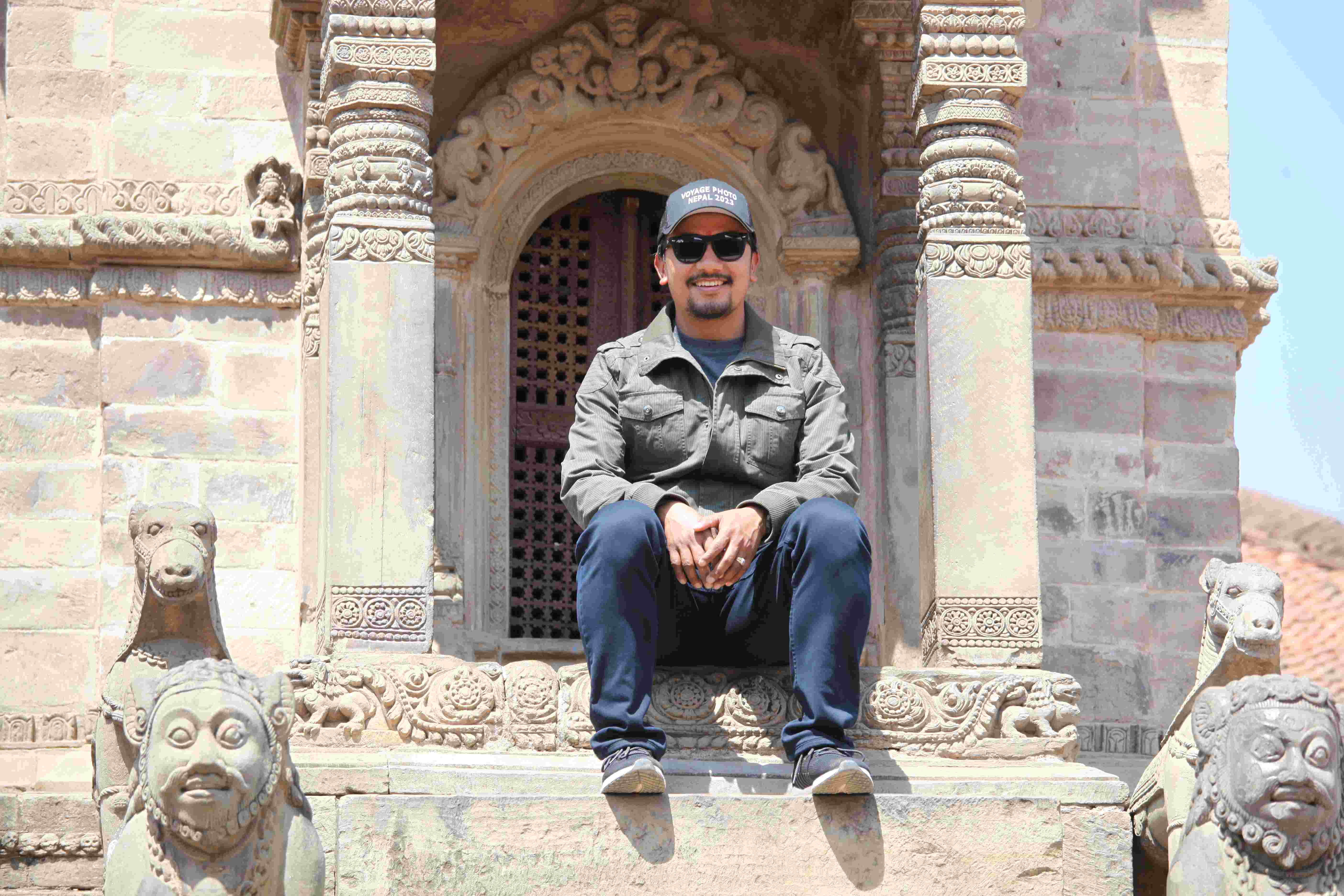
…beaming with a smile!
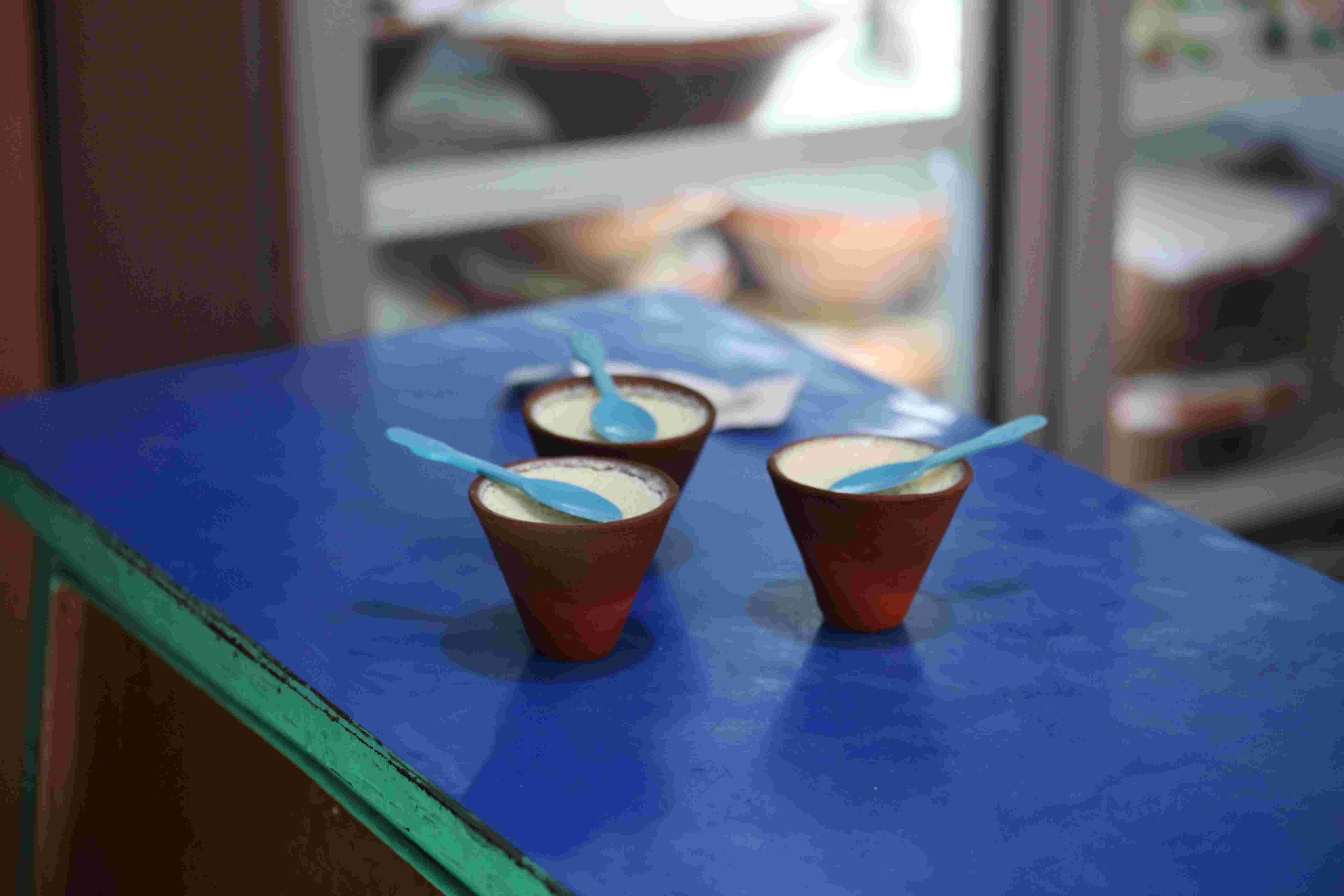
We cannot mention Bhaktapur without mentioning its world-famous yogurt: juju dhau, the king of yogurts. This is a variety of yoghurt, prepared by the Newari, in the famous little clay pots.
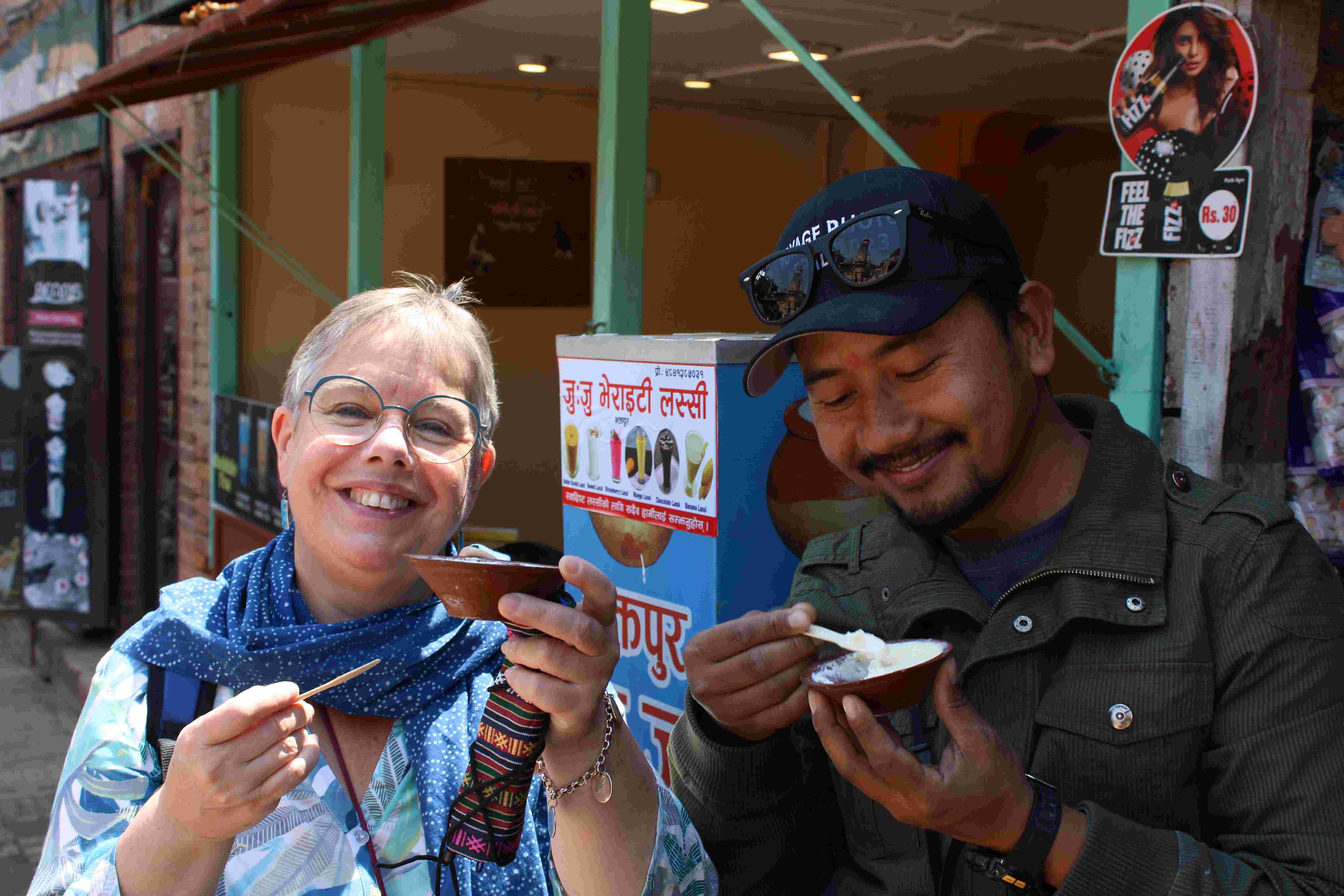
We had heard that it was the best yogurt in the world and we confirm it.
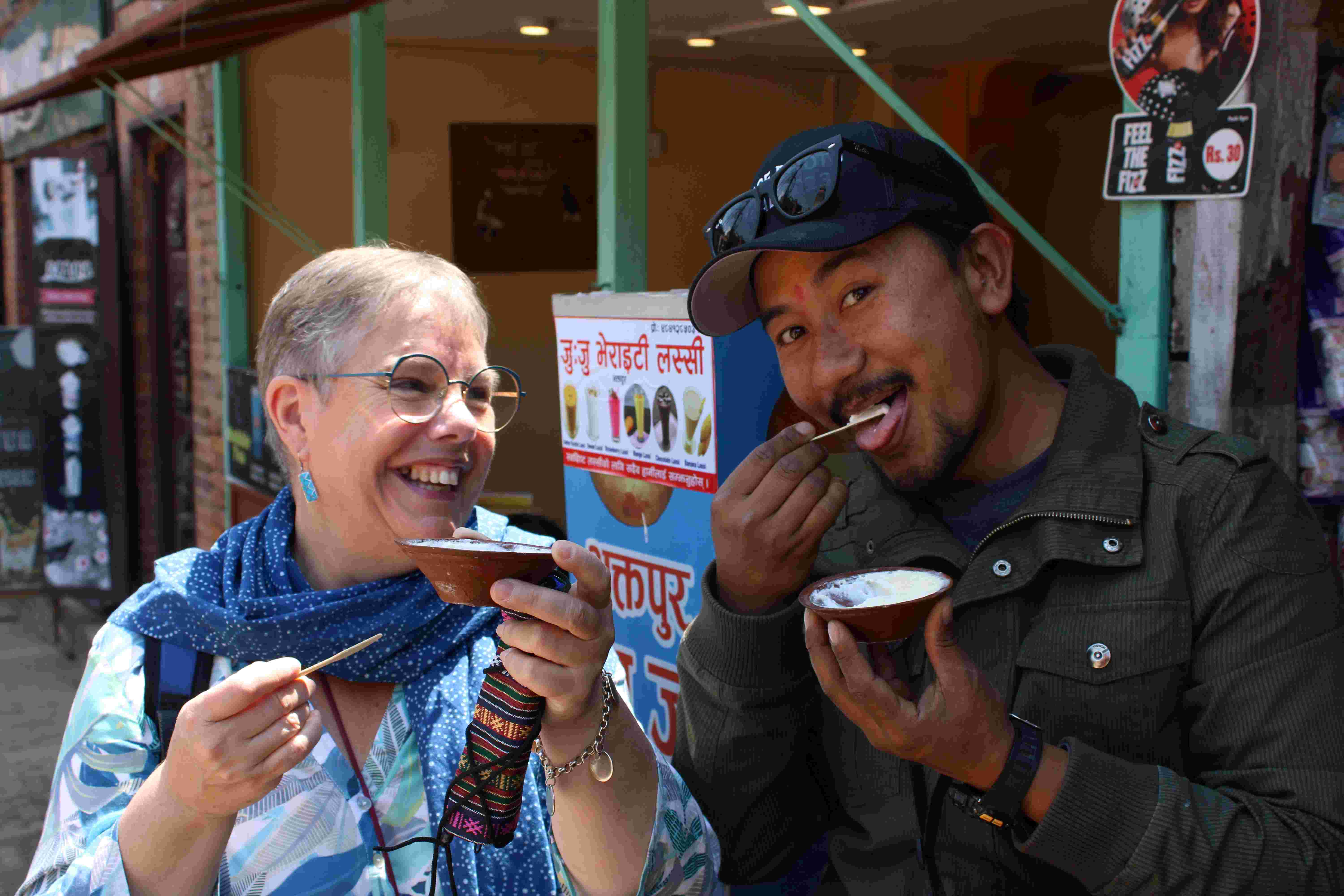
A perfect consistency and an inimitable and unforgettable creamy taste. Above all, don’t leave Bhaktapur without having taken the time to taste one or two… You can find them in many small eateries.

Before letting you stroll peacefully through the medieval city through these last few shots, we invite you to admire this world-famous window, adorned with a splendid carved peacock.
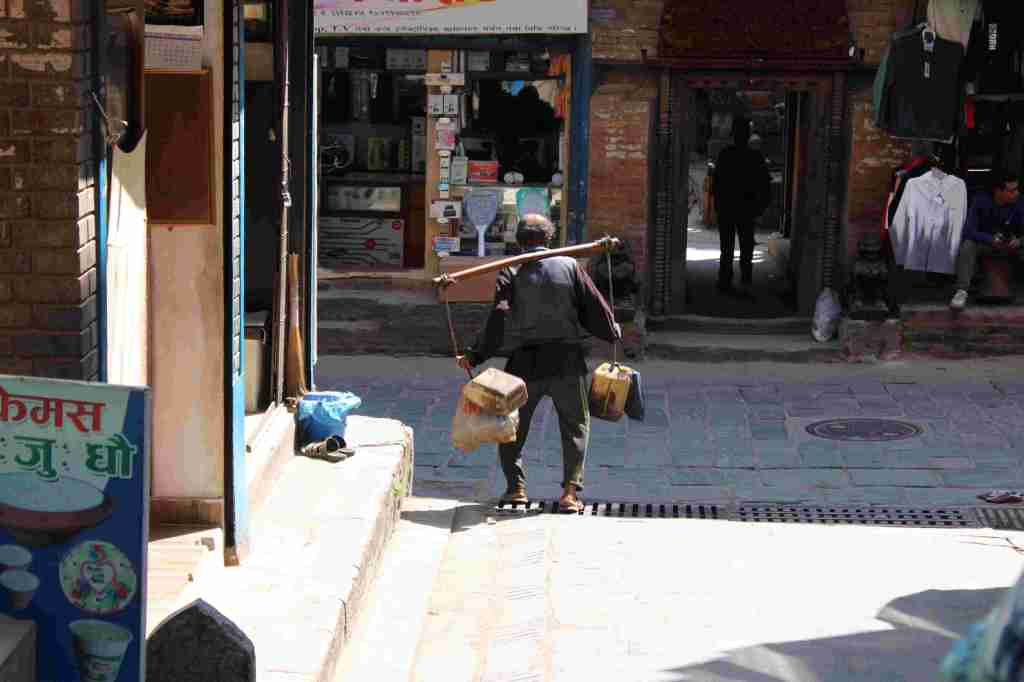
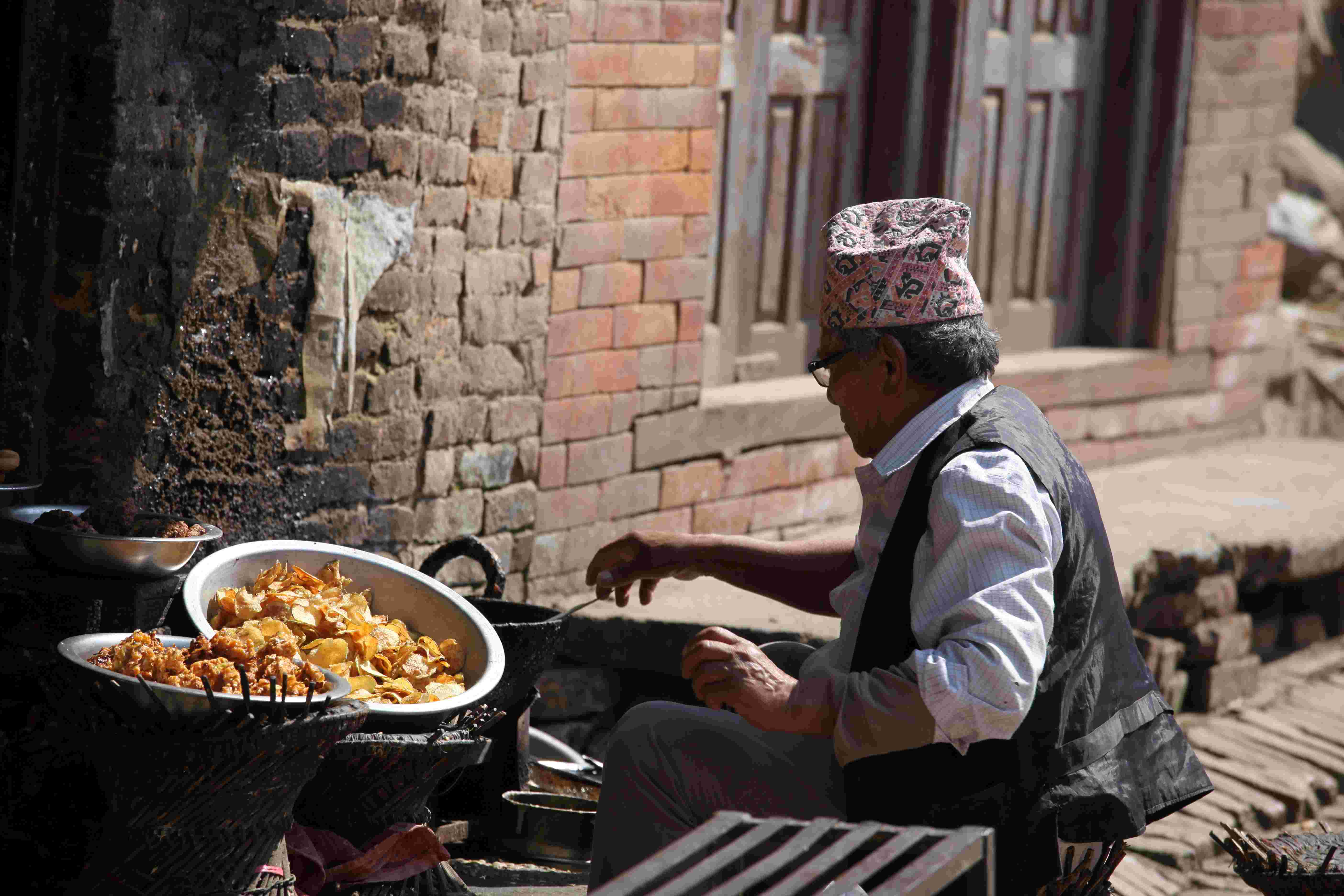
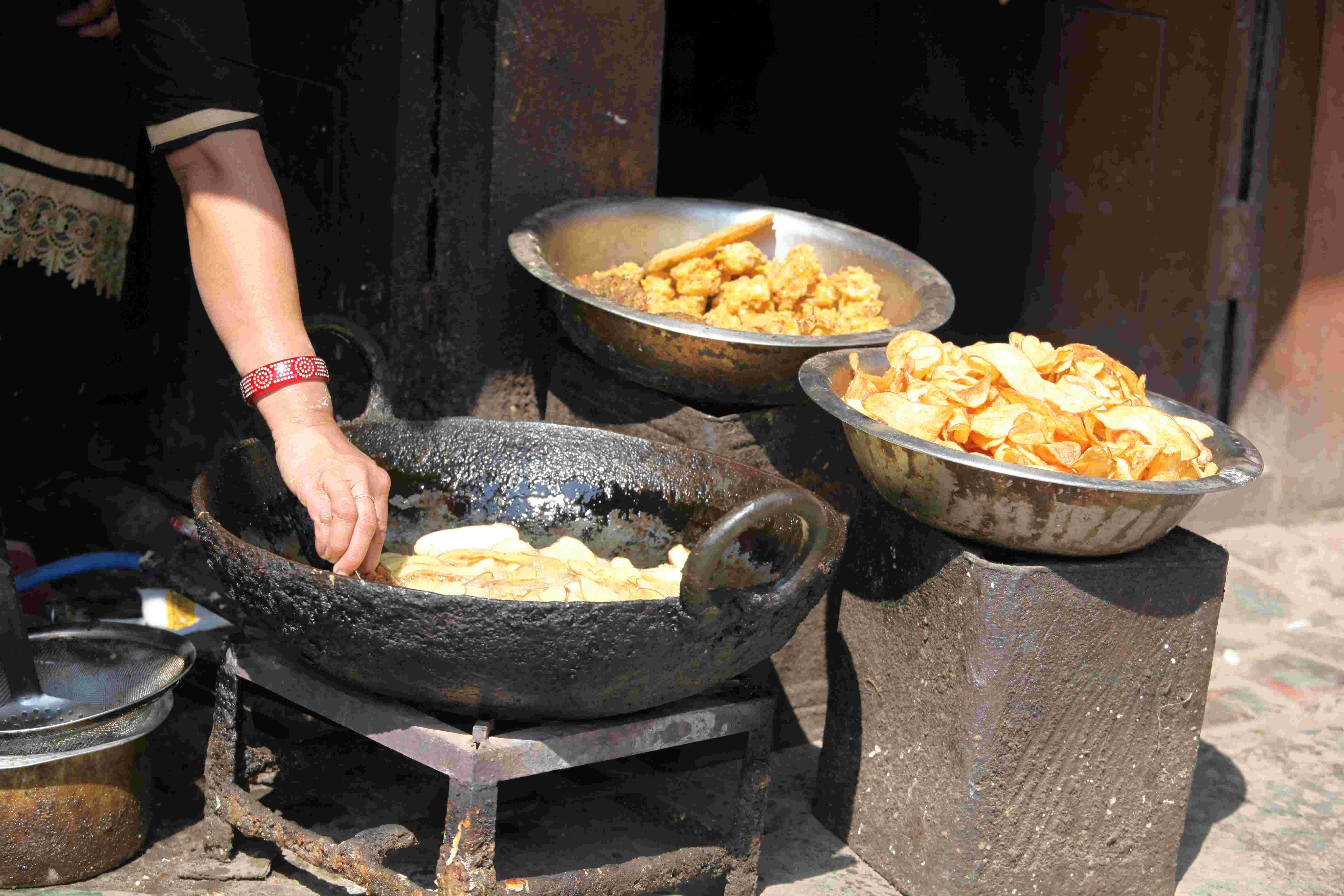
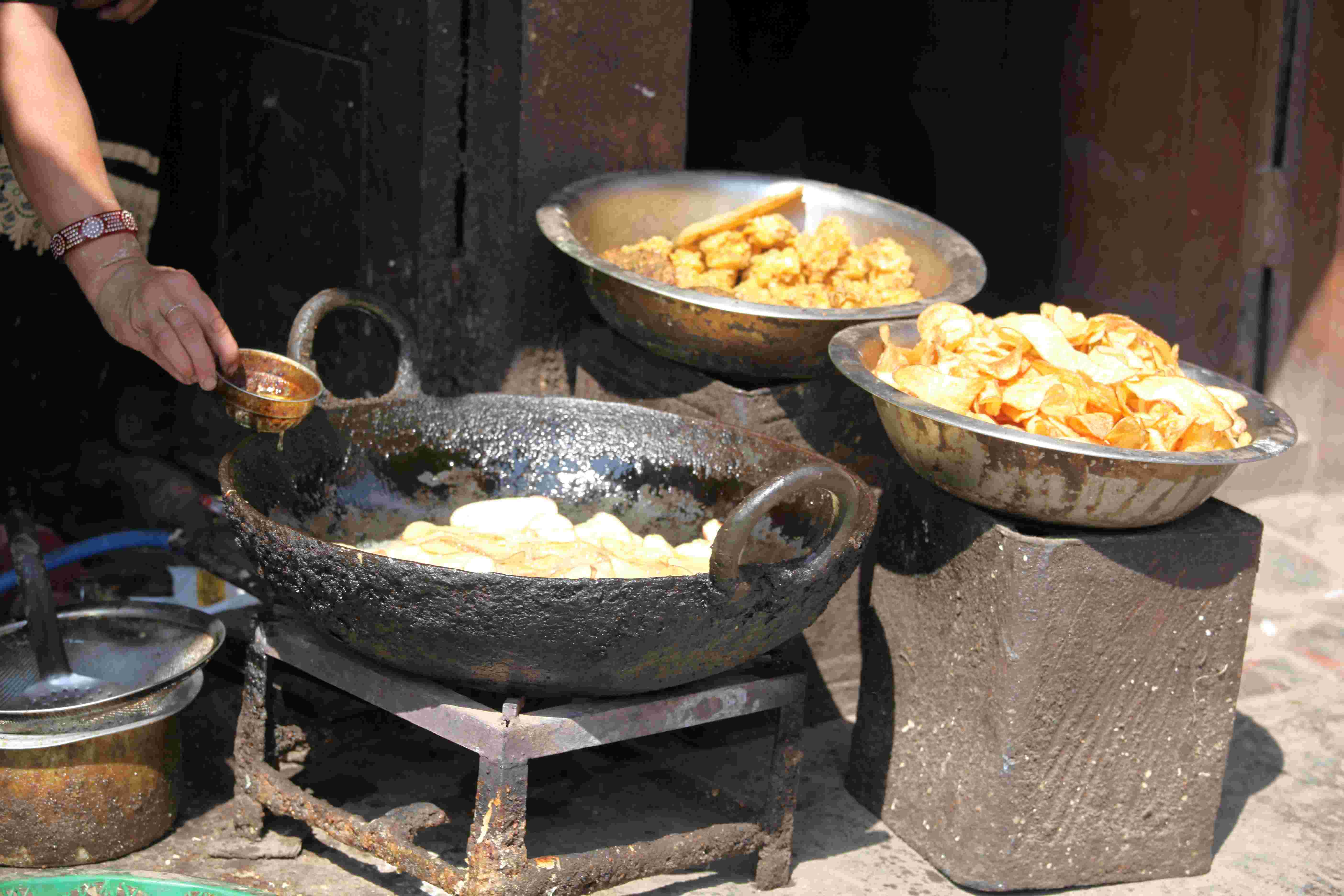
Make way for your free visit to the detour of the charming alleys according to these few photos which, we hope, will make you dream…You will see how pleasant it is to dive into a new temporality and to grasp the small details. .


Par Nathalie et Jean-Yves
 Rencontres et découvertes, ici et ailleurs